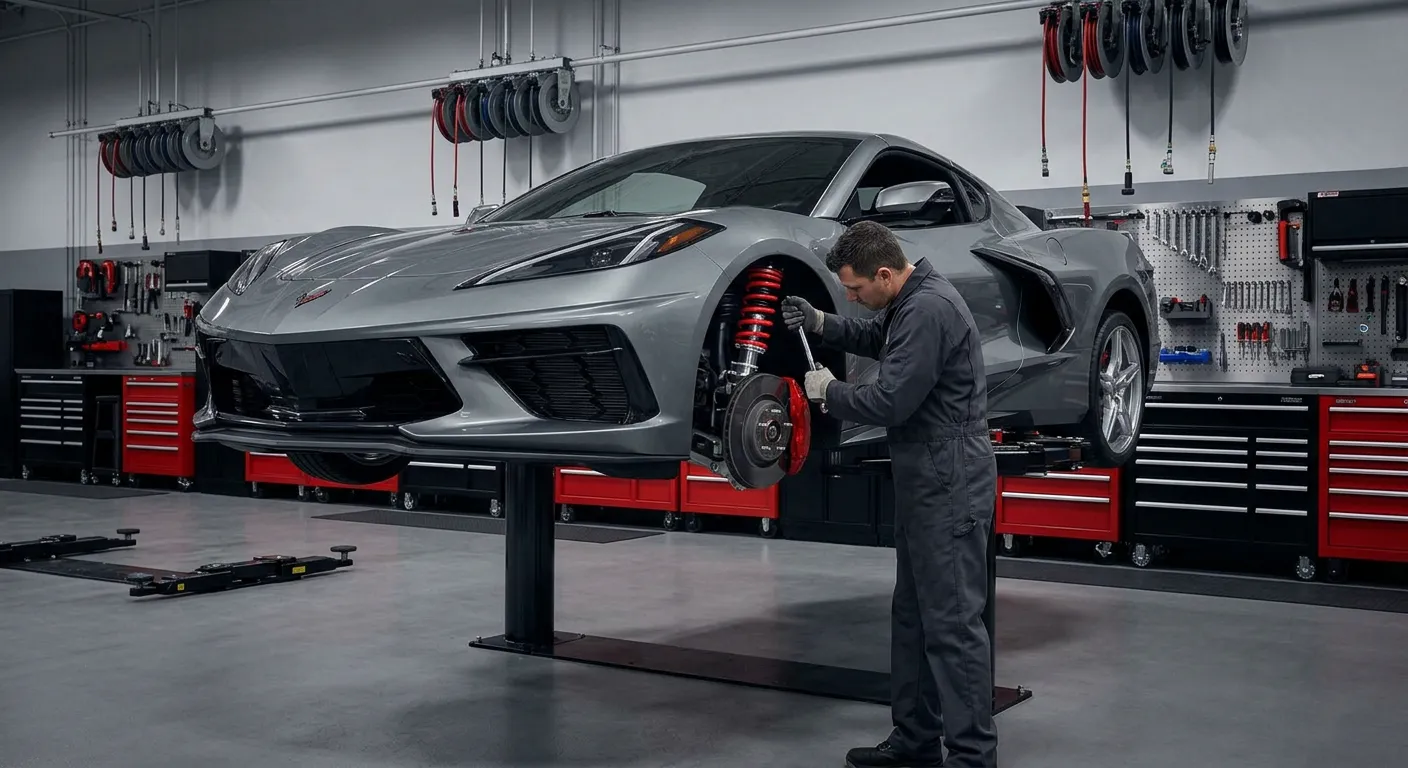
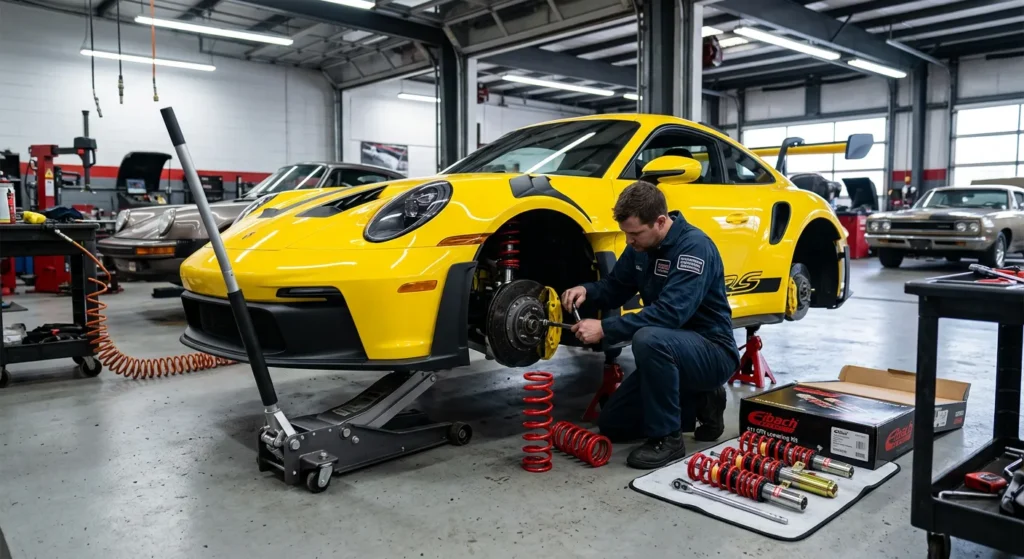
Lowering Kit Installation can change your car’s stance, reduce the space between the tires and fenders, and alter how the suspension responds. For a daily-driven vehicle, one of the first choices is usually between lowering springs and coilovers. Both can lower a car, but they take different approaches to ride height, adjustment, shock pairing, and suspension setup.
Lowering springs usually replace the factory springs while retaining compatible shocks or struts. Coilovers combine a spring and damper into an assembly that commonly allows ride-height adjustment. Some coilovers also provide damper adjustments, depending on the product.
For a car driven to work, around Syracuse, NY, and on longer trips, appearance is only part of the decision. Ride quality, ground clearance, tire clearance, alignment, suspension travel, and winter driving all deserve attention.
Notorious Auto Protection provides lowering kit installation and suspension repair in Syracuse, NY.
Here is how lowering springs and coilovers compare for a street-driven car.
A lowering kit changes suspension ride height so the vehicle sits closer to the road than it did in its factory configuration.
There are several ways to lower a vehicle.
Two common choices are:
Both change ride height, but the parts and adjustment options can differ considerably.
Lowering a car also changes more than appearance.
Suspension components operate at certain positions and angles from the factory. Changing ride height can alter alignment measurements, available suspension travel, tire clearance, and how the car reacts to bumps.
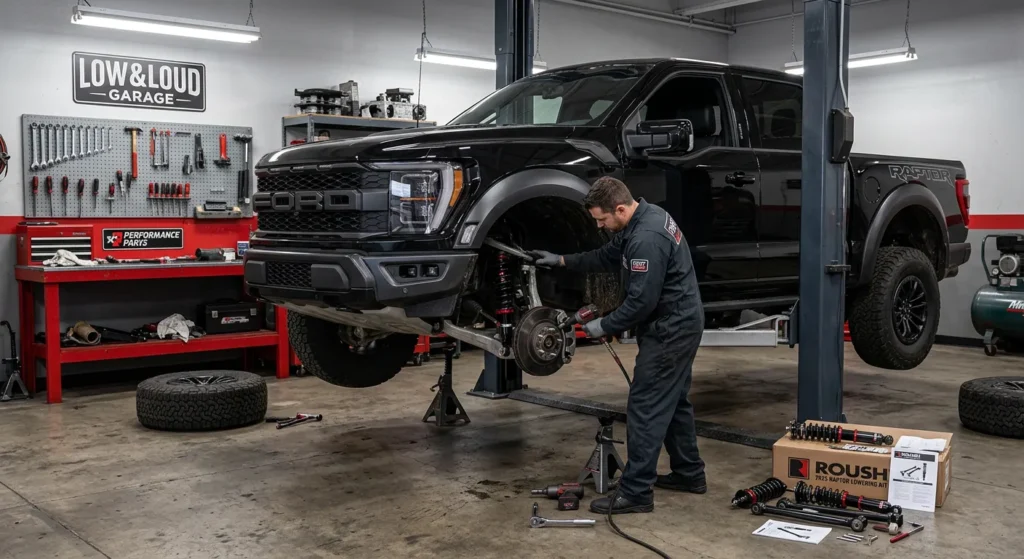
That is why a daily driver should be lowered around how the car will actually be used.
Lowering springs replace the vehicle’s original springs with shorter or differently designed springs that produce a lower ride height.
Eibach, a suspension manufacturer, offers PRO-KIT lowering springs designed to lower a vehicle while working with factory-style suspension layouts. The amount of lowering varies by application.
Lowering springs usually have a predetermined ride height.
You install the springs designed for your vehicle, and the resulting drop is based on that spring design and the car.
That simplicity appeals to many daily drivers.
A spring setup may suit an owner who knows roughly how low the car should sit and does not plan to adjust ride height regularly.
Coilovers combine the coil spring and damper into an assembly.
Many aftermarket coilover systems allow the owner or installer to adjust ride height.
Some systems also provide adjustment for damper behavior.
KW Automotive, a suspension manufacturer, offers coilover systems with vehicle-specific lowering ranges. Certain KW systems also include adjustable damping, while others use preset damping.
That distinction matters because “coilovers” describes a category rather than one identical suspension design.
One set may offer only ride-height adjustment.
Another may provide ride height plus additional damper settings.
The exact features depend on the product.
When comparing lowering springs and coilovers, start with what actually changes.
A typical lowering spring setup offers:
A typical street coilover setup may offer:
Neither setup should be chosen only because one car looks lower in a photo.
The suspension needs to work on your vehicle, with your wheels and tires, on the roads you drive every day.
Coilovers generally provide more ride-height adjustment than lowering springs.
This is one of their clearest differences.
A lowering spring is manufactured to produce a specified change in ride height for its intended application. Once installed, you do not normally turn an adjustment to raise or lower the spring setup.
Many coilovers have threaded components that allow ride height to be adjusted within the manufacturer’s stated range.
That can be useful if you want to fine-tune the stance.
Maybe the initial setup sits lower than expected.
Maybe you install a different wheel and tire combination later.
Maybe you want additional ground clearance.
An adjustable system gives you more room to change the setup, provided adjustments stay within the manufacturer’s specifications.
A car can look great sitting low in a parking lot and still be frustrating to drive every morning.
Daily driving introduces obstacles that photos do not show.
Think about:
A suspension setup needs enough usable clearance for the roads the vehicle actually travels.
The lowest possible setting is not automatically the right setting for a street car.
For a daily driver, the goal is usually a balance between the desired stance and enough usable suspension and ground clearance for normal driving.
Lowering springs can change ride quality because the spring design differs from the factory spring.
The amount of change depends on the product and vehicle.
Eibach describes its PRO-KIT as a performance spring system developed for street use, with application-specific spring characteristics and lowering amounts.
The damper paired with the spring also matters.
Installing a different spring changes the environment in which the shock or strut operates.
If you are retaining existing dampers, their age and condition should be considered before installing lowering springs.
A worn damper does not become new because a new spring is installed around it.
Coilover ride quality varies widely.
Do not assume that every coilover produces an extremely stiff ride.
Do not assume every coilover will ride like the factory suspension either.
Spring rates, damper tuning, ride height, available travel, tire sidewall, vehicle weight, and adjustment settings can all affect how the car feels.
Some street-oriented coilovers are designed around road use.
Other suspension systems place more emphasis on track use.
If the car spends nearly all its time commuting and running errands, tell your installer that.
A street-driven setup should be chosen around street use rather than specifications intended for a different type of driving.
It depends on the spring, vehicle, lowering amount, and damper.
Some lowering springs are designed to work with factory-style dampers.
Other setups can benefit from dampers designed around lowered suspension travel.
The spring manufacturer’s application information should be checked before deciding what stays and what gets replaced.
Existing damper condition matters too.
If your shocks or struts are already worn, installing new lowering springs while retaining worn dampers can leave you with suspension problems that the new springs cannot correct.
Have the existing suspension inspected before ordering the complete setup.
Notorious Auto Protection also provides suspension repair for vehicles that need suspension components addressed before or alongside modification.
Your suspension needs room to move.
When a tire travels over a bump, suspension components compress and extend to help keep the tire controlled.
Lowering the car changes the suspension’s resting position.
If a car is lowered beyond the range intended by the suspension manufacturer, available travel can become a concern.
This can contribute to harsh contact with bump stops or clearance problems.
It can also create issues between tires, fenders, liners, and suspension components.
Follow the stated adjustment range for the suspension system.
Going lower than the product was designed to operate is not the same as properly adjusting an aftermarket suspension.
Yes, alignment should be part of a lowering project.
Changing ride height can alter wheel alignment measurements.
Eibach’s installation instructions for its spring products call for checking wheel alignment after installation and adjusting it to the manufacturer’s specifications where applicable.
KW also directs installers to perform wheel alignment after coilover installation.
Alignment can affect:
Do not treat alignment as an unrelated service after changing suspension height.
It is part of finishing the suspension job.
Lowering changes suspension position, and that can change alignment.
Camber and toe are two measurements that may be affected depending on suspension design.
Tire wear can become a problem when alignment falls outside the appropriate specifications.
NHTSA recommends checking tire condition and paying attention to uneven tread wear. The agency notes that uneven wear can be a sign of problems such as improper inflation or wheel misalignment.
After lowering a vehicle, watch how the tires wear.
If one edge begins wearing much faster than the rest of the tread, do not simply keep replacing tires.
Have the alignment and suspension checked.
Ground clearance deserves extra attention when the car is used every day.
The lower you go, the less space you have between parts of the vehicle and the road.
Low points may include:
Driveways are another concern.
A car may clear a flat road easily but scrape when entering a steep driveway.
Speed bumps can create the same problem.
If you are choosing adjustable coilovers, there is little reason to start at the lowest setting simply because adjustment is available.
Start with a practical ride height and evaluate the vehicle.
Syracuse, NY weather gives daily drivers another reason to think carefully about ride height.
Winter can bring snow, slush, ice, road salt, and uneven snow buildup.
A very low car may have less room between the underside and accumulated snow.
Winter tires can also affect your wheel and tire plans.
If you run one set of wheels in summer and another during winter, both setups need adequate clearance.
Coilover owners should also follow the suspension manufacturer’s cleaning and maintenance guidance, especially when threaded adjustment components are exposed to winter road conditions.
The suspension needs to work in February, not just look good during a July car meet.
Suspension and wheel fitment should be planned together.
Lowering a vehicle reduces or changes clearance around the wheel and tire.
A combination that cleared at factory ride height may behave differently after lowering.
Check:
Do not judge fitment with the vehicle sitting still and the steering wheel straight.
The tires need clearance as the steering turns and suspension moves.
Notorious Auto Protection offers wheels and tires for owners planning suspension and wheel changes together.
For a daily-driven car, the choice comes down to what you want to adjust.
Daily drivers do not automatically need one type over the other.
Your preferred ride height, vehicle, roads, tires, and expectations determine which approach makes more sense.
If the car also sees performance driving, tell your installer before choosing suspension.
A daily driver that occasionally attends an autocross or track event has different demands from a car used only for commuting.
Some coilovers provide adjustable damping that allows suspension settings to be changed within the manufacturer’s specified range.
That can appeal to drivers who want more adjustment.
Lowering springs can also be part of a street performance setup.
The important point is choosing parts designed around how the vehicle will be used.
Do not build a daily commuter as if every drive is a track session unless that is actually what you want.
Age alone does not prevent a vehicle from being lowered.
Suspension condition matters more.
Before installing new springs or coilovers, inspect related components.
These may include:
Putting new suspension components onto a vehicle with worn supporting parts can make existing problems more noticeable.
If the vehicle already clunks, wanders, vibrates, or wears tires unevenly, find out why before changing ride height.
Start with your goals.
Do you want a mild reduction in wheel gap or a noticeably lower stance?
That answer can narrow the suspension choices quickly.
A car driven around Syracuse, NY needs to handle the roads you use every day.
Look at your driveway, workplace entrance, parking garage, speed bumps, and winter driving needs.
If new wheels are part of the build, plan them at the same time.
Changing suspension height first and guessing about wheels later can create clearance problems.
Make sure existing suspension wear is not being overlooked.
Budget time for an alignment after the suspension work.
Use the instructions and adjustment limits for the exact components installed on your car.
Springs store considerable energy.
Suspension work can also involve removing and reinstalling components connected to steering and wheel alignment.
Correct installation means following the procedures and torque specifications for the vehicle and suspension parts.
After the work, the car should also be checked for clearance.
That includes looking at tire clearance through steering movement and suspension operation.
If coilovers are installed, the ride height needs to stay within the product’s specified range.
Lowering a car should be treated as suspension work first and an appearance change second.
Notorious Auto Protection provides lowering kit installation in Syracuse, NY.
Our shop is located at:
Notorious Auto Protection
6742 Pickard Dr
Syracuse, NY 13211
We can discuss your vehicle, desired ride height, suspension plans, and wheel and tire setup before installation.
Related services include:
If you are changing several parts of the vehicle, discussing them together can help identify fitment concerns before the work begins.
When comparing lowering springs and coilovers for a daily driver, focus on how much adjustment you actually want.
Lowering springs provide a predetermined change in ride height and can work well when you want a straightforward street setup.
Coilovers usually provide more ride-height adjustment and combine the spring and damper into one suspension package. Some also allow damper adjustments.
Whichever route you choose, consider suspension travel, alignment, ground clearance, tire fitment, winter driving, and the condition of the existing suspension.
If you are considering Lowering Kit Installation in Syracuse, NY, call Notorious Auto Protection at (315) 552-4441 or visit our contact page to schedule an appointment.
Our hours are Monday through Saturday from 8 AM to 6 PM and Sunday from 8 AM to 5:30 PM.
It depends on the amount of adjustment you want. Lowering springs can work well for a driver who wants a set ride-height change. Coilovers may make more sense when adjustable ride height or other suspension settings are desired. Product design and vehicle compatibility matter with either option.
No. Coilover ride quality varies with spring rates, damper tuning, ride height, suspension travel, tire setup, and the product itself. Some coilovers are designed around street use, while others have different goals. Lowering springs can also change ride quality.
Yes, the alignment should be checked after changing suspension ride height. Eibach’s spring installation guidance calls for checking wheel alignment after installation. Adjustments should follow the requirements for the vehicle and suspension components.
Yes. KW’s coilover installation guidance calls for wheel alignment after installation. Changing ride height can change alignment measurements, so the alignment should be checked after the final ride height is set.
It can if the wheel, tire, suspension, and ride-height combination does not provide enough clearance. Tire width, diameter, wheel offset, steering movement, and suspension travel all affect fitment. Check the complete setup rather than relying on ride height alone.
A lowered vehicle can be driven in winter, but reduced ground clearance can become more noticeable in snow and slush. Tire selection and winter wheel clearance also matter. Choose a ride height that fits how the vehicle is used throughout the year.
Notorious Auto Protection provides lowering kit installation at 6742 Pickard Dr, Syracuse, NY 13211. Call (315) 552-4441 or visit our contact page to schedule an appointment.

Your vehicle is a significant investment, and ensuring its protection from the elements and everyday hazards is crucial to maintaining its value and appearance. In Syracuse, NY, where road conditions and weather can be unpredictable, combining STEK Paint Protection Film (PPF) and Window Tint offers the ultimate solution for safeguarding your car. At Notorious Auto Protection, we specialize in applying these premium products to provide your vehicle with maximum protection and enhanced aesthetics.
Product Brand: Auto Protection
Question about the service you're choosing, or simply ready to book? Contact us today to get started
Explore the many services we offer by clicking the boxes below