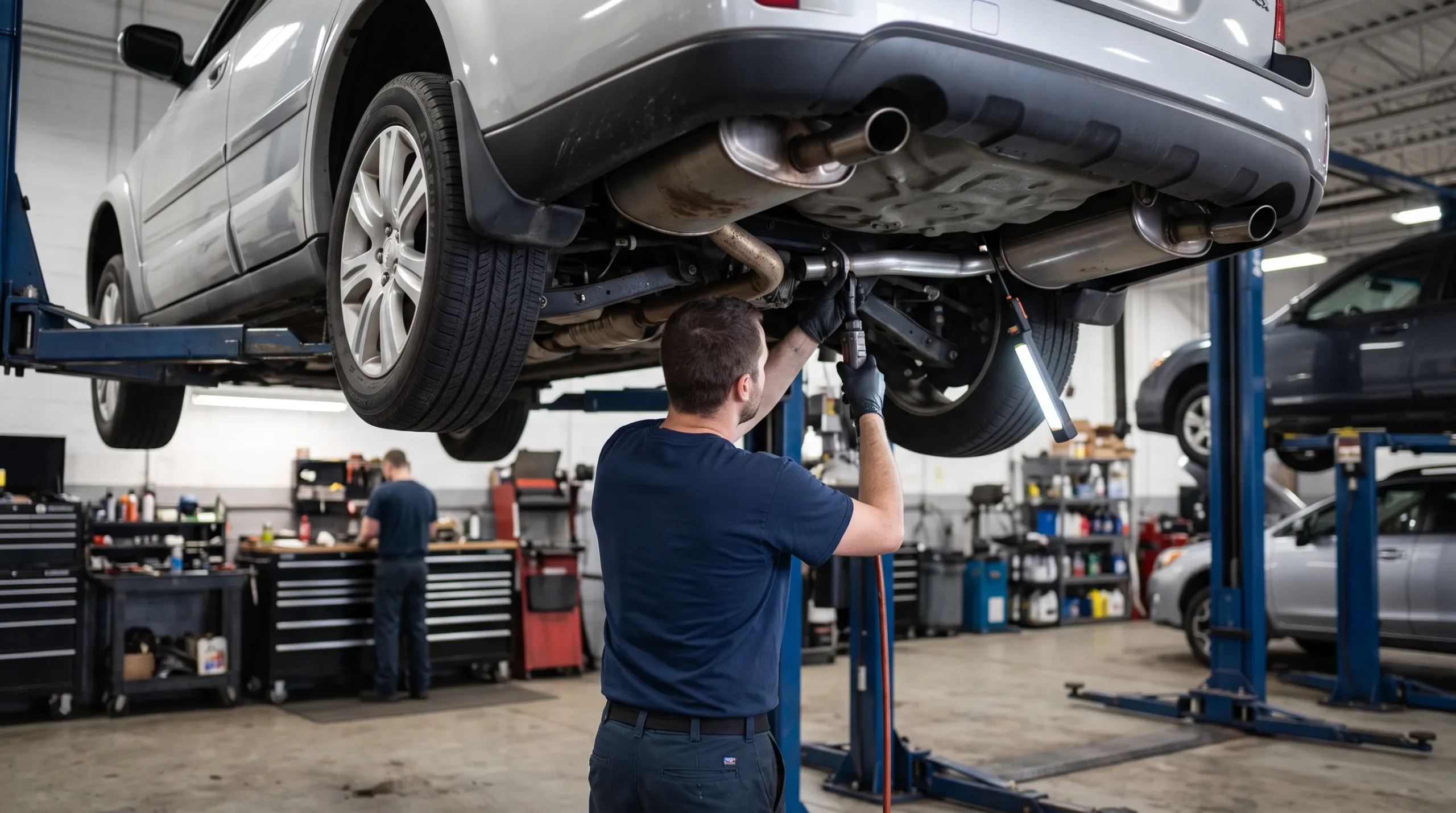
Muffler & exhaust shops in Syracuse can help when your vehicle develops a leak, rattle, rusted pipe, damaged muffler, broken hanger, or an exhaust sound you no longer like. The decision usually comes down to two paths: restore the system with a repair or replace selected sections with an exhaust upgrade that changes sound, appearance, or flow.
At Notorious Auto Protection in Syracuse, NY, we provide exhaust system repair and upgrades for cars, trucks, SUVs, performance vehicles, daily commuters, luxury vehicles, and custom builds. Our team can inspect exhaust leaks, rusted sections, mufflers, hangers, flex pipes, catalytic-converter concerns, and other exhaust components before discussing the next step.
For Central New York vehicle owners, corrosion deserves extra attention. Exhaust parts sit underneath the vehicle where they face water, snow, road grime, salt, heat, and vibration. A system that was quiet last winter may begin rattling or leaking after another season on Syracuse, NY roads.
This guide explains how to compare repair and upgrade options while keeping New York inspection, emissions, and exhaust-noise rules in mind.
A repair is usually the better path when you like the current exhaust and simply want the vehicle returned to proper working condition.
That may mean repairing or replacing:
An upgrade makes more sense when a worn section already needs replacement and you also want a different sound or appearance.
Possible upgrade paths include:
The choice should start with an inspection.
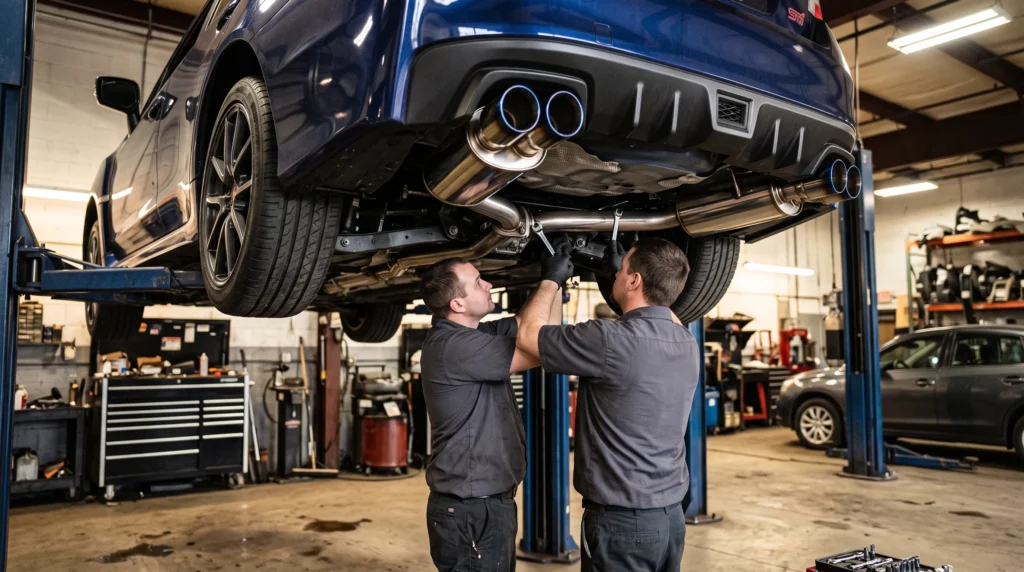
If the exhaust has corrosion in several places, replacing one small section may not solve the whole problem. If most of the system is healthy, replacing a single failed component may be all that is needed.
The exhaust system routes gases from the engine toward the rear of the vehicle while reducing noise and supporting emissions-control equipment.
Depending on the vehicle, the system may include:
Each part has a job.
The muffler reduces exhaust noise.
The resonator can help shape sound and reduce certain frequencies.
The catalytic converter is part of the emissions-control system.
Hangers hold the exhaust in position beneath the vehicle.
When one section fails, the symptoms can show up as noise, vibration, smell, warning lights, or a pipe hanging lower than normal.
A failing exhaust system usually gives you clues.
Contact a shop if you notice:
A louder exhaust does not automatically mean the muffler is the problem.
A leak can occur at a gasket, flex pipe, flange, converter connection, weld, pipe section, resonator, or muffler.
That is why diagnosis comes before buying parts.
Central New York weather is hard on metal beneath a vehicle.
Exhaust systems face repeated exposure to:
Rust may begin around welds, seams, clamps, hangers, flanges, mufflers, and pipe sections.
Once the metal becomes thin, an opening can form.
A small leak may begin as a faint ticking sound. As the opening becomes larger, the exhaust can get noticeably louder.
Hangers can also rust or break, allowing the system to move and strike nearby parts.
When visiting muffler & exhaust shops in Syracuse, ask for the full system to be inspected rather than focusing only on the loudest section.
Repair may be right when the vehicle already has the sound and layout you want.
You may prefer repair when:
A broken hanger or leaking connection does not automatically call for a full exhaust replacement.
The condition of nearby metal matters.
If the muffler has a hole but the surrounding pipe is heavily corroded too, replacing a larger section may make more sense than attaching a new muffler to weakened metal.
An upgrade can make sense when you already need exhaust work and want something different from the original setup.
You may want:
Sound should be chosen carefully.
A system that sounds good for a few minutes outside the vehicle may become tiring on a long highway trip.
Ask about cabin drone before choosing a louder setup.
The goal should be a system you can live with during normal road use, not only one that sounds good during a cold start.
A standard replacement muffler is intended to bring the exhaust closer to its original sound and function.
An aftermarket muffler may change the exhaust note.
Possible differences include:
Do not choose by brand name alone.
Ask what the muffler is expected to sound like on your engine and vehicle.
A V8 pickup, turbocharged four-cylinder sedan, six-cylinder SUV, and sports coupe can sound very different with the same general muffler style.
New York’s current exhaust-noise law also needs to be considered before choosing a louder system.
These terms describe how much of the rear exhaust system is being changed.
A cat-back system generally replaces components behind the catalytic converter.
Depending on the vehicle, that can include:
A cat-back system changes more of the exhaust than a simple muffler replacement.
An axle-back setup replaces the rear portion of the system around or behind the rear axle.
It often includes:
An axle-back can be an option when the owner mainly wants a different rear exhaust section without replacing as much pipe.
Before choosing either, ask how the system affects sound and whether it complies with New York requirements.
A resonator helps shape the sound produced by the exhaust system.
It can reduce certain frequencies before the gases reach the muffler.
Removing or changing a resonator may affect:
Do not assume removing a resonator will automatically produce a better sound.
The result depends on engine layout, exhaust design, pipe size, muffler design, and the rest of the system.
For a vehicle used every day, controlling unwanted cabin resonance may matter more than making the exhaust louder.
Exhaust tips can change appearance and may make a small difference in the way sound exits the rear of the vehicle.
They usually do not create the same change as replacing a muffler, resonator, or larger exhaust section.
Tip choices can include:
Fitment matters.
A tip should have enough clearance from the bumper and surrounding trim.
If your goal is mainly appearance, a tip change may be worth discussing without changing the rest of a healthy exhaust.
Rust can change a small repair into a larger job.
Imagine a leaking muffler attached to pipe that is already thin and flaky.
Installing a new muffler does little good if the pipe next to it is close to failing.
During inspection, the shop may look at:
Central New York vehicles can have corrosion in more than one section.
Ask the shop to tell you which parts are still solid and which ones are near the end of their useful life.
Exhaust fumes inside a vehicle need prompt attention.
Vehicle exhaust can contain carbon monoxide, which is dangerous and cannot be detected by smell alone.
An exhaust odor may still be one clue that gases are reaching an area where they should not.
Possible leak locations include:
New York inspection rules call for rejection when exhaust gases leak at listed points in the exhaust system.
If you suspect exhaust is entering the cabin, have the vehicle inspected rather than treating the problem as a sound issue only.
The catalytic converter is emissions equipment.
It should not be treated like a muffler that can simply be removed for more sound.
The U.S. Environmental Protection Agency states that removing or bypassing required catalytic converters can violate federal anti-tampering rules.
EPA guidance for exhaust repair facilities also states that installing a replacement pipe where a catalytic converter has been removed is prohibited.
That means an exhaust upgrade should be planned around required emissions equipment.
Do not assume a part is suitable for street use because it can physically bolt onto the vehicle.
If your catalytic converter is damaged or has failed, ask about a compliant repair path rather than deleting it.
New York Vehicle and Traffic Law §375(31) places restrictions on exhaust noise.
The current law states that vehicles used on New York highways must have an adequate muffler and exhaust system that is operating and maintained to prevent excessive or unusual noise.
It also says a vehicle’s muffler or exhaust system cannot be modified in a way that increases exhaust noise above the sound emitted by the system originally installed on the vehicle.
Cut-outs, bypasses, and similar devices are also restricted.
This matters when comparing muffler & exhaust shops in Syracuse for an upgrade.
A louder exhaust part is not automatically lawful for public-road use.
If you want a different exhaust tone, discuss New York restrictions before choosing the parts.
This article provides general information and is not legal advice.
New York DMV inspection rules include a visual check of the exhaust system.
Current inspection regulations list several conditions that can cause rejection, including:
The regulations also require the exhaust to discharge in the proper area behind the passenger compartment or cab based on vehicle type.
What this means is that exhaust work should account for more than sound.
Fitment, leaks, support, routing, and condition all matter.
Pickup owners often want a deeper exhaust note, especially when the factory muffler is already rusted or damaged.
Before choosing a truck exhaust upgrade, consider:
A system that sounds good outside the truck can create unwanted resonance inside a crew cab.
Truck owners planning other work can also view our truck modifications service.
If the truck is used year-round around Syracuse, NY, ask the shop to inspect the remaining exhaust for corrosion before replacing only one piece.
Performance-car owners may care more about tone and response than someone restoring a commuter to factory condition.
That still does not mean the loudest system is the right one.
Consider:
Lowered vehicles deserve special attention because exhaust components may sit closer to the pavement.
Owners planning broader changes can also view our vehicle modifications page.
Before booking repair or upgrade work, ask a few direct questions.
Ask the shop to identify the leak, rust, broken part, or failed section.
A new muffler should not be attached to pipe that is close to failing.
Some faults are limited to one section.
Ask about sound, fitment, and road use.
Catalytic converters and other required emissions parts should not be bypassed.
New York checks exhaust condition, leaks, mufflers, routing, and noise.
A louder idle does not tell you how the system will sound inside the cabin during a long trip.
These questions help separate a needed repair from an optional modification.
Vehicle owners searching for muffler & exhaust shops in Syracuse, NY can contact Notorious Auto Protection at:
Notorious Auto Protection
6742 Pickard Dr
Syracuse, NY 13211
Our exhaust system repair and upgrades service can address problems such as:
We serve vehicle owners from Syracuse, NY and nearby areas such as North Syracuse, NY, East Syracuse, NY, Liverpool, NY, Cicero, NY, Clay, NY, Fayetteville, NY, Baldwinsville, NY, Camillus, NY, Manlius, NY, Chittenango, NY, Canastota, NY, Oneida, NY, Rome, NY, and Utica, NY.
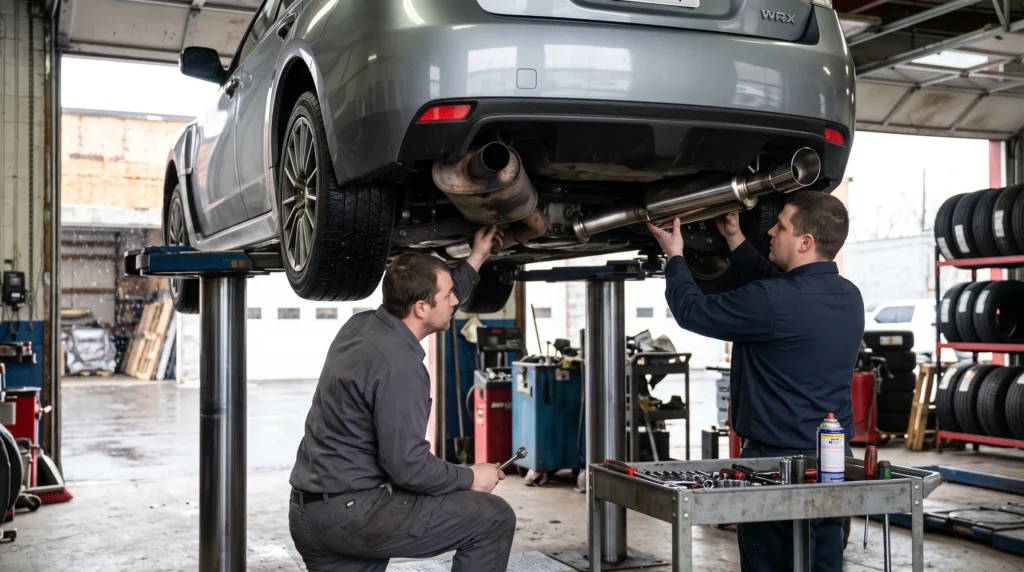
When contacting the shop, describe the sound or symptom you have noticed.
If the check engine light is on, mention that too.
Choosing between repair and upgrade begins with finding out what is wrong with the current system.
A small leak may only need a targeted repair.
A rusted muffler connected to weak pipes may call for broader replacement.
A healthy system may not need repair at all if your goal is simply changing appearance.
If you want an exhaust upgrade, New York noise rules and federal emissions requirements should be part of the plan before parts are selected.
Call Notorious Auto Protection at (315) 552-4441 to discuss your vehicle.
You can also visit our contact page to request an appointment.
When you reach out, provide:
Our Syracuse, NY team can inspect the system and discuss the repair or upgrade path that fits the vehicle.
A muffler may need attention if the vehicle becomes louder, develops a rattle, shows rust holes, or leaks around the muffler body or connections. The surrounding exhaust should also be checked because rust can affect the pipes and flanges next to the muffler.
Repair restores a worn or damaged system. An upgrade changes part of the exhaust for a different sound, appearance, or layout. If a worn component already needs replacement, you can ask whether a compliant upgrade makes sense instead of a factory-style replacement.
New York VTL §375(31) restricts modifications that increase exhaust noise above the system originally installed on the vehicle and requires an adequate muffler in operation. Ask about current state requirements before choosing an exhaust designed mainly to increase sound.
It can. New York DMV inspection regulations call for rejection when exhaust gases leak at listed points such as manifold connections, muffler connections, exhaust pipe, or tailpipe.
Required catalytic converters are emissions-control equipment. Federal EPA rules prohibit tampering with emissions systems, including replacing a required converter with a bypass pipe. A failed converter should be handled through a compliant replacement or repair path.
A cat-back system generally replaces more of the exhaust behind the catalytic converter. An axle-back system usually changes the rear section around or behind the axle, often including the muffler and tips. Exact layouts vary by vehicle.
Call Notorious Auto Protection at (315) 552-4441 or visit our contact page. Tell us your vehicle’s year, make, model, symptoms, visible rust, warning lights, and whether you are interested in repair or upgrade work.
Question about the service you're choosing, or simply ready to book? Contact us today to get started
Explore the many services we offer by clicking the boxes below