Do starlight headliners damage your car’s interior? A properly installed starlight headliner should not damage your vehicle’s upholstery, trim, wiring, or other interior parts. The work does involve accessing the factory headliner and placing many small fiber-optic strands through it, so the skill and care used during installation matter.
At Notorious Auto Protection in Syracuse, NY, our starlight headliner installation service is designed to add the star-filled appearance without damaging the vehicle’s interior. Our team works around the existing headliner, trim, factory lighting, wiring, and roof-area components while installing the fiber-optic system.
The bigger concern is not whether a starlight headliner automatically damages a car. It is whether the installation is performed correctly. Here is what vehicle owners should know before scheduling the work.
A starlight headliner does require physical work to the headliner because each visible star needs a small fiber-optic strand placed through the material.
That does not mean the finished headliner should look damaged.
When the fibers are properly positioned and trimmed, the visible side of the ceiling should look clean when the system is off. Once the lighting is switched on, the fiber points become visible as stars.
Notorious Auto Protection states that its technicians use careful placement methods intended to prevent damage to vehicle upholstery during starlight headliner installation.
The distinction is between controlled installation work and unwanted damage.
Creating the tiny openings needed for fibers is part of the installation. A torn headliner, broken trim, loose panel, exposed wiring, large holes, stains, or permanent creases are not normal goals of the job.
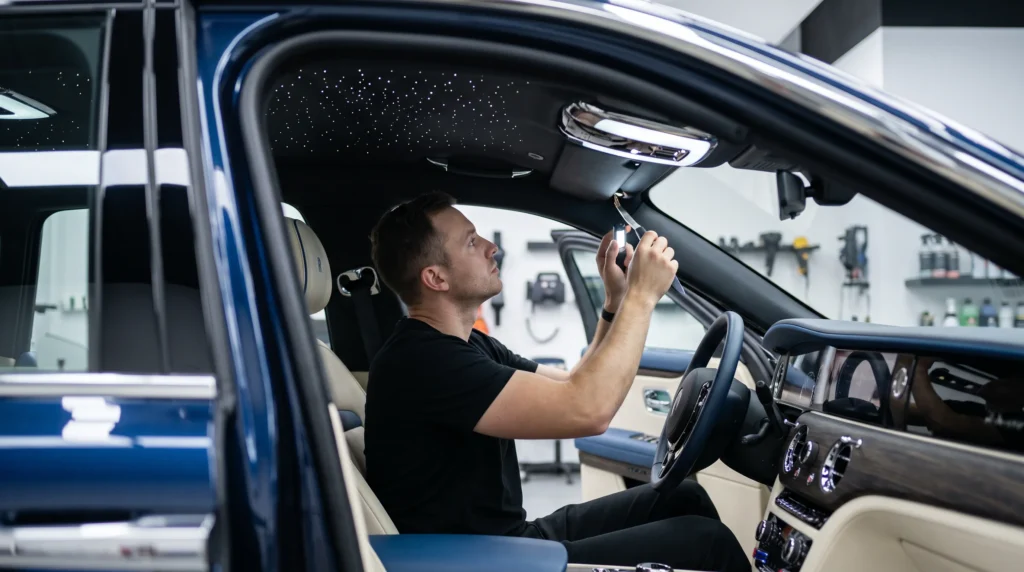
Here’s what matters: the headliner needs to be handled as an interior finish panel, not simply as a piece of material that holds lights.
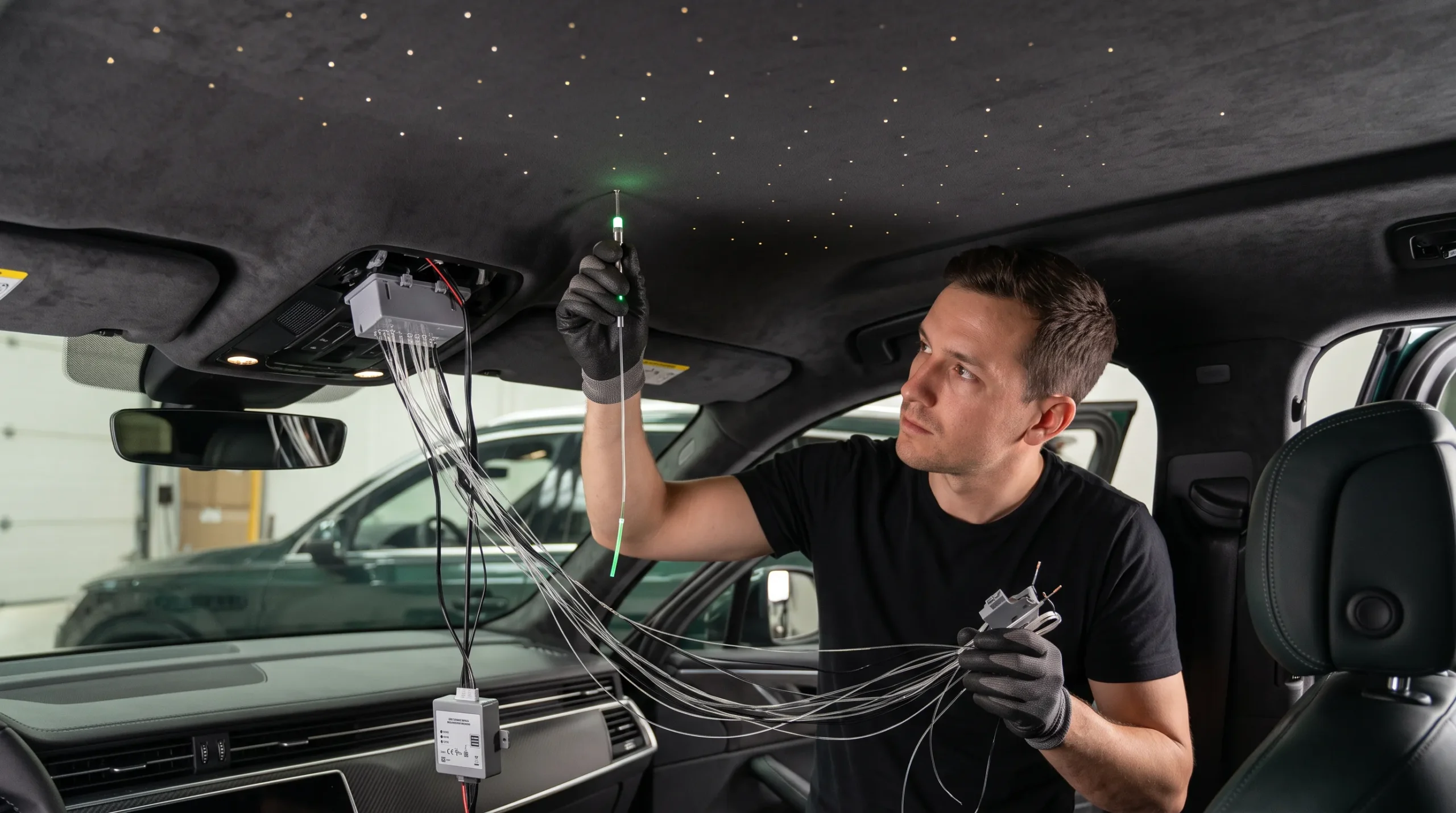
A starlight headliner installation often requires access to the back side of the vehicle’s roof liner.
The exact process depends on the vehicle. Some headliners can be lowered enough to work on them. Other vehicles may call for more removal so the installer can reach the full surface.
Once accessible, the installer can plan where the stars will appear.
The process may involve:
Industry publication THE SHOP notes that aftermarket starlight installation involves mapping the removed headliner while accounting for factory modules and original roof lighting.
That planning is one reason the job should not be treated as simply poking hundreds of holes into a ceiling.
Headliner removal can cause problems if it is handled poorly.
Vehicle headliners are often large, thin interior pieces. They can be awkward to move through a door or around seats and interior trim.
Possible problems from poor handling can include:
The risk can vary from one vehicle to another.
A small coupe may have limited space for moving a headliner. A large SUV may have a bigger panel that takes more care to support while it is being handled.
The age of the vehicle matters too. Older headliners may already have weak adhesive, brittle backing, sagging fabric, or worn trim pieces.
A careful installer looks at the condition of the interior before starting the starlight headliner project.
The star lights themselves are installed in the headliner, but accessing that area can require work around other interior pieces.
Depending on the vehicle, that may include:
Many of these pieces use clips or hidden fasteners.
Pulling them incorrectly can break a clip, mark a panel, or leave the trim sitting differently when the vehicle is put back together.
This is another reason the answer to do starlight headliners damage your car’s interior depends heavily on the installation process.
A finished job should not leave loose trim or obvious signs that interior panels were removed.
Modern vehicle roofs can contain much more than a dome light.
Depending on the make and model, equipment near the roof may include:
A starlight headliner needs its own lighting equipment, so the installer has to plan where the fiber bundles, light source, and wiring will sit.
The new components should not be placed carelessly across existing factory equipment.
The real question is what is hidden above the headliner in your particular vehicle.
That is why providing the year, make, and model before scheduling helps the shop understand what type of roof and cabin it will be working with.
Side curtain airbags deserve close attention during any work around a vehicle’s roof liner and pillars.
The National Highway Traffic Safety Administration explains that federal law prohibits certain vehicle businesses, including motor vehicle repair businesses, from knowingly making safety equipment installed to comply with federal standards inoperative.
NHTSA has also discussed side curtain airbags that run through roof areas of vehicles.
This does not mean a starlight headliner cannot be installed in vehicles with curtain airbags.
It means the airbag location and deployment area need to be treated properly when nearby trim or headliner sections are being accessed.
What this means for the vehicle owner is straightforward: roof work involves more than appearance.
The installer needs to know what sits behind the visible interior panels before routing fibers, wiring, or other lighting components.
Fiber-optic strands create the individual points of light in a starlight headliner.
The fiber itself carries light from a separate lighting source to the visible point in the ceiling. The headliner does not need a separate bulb mounted at every star location.
That is one reason fiber optics work well for this type of interior lighting.
Each strand still needs a carefully placed opening.
If the openings are oversized, poorly spaced, or made without considering the material, the finished surface may not look clean.
Proper fiber placement should leave small, controlled light points rather than obvious holes.
Star density also needs planning.
Hundreds of fibers spread across a roof create a different installation than a small number of lights concentrated in one section.
Notorious Auto Protection offers different star counts, patterns, colors, brightness settings, twinkle effects, and shooting-star choices through its starlight headliner service.
A properly installed starlight headliner should not be expected to create a sagging ceiling simply because fiber-optic lights were added.
Sagging can already be present before the job begins, especially in older vehicles where the original headliner material or adhesive has aged.
That is why the existing condition of the ceiling matters.
If the fabric is already separating from its backing, adding a lighting system does not repair the underlying headliner problem.
The catch is that installing fibers into weak or deteriorated material may not give the same result as working with a headliner that is in good condition.
Tell the shop if your headliner:
Photos can help the team understand the starting condition before your appointment.
Existing damage should be discussed before a starlight headliner installation begins.
A fiber-optic system changes the appearance of the ceiling, but it should not be viewed as a way to hide every headliner problem.
A damaged headliner may need separate attention.
Older vehicles can also have brittle clips or trim that has been removed several times before. Previous audio work, sunroof repairs, accident repairs, or interior changes may have altered what is behind the roof liner.
Here’s what matters: the installer needs to know the condition they are starting with.
If you know the roof liner has prior damage, mention it when you call.
A sunroof or panoramic roof changes the available area for a starlight headliner, but it does not automatically prevent installation.
The star pattern needs to work around the glass and the hardware associated with it.
That can include:
A panoramic roof can leave narrow sections of headliner along the edges or toward the front and rear of the cabin.
Those areas require a different pattern from a solid roof.
Now here’s the thing: less fabric does not always mean an easier job.
A smaller available surface can call for careful fiber placement so the design still looks balanced around the glass.
The vehicle should be evaluated based on its own roof configuration.
A DIY starlight headliner project may look straightforward in a short video.
The visible concept is simple: remove the headliner, create the star pattern, thread fibers through it, connect the lights, and reinstall everything.
The amount of work behind those steps can be much larger.
THE SHOP notes that starlight headliner work involves accounting for factory modules and original lighting while mapping the headliner. The publication also points out that reinstalling a headliner filled with many fiber strands can be challenging.
DIY problems can come from several areas:
A person can successfully install a starlight kit at home, but the risk is not limited to whether the lights turn on.
The interior still needs to look right after everything goes back together.
A finished starlight headliner should look like part of the interior rather than a project that was added without much care.
Warning signs after poor installation may include:
Some star variation is intentional. A night-sky pattern does not need every point placed in a perfect grid.
There is still a difference between intentionally varied placement and a ceiling that looks unfinished.
Notorious Auto Protection states that its team uses careful fiber placement intended to install the system without damaging the vehicle’s upholstery.
Our starlight headliner service also allows vehicle owners to choose from different patterns, star placements, lighting effects, star counts, brightness settings, colors, and shooting-star effects.
The typical installation takes 1 to 2 days depending on the design.
Taking time with the project matters because the job involves both the visible star pattern and the parts behind it.
The headliner needs to be accessed, fibers need to be positioned, lighting hardware needs a suitable location, and the interior needs to be reassembled afterward.
Drivers considering more cabin lighting can also view our interior vehicle ambient lighting installation service.
If your cabin needs cleaning before or after the project, we also provide interior detailing.
Notorious Auto Protection provides starlight headliner installation in Syracuse, NY for cars, trucks, SUVs, luxury vehicles, daily drivers, and enthusiast vehicles.
Our shop is located at:
Notorious Auto Protection
6742 Pickard Dr
Syracuse, NY 13211
We serve vehicle owners from Syracuse, NY and nearby Central New York communities, including North Syracuse, NY, Cicero, NY, Clay, NY, Liverpool, NY, East Syracuse, NY, Baldwinsville, NY, Fayetteville, NY, and other listed service areas.
If you are concerned about whether a starlight headliner could damage your interior, talk with us about your vehicle before booking.
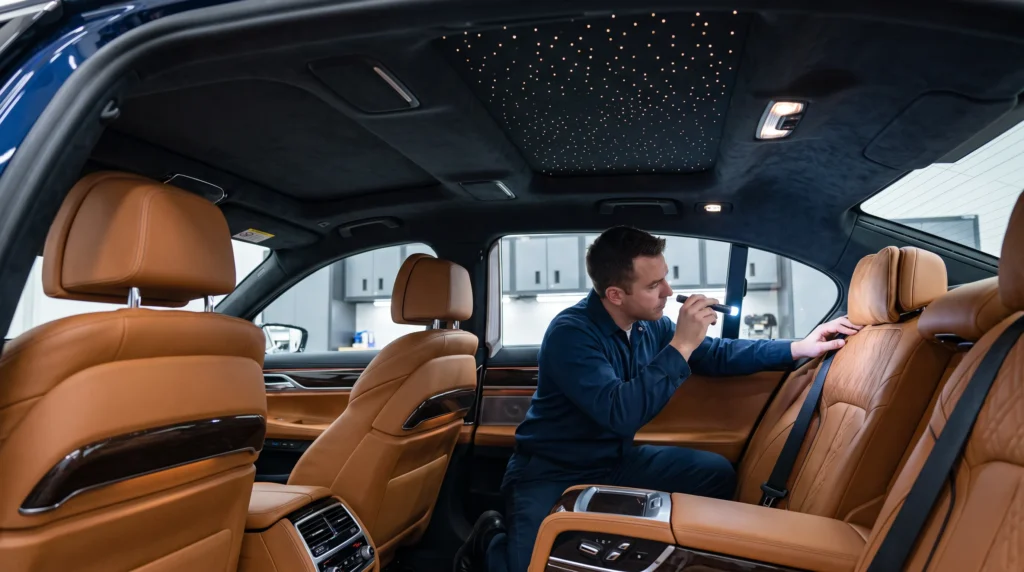
Tell us the year, make, model, roof style, current headliner condition, and the type of star pattern you want.
So, do starlight headliners damage your car’s interior?
A properly handled installation should not leave your vehicle with torn upholstery, damaged trim, exposed wires, or other unwanted interior problems. The job does require direct work with the headliner, and careful handling becomes especially relevant around roof trim, wiring, electronics, sunroofs, and curtain airbag areas.
Notorious Auto Protection offers starlight headliner installation from our Syracuse, NY shop.
Call (315) 552-4441 to discuss your vehicle with our team.
You can also visit our contact page to request an appointment.
Let us know your vehicle’s year, make, model, roof configuration, and the starlight design you have in mind.
A properly installed starlight headliner should not leave your vehicle with unwanted interior damage. The installation does require access to the headliner and placement of fiber-optic strands through the material, so careful removal, fiber placement, wiring, and reassembly matter.
Yes. Small openings are created for the individual fiber-optic strands that form the visible stars. These openings are part of the starlight design. Properly placed fibers should leave controlled light points rather than large visible holes.
Trim can be damaged if it is removed or reinstalled poorly. Many vehicles require access around pillar trim, visors, handles, dome lights, or overhead consoles during headliner work. Careful handling lowers the chance of broken clips, marks, or loose panels.
Some vehicles have side curtain airbags located near the roof rails and headliner. The system layout varies by vehicle. NHTSA rules restrict motor vehicle repair businesses from knowingly making federally required safety equipment inoperative, so roof-area safety components need to be accounted for during installation.
A properly installed fiber-optic system should not automatically cause a headliner to sag. Existing headliner condition matters. If the fabric or adhesive is already failing, tell the installer before the work begins.
Many vehicles with sunroofs or panoramic roofs may still be candidates. The lighting pattern must use the remaining headliner material and work around the glass, controls, shades, wiring, and roof hardware. Compatibility depends on the vehicle.
Call Notorious Auto Protection at (315) 552-4441 or visit our contact page. Tell us your vehicle’s year, make, model, headliner condition, roof type, and the type of star pattern you want.
Your vehicle is a significant investment, and ensuring its protection from the elements and everyday hazards is crucial to maintaining its value and appearance. In Syracuse, NY, where road conditions and weather can be unpredictable, combining STEK Paint Protection Film (PPF) and Window Tint offers the ultimate solution for safeguarding your car. At Notorious Auto Protection, we specialize in applying these premium products to provide your vehicle with maximum protection and enhanced aesthetics.
Product Brand: Auto Protection
Question about the service you're choosing, or simply ready to book? Contact us today to get started
Explore the many services we offer by clicking the boxes below