Rust proofing vs undercoating comes down to where corrosion protection is applied and what parts of the vehicle it is intended to protect. Rust proofing is a broader term that can include treatment inside seams, cavities, frame sections, and other corrosion-prone areas. Undercoating focuses on exposed surfaces underneath the vehicle, where road salt, water, slush, dirt, and grit can reach metal during Syracuse, NY winters.
At Notorious Auto Protection, we provide undercoating and rust protection from our Syracuse, NY shop using Waxoyl corrosion-protection products. For drivers in Central New York, understanding rust proofing vs undercoating makes it easier to know what is being treated and why more than one type of corrosion protection may be used on the same vehicle.
New York is listed as a Salt Belt state in automotive corrosion service documents filed with the National Highway Traffic Safety Administration. The New York State Thruway Authority also uses rock salt and anti-icing materials during winter operations throughout its Syracuse Division.
That makes corrosion protection worth thinking about before several winters of road-salt exposure build up underneath your car, truck, or SUV.
The easiest way to understand rust proofing vs undercoating is to look at where each treatment goes.
Rust proofing can refer to corrosion treatment applied to areas such as:
These places may not receive direct impacts from the road, but moisture can still enter and remain inside them.
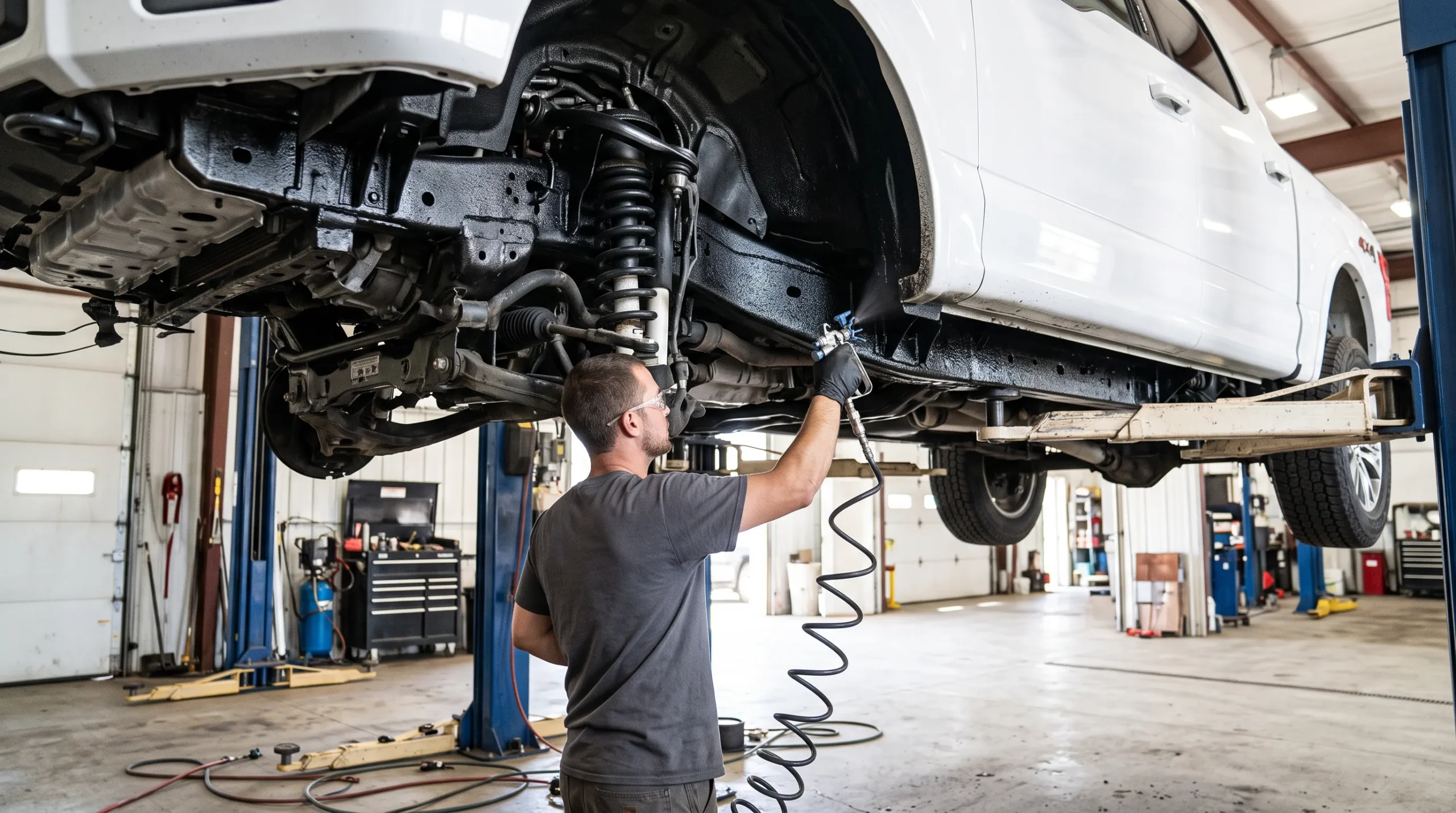
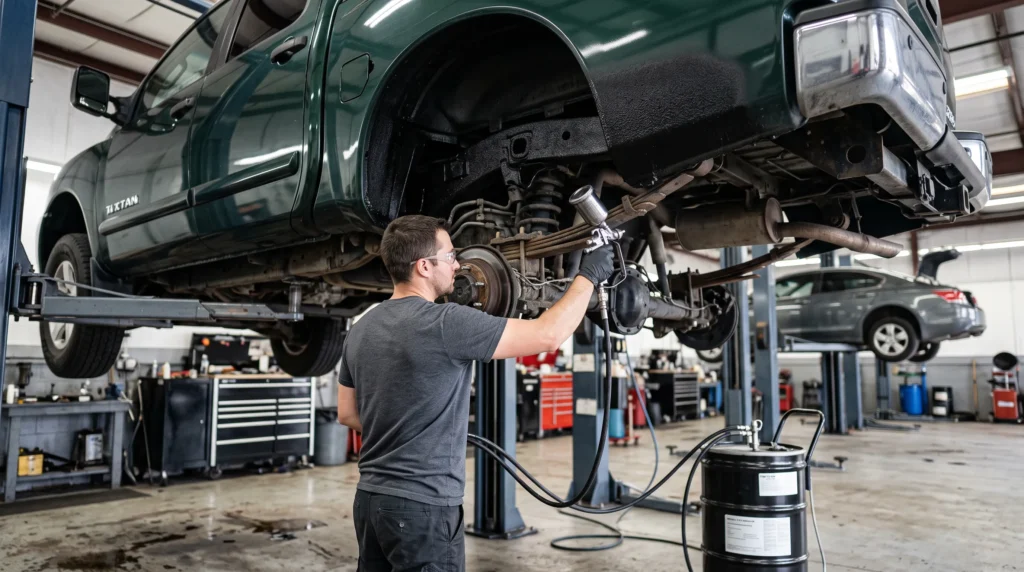
Undercoating is applied to suitable exterior surfaces beneath the vehicle.
Those areas can include portions of:
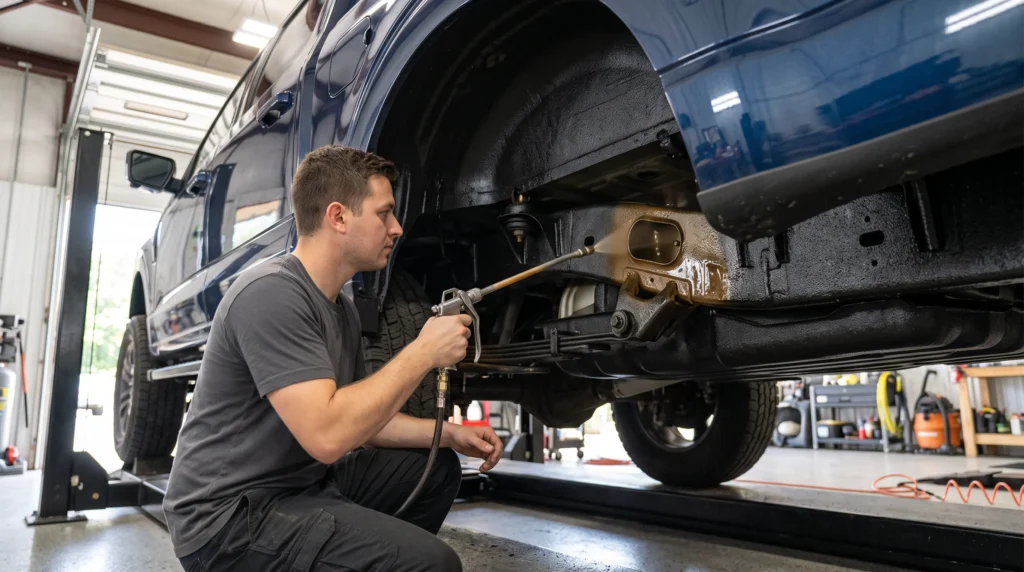
Undercoating creates a barrier between treated surfaces and material coming from the road.
A vehicle may receive both types of treatment because internal cavities and exposed underbody sections face different conditions.
Rust proofing is a general term for treatments intended to slow corrosion on vehicle metal.
It can involve wax-based corrosion products designed to reach areas that ordinary exterior coatings cannot easily cover.
Waxoyl uses a two-part approach to corrosion protection.
Its 120-4 product is intended for vehicle cavities. Waxoyl says the material can enter seams and enclosed areas through existing openings and drain holes.
Its Hardwax products are intended for exposed underbody surfaces.
This shows why the rust proofing vs undercoating distinction matters.
If someone says your vehicle is being “rust proofed,” ask which areas are actually receiving treatment.
A service focused only on the visible underside is not necessarily treating internal cavities.
Undercoating is a protective material applied underneath the vehicle.
The underside regularly encounters material coming from the road, including:
Waxoyl describes its Hardwax product as a flexible, wax-based coating intended to keep moisture and other outside material away from treated metal.
Unlike a hard plastic shell, a wax-based coating can remain flexible.
Different undercoating products behave differently, so it helps to know exactly what a shop is applying.
At Notorious Auto Protection, our undercoating service uses Waxoyl products for vehicle corrosion protection in Syracuse, NY.
Rust can begin in places that are difficult to see during a normal walk-around.
Vehicle bodies contain:
Moisture can reach those locations.
Waxoyl’s cavity-treatment system is designed to enter enclosed spaces through existing access points and coat internal surfaces.
That makes cavity treatment different from spraying the exposed underside.
Manufacturer corrosion programs show the same distinction.
A Hyundai corrosion-prevention campaign filed with NHTSA called for cavity wax on internal surfaces and undercoating spray on exterior underbody surfaces.
That is a useful real-world illustration of rust proofing vs undercoating.
They can be separate steps within the same corrosion-prevention plan.
Undercoating focuses on exposed areas beneath the vehicle.
Depending on the vehicle, suitable areas may include portions of:
Not every component underneath a vehicle should receive coating.
Parts around high heat, moving assemblies, braking components, exhaust pieces, and other excluded areas need to be handled correctly.
Modern cars and SUVs can also have large plastic underbody panels.
Those covers can affect access to metal surfaces and change how the treatment is planned.
The vehicle should be inspected before application rather than sprayed without checking what is underneath.
Road salt is not the only source of moisture around a vehicle.
Water can enter seams and enclosed areas during rain, snow, washing, and ordinary road use.
If moisture stays against metal inside a cavity, corrosion can begin where you may not notice it from outside.
Waxoyl states that its cavity-treatment material is designed to penetrate seams and displace moisture.
This is one reason a full discussion about rust proofing vs undercoating should include cavities.
Underbody coating can protect exposed exterior metal while cavity wax reaches spaces the exterior coating cannot.
Ask what your service includes rather than assuming the two treatments are identical.
Waxoyl Hardwax forms a wax-based coating over suitable metal surfaces.
The manufacturer states that its Hardwax products are designed to displace moisture and form a flexible corrosion barrier.
Waxoyl currently offers different Hardwax formulations.
Waxoyl describes Hardwax Plus as a lighter, more penetrating coating that can be used on vehicles with some existing surface rust.
The manufacturer says this version does not fully dry and may need more frequent touch-ups.
Waxoyl describes Hardwax 21 as a harder-wearing treatment intended for relatively new or rust-free vehicles in harsh environments.
It cures to a tack-free finish and is designed to remain in place longer between touch-ups.
The condition of the vehicle can influence which product makes sense.
That is another reason inspection comes before deciding how to handle rust proofing vs undercoating.
Syracuse, NY sits in an area where winter road treatment is part of regular vehicle use.
The New York State Thruway Authority has four winter maintenance divisions, including a Syracuse Division.
The Authority uses plow trucks to remove snow and apply salt and other anti-icing materials.
Its winter maintenance information identifies rock salt as a standard part of snow and ice operations.
Vehicles traveling around Syracuse, NY may encounter treated roads repeatedly throughout winter.
Local drivers may travel on:
Salt and moisture can collect underneath a vehicle after repeated winter travel.
New York also appears on the Salt Belt state list in vehicle corrosion service documentation filed with NHTSA.
For owners comparing rust proofing vs undercoating, Syracuse, NY is a location where both treatments are worth understanding.
Road salt can speed corrosion when moisture and exposed metal are present.
Salt helps the electrochemical corrosion process take place more readily.
Factory finishes already protect much of a vehicle.
Problems can develop when protective finishes are:
Metal can then have more direct contact with moisture and road salt.
Automakers have issued corrosion campaigns for some vehicles operated in Salt Belt areas because of this type of exposure.
The goal of rust protection is not to claim that a vehicle will never rust.
The goal is to reduce exposure on treated surfaces and slow the corrosion process.
Should a new vehicle receive corrosion protection?
That depends on the owner, vehicle, factory treatment, and expected use.
New vehicles already come with factory corrosion protection.
They may use:
A new vehicle in Syracuse, NY can still encounter salt during its first winter.
Some owners choose to add underbody and cavity treatment before years of exposure build up.
Waxoyl Hardwax 21 is designed for newer or rust-free vehicles used in harsh conditions.
If you plan to keep a truck, SUV, or car for many years, treating a cleaner underbody early may be easier than waiting until corrosion has already started.
A vehicle does not always need to be completely rust-free before treatment.
Light surface rust may still allow certain corrosion products to be applied after the condition is checked.
Waxoyl describes Hardwax Plus as suitable for vehicles with some existing surface rust.
That does not mean every rusty vehicle should simply be sprayed.
There is a large difference between:
A vehicle with more advanced corrosion needs proper inspection and repair.
Undercoating is not a substitute for replacing damaged metal or unsafe components.
A coating should not be used simply to cover up a corrosion problem.
That can make it harder to see what is happening underneath.
Before undercoating an older vehicle, the installer should be able to view the condition of the areas being treated.
Heavy loose rust, dirt, damaged coating, and other buildup can interfere with the treatment.
If structural corrosion is present, the damaged metal needs attention before a protective coating is treated as the next step.
When comparing shops, ask how they handle existing rust.
A useful rust proofing vs undercoating conversation should include what the installer will do if the underside is not ready for treatment.
Surface preparation matters before corrosion-protection products are applied.
Depending on the vehicle, preparation may include:
Applying fresh material over a heavily contaminated underside does not give you the same starting point as treating a clean surface.
If the vehicle has old aftermarket undercoating, mention it when scheduling.
The existing product may affect how new treatment should be handled.
No.
Rust proofing and undercoating do not mean winter cleaning can stop.
Manufacturer corrosion guidance for Salt Belt vehicles recommends washing the undercarriage during snowy and salty conditions.
Winter washing helps remove salt and road residue from:
A coated vehicle can still collect grime.
Think of undercoating as a barrier on treated surfaces, not a replacement for cleaning.
Ask the installer how they want the coated underside washed and whether there are any restrictions during the first days after application.
Trucks can have large exposed underbody structures.
Depending on the truck, that may include:
A truck used throughout a Central New York winter can receive plenty of road spray underneath.
The same is true for trucks used on:
Owners with lifted trucks should mention suspension changes, skid plates, running boards, and other modifications before treatment.
The installer needs to see which areas are accessible.
SUV owners may think there is less exposed metal underneath because many newer SUVs have plastic underbody covers.
Those panels do not mean corrosion protection is irrelevant.
Behind the covers can be:
SUVs used year-round around Syracuse, NY still encounter slush and treated roads.
Families who plan to keep an SUV for many winters may want the underside checked early rather than waiting until corrosion becomes easy to see.
The layout will vary by vehicle, so treatment should be based on what is actually underneath.
Daily commuters can build up winter exposure quickly.
A vehicle traveling between Syracuse, NY and North Syracuse, NY five days a week may encounter treated roads every morning and evening during a storm cycle.
The same applies to commuters from East Syracuse, NY, Liverpool, NY, Cicero, NY, Clay, NY, and Fayetteville, NY.
Each winter trip can put more salty water and road grime underneath the vehicle.
Drivers who keep a car for several years may want to think about corrosion protection before that exposure becomes long term.
Undercoating can wear.
Areas exposed to direct tire spray, gravel, sand, or road debris can see more abrasion than protected sections farther inside the chassis.
Waxoyl recommends checking its coating and touching up areas where the material has worn away.
Inspection timing can depend on:
A work truck may need closer attention than a garage-kept vehicle that sees limited winter use.
The coating should not be treated as something that can never be damaged.
Rust protection, paint protection film, and ceramic coating protect different areas.
Rust proofing can reach internal seams, cavities, and other corrosion-prone areas.
Undercoating focuses on suitable exterior surfaces beneath the vehicle.
Paint protection film is applied over painted exterior panels. It can help protect covered paint from rock chips, scratches, scuffs, and road debris.
Ceramic coating is applied to suitable exterior surfaces and can change water behavior while helping with cleaning and surface contamination.
A vehicle can use more than one type of protection because each service addresses a different part of the vehicle.
Someone preparing a new truck for Syracuse, NY winters might choose PPF for painted impact areas and Waxoyl treatment underneath.
Notorious Auto Protection provides rust proofing and undercoating in Syracuse, NY for cars, trucks, SUVs, daily commuters, and work vehicles.
Our shop is located at:
Notorious Auto Protection
6742 Pickard Dr
Syracuse, NY 13211
Our undercoating service uses Waxoyl corrosion-protection products for suitable underbody areas.
We work with owners from Syracuse, NY and nearby Central New York communities, including:
If you are unsure whether your vehicle needs cavity treatment, underbody coating, or an inspection first, tell us the age and condition of the vehicle when you contact the shop.
The rust proofing vs undercoating difference becomes easier to understand once you separate internal corrosion protection from exposed underbody protection.
Rust proofing can include treatment inside cavities and seams.
Undercoating creates a protective barrier over suitable exterior surfaces underneath the vehicle.
Some corrosion-protection plans use both.
Which approach makes sense depends on:
Call Notorious Auto Protection at (315) 552-4441 to discuss your vehicle.
You can also use our contact page to request an appointment.
Tell us the year, make, model, mileage, winter use, and whether you can already see rust underneath.
Our Syracuse, NY team can discuss the condition of the vehicle and the available Waxoyl underbody protection options.
Rust proofing vs undercoating mainly differs in where the treatment is applied. Rust proofing can include enclosed cavities, seams, and internal metal areas. Undercoating focuses on exposed surfaces underneath the vehicle.
It can. Internal cavities and exposed underbody surfaces face different forms of moisture and road exposure. Some corrosion-protection procedures use cavity wax internally and undercoating on exterior underbody metal.
Undercoating can help reduce direct exposure between treated metal and winter road materials. Syracuse, NY roads regularly receive salt and anti-icing materials during winter maintenance, so underbody corrosion protection can be worth considering.
Some products can be used where light surface rust is present, but the condition should be checked first. Heavy scaling, rust holes, structural corrosion, or weakened parts require proper repair rather than simply being covered.
Some owners choose corrosion treatment early because the underbody may still be relatively clean and rust-free. Waxoyl offers Hardwax 21 for relatively new or rust-free vehicles used in harsh environments. The vehicle should be inspected before treatment.
No. Winter washing still helps remove road salt, slush, dirt, and grit from treated and untreated areas. Corrosion-prevention guidance for Salt Belt vehicles recommends underbody cleaning during winter conditions.
Call Notorious Auto Protection at (315) 552-4441 or visit our contact page. Our shop at 6742 Pickard Dr in Syracuse, NY provides Waxoyl underbody corrosion protection for cars, trucks, SUVs, and other vehicles.

Your vehicle is a significant investment, and ensuring its protection from the elements and everyday hazards is crucial to maintaining its value and appearance. In Syracuse, NY, where road conditions and weather can be unpredictable, combining STEK Paint Protection Film (PPF) and Window Tint offers the ultimate solution for safeguarding your car. At Notorious Auto Protection, we specialize in applying these premium products to provide your vehicle with maximum protection and enhanced aesthetics.
Product Brand: Auto Protection
Question about the service you're choosing, or simply ready to book? Contact us today to get started
Explore the many services we offer by clicking the boxes below