Truck Lighting Upgrades in Central New York can add useful illumination around a pickup when factory headlights do not cover the areas you want to see. Ditch lights and LED pod lights are two popular choices for trucks used on trails, rural property, campsites, work areas, and other dark settings.
The terms can get confusing because a ditch light is often a pod light.
“Pod light” describes the compact light fixture. “Ditch light” usually describes how and where a pair of pods is mounted and aimed. Ditch lights commonly sit near the rear corners of the hood or A-pillars and point outward to illuminate areas beside the truck. Pod lights can be mounted in many other places, including bumpers, grilles, racks, and other suitable locations.
Beam pattern matters just as much as mounting position.
A narrow spot beam reaches farther ahead. A wide beam spreads light across a larger area closer to the truck. A combination pattern attempts to cover both distance and nearby areas.
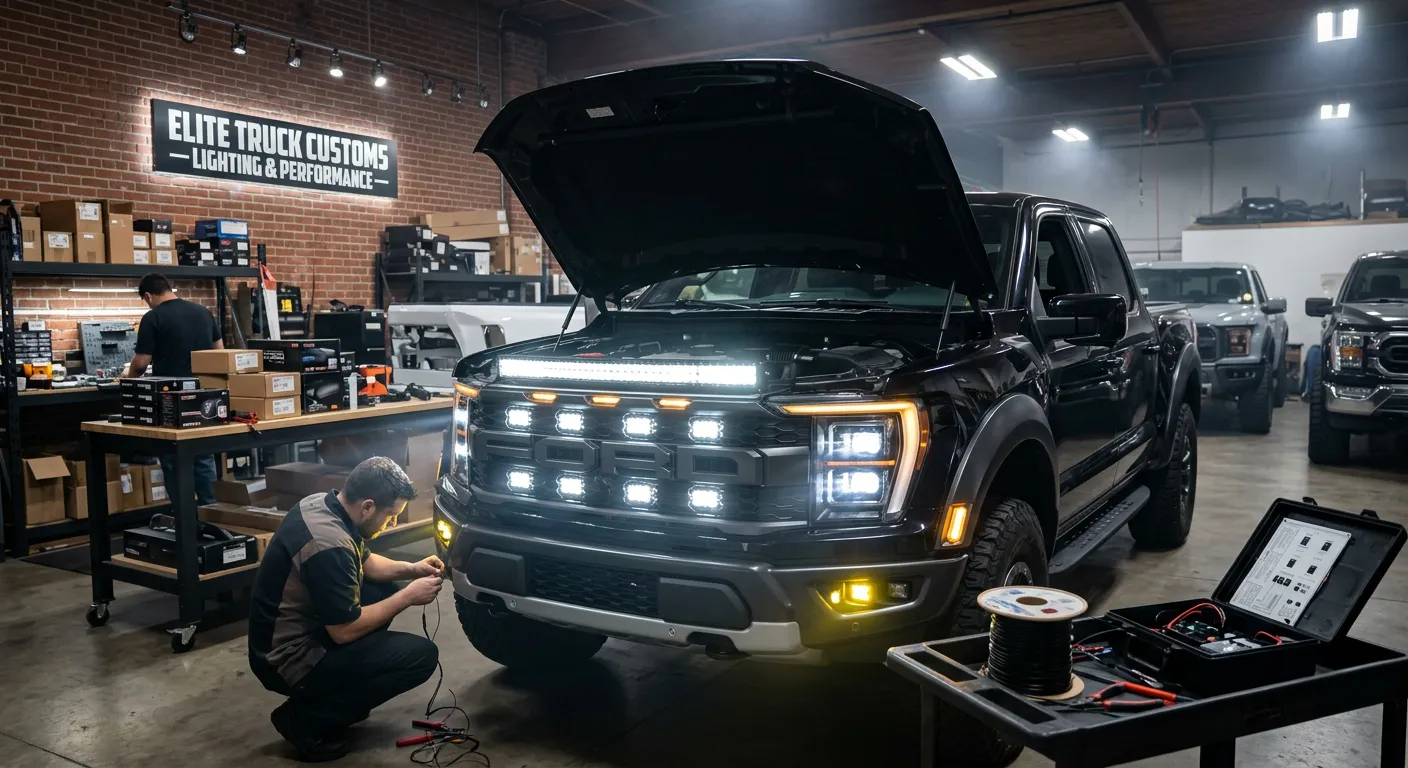
Notorious Auto Protection provides truck lighting and light bar installation in Syracuse, NY for truck owners throughout Central New York.
Here is what to know before choosing your lights.
Ditch lights are auxiliary lights mounted high enough and far enough outward to illuminate areas that factory headlights may not cover well.
On many trucks, a ditch-light setup uses two compact LED pods mounted near the hood hinges or lower A-pillar area.
Rather than pointing both lights directly forward like headlights, they can be angled outward.
That makes them useful for seeing areas such as:
Mounting location does not determine beam pattern by itself.
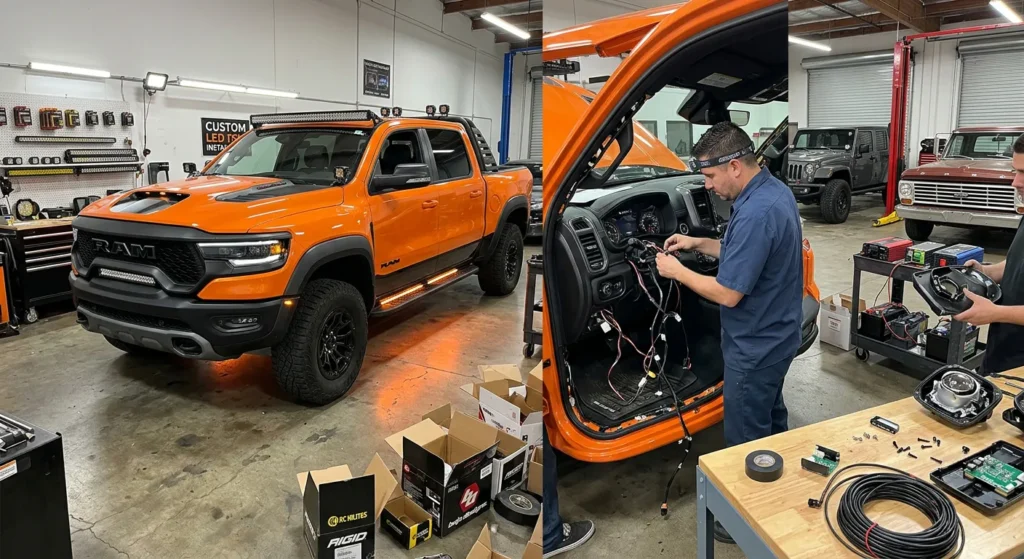
You can put different pod-light patterns on an A-pillar bracket.
The way those lights perform depends on both the optics and how they are aimed.
A pod light is a compact auxiliary-light housing.
The name describes the physical format rather than one mounting position.
Pod lights can be installed in pairs or larger groups.
Depending on the truck and mounting hardware, possible locations include:
Baja Designs’ current Squadron 2.0 Sport is one illustration of a modern pod format. It is offered with Spot, Driving/Combo, Wide Cornering, and Work/Scene optics.
That means two lights with nearly identical housings can cast very different beams.
Choose the beam before focusing on appearance.
Ditch lights are usually pod lights, but pod lights are not always ditch lights.
Think of it this way:
Pod light = the fixture
Ditch light = a use and mounting style
A pair of pods mounted near the hood and aimed outward can serve as ditch lights.
Take the same type of pods and mount them in an aftermarket bumper with forward-facing optics, and they are now serving a different purpose.
This distinction helps when shopping for truck lighting.
Do not search only for “ditch lights.”
You may need three separate components:
Check compatibility between all three.
A common ditch-light location is near the rear corners of the hood.
Vehicle-specific brackets may attach around factory hood-hinge or cowl mounting points.
This position has several advantages.
The lights sit high enough to cast outward without being blocked by the front bumper.
The position also allows each light to cover one side of the truck.
Mounting near the windshield creates its own concerns.
Check for:
Aim matters.
A very bright pod pointed across the hood can produce distracting reflections.
The goal is usable light where you want it, not light bouncing back toward the cab.
Pod lights give truck owners more mounting choices.
These can function as ditch lights when aimed outward.
Pods mounted in or on a bumper can point forward and supplement lighting in off-road settings.
Some aftermarket bumpers include dedicated openings or tabs for auxiliary lights.
A grille can provide a relatively discreet location for compact forward-facing lights when the truck and bracket system allow it.
Truck racks can hold forward, side, or rear-facing lighting.
Rear-facing lights require extra care because a powerful white lamp can interfere with other road users if used improperly.
Choose the location based on where you need illumination.
Beam pattern determines where the light goes.
This is one of the biggest choices in a truck-lighting project.
A spot beam concentrates light into a narrower area.
Baja Designs describes its Spot optic as a long, narrow pattern intended to send light farther down a trail or road.
A spot pattern makes more sense when distance matters more than wide nearby coverage.
A wide pattern spreads light horizontally.
Baja Designs’ Wide Cornering pattern uses a flattened horizontal beam intended for cornering and conditions such as dust or fog.
This type of pattern can suit ditch-light use because you often want to illuminate the sides of the truck rather than send another narrow beam straight ahead.
A combination pattern mixes near and distant coverage.
Baja Designs describes its Driving/Combo optic as combining wide-cornering and spot optics.
This can suit truck owners who want a more mixed beam rather than a dedicated narrow or wide pattern.
A work or scene pattern spreads light across a broad nearby area.
Baja Designs describes its Work/Scene pattern as a 120-degree circular pattern and states that the pattern is not suitable for driving.
That type of beam can make more sense around a campsite or stationary work area.
Ditch lights usually need width more than long-distance reach.
The goal is often to see an area off to the side that the headlights do not cover.
A wide-cornering pattern can work well for that purpose.
A combination pattern can make sense if you want some forward reach along with side coverage.
A narrow spot pattern can still be used on an A-pillar mount, but it may not produce the broad side illumination many people expect from ditch lights.
Ask what you are trying to see.
If the answer is “the edge of the trail right beside the truck,” look at wider patterns.
If the answer is “farther down a dark trail,” a spot or combination pattern may be a better match.
Many auxiliary-light manufacturers offer clear and amber lens choices.
Baja Designs offers its current Squadron 2.0 Sport with clear and Baja Amber options.
Amber lighting is often chosen for conditions where airborne particles, snow, dust, or fog are concerns.
Clear white lighting gives a different appearance and color rendition.
Central New York truck owners may encounter:
Think about where the lights will actually be used.
Color alone does not determine whether a light works well.
Beam shape, mounting height, aim, output, and weather conditions all affect what you see.
More lumens are not always the answer.
A powerful light with the wrong beam can put a lot of light where you do not need it.
Baja Designs lists its current Squadron 2.0 Sport at 3,200 raw lumens and 30 watts per pod.
Its more powerful Squadron 2.0 Pro is listed at 5,921 raw lumens and 65 watts per pod.
That difference also changes electrical demand.
Two 30-watt pods consume less power than two 65-watt pods.
When planning several auxiliary lights, consider the total electrical load rather than looking at each light separately.
Your setup may include:
The wiring and switching system needs to suit the equipment connected to it.
Auxiliary lights need more than a positive and negative wire hanging from the battery.
A typical lighting circuit may include:
Some newer trucks have factory auxiliary switches or upfitter switches.
When compatible with the intended load and installation, these can provide a clean way to control added equipment.
Other trucks may use aftermarket switch panels.
Wire routing should avoid:
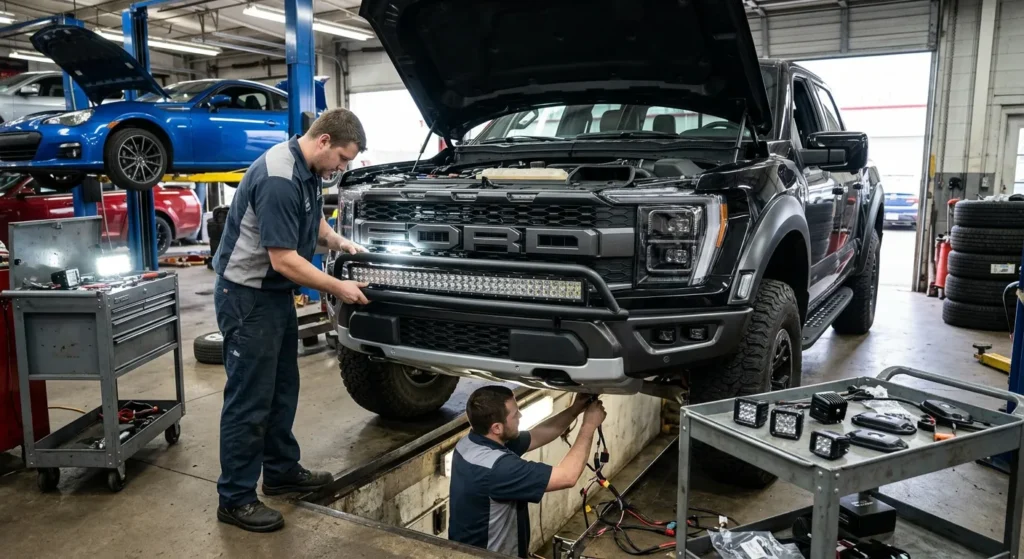
Secure the harness so vibration and movement do not leave wiring rubbing against metal.
The lighting manufacturer’s instructions should determine how the circuit is wired.
A relay can let a low-current switch control a higher-current lighting circuit.
A fuse protects the circuit when sized and installed correctly for the wiring and equipment.
Do not choose a larger fuse simply because a smaller fuse keeps opening.
That can hide an electrical problem rather than fix it.
If you add more lights later, revisit the wiring capacity.
A harness intended for one pair of small pods may not be suited to several higher-output lights.
Truck lighting mounted outside the cab needs to deal with weather.
In Central New York, that can include:
Look for a published ingress-protection rating on the lights you are considering.
Baja Designs lists its current Squadron 2.0 products with an IP69K rating.
The rating of the light housing is only one part of the setup.
Connections and wiring also need protection.
A weather-resistant pod paired with poorly protected electrical connections can still leave you with lighting trouble.
Mount connectors where they are protected when possible and follow the lighting manufacturer’s installation instructions.
A suspension lift changes the height and stance of a truck, but it does not automatically mean you need more powerful ditch lights.
The same principle applies to stock-height and lifted trucks.
Put light where you need to see.
A lifted truck may already have other off-road changes such as:
Notorious Auto Protection provides truck lift and suspension kit installation and off-road wheels and tires for owners building trucks around off-road use.
If several changes are planned, decide where the lighting will mount after the larger components have been selected.
That can prevent a bumper, rack, or other accessory from interfering with a light installed earlier.
An aftermarket bumper can provide mounting locations for compact LED pods.
This can produce a clean appearance because the light may sit within a purpose-built opening.
Before buying the lights, measure or verify:
A pod that physically fits the opening may still have the wrong beam for the job.
Forward bumper lighting and ditch lighting usually have different goals.
A bumper-mounted spot or combination beam can put light farther forward.
An outward-aimed ditch light can cover the sides.
Used together in an off-road setting, the two positions can cover different areas.
If you are planning both modifications, see our bumper installation service.
Pod lights and light bars can both add auxiliary illumination, but they package the LEDs differently.
Pods are compact.
That makes them easier to place in several locations.
A truck could have one pair at the A-pillars and another pair in the bumper.
A light bar puts many LEDs and optics into one longer housing.
Depending on the product, a bar can provide wide coverage, distance, or a combination of the two.
The choice does not need to be either/or.
Some off-road trucks use:
The problem comes when several lights all illuminate the same area while leaving another area dark.
Plan the beam coverage before adding fixtures.
Notorious Auto Protection provides light bar installation for trucks that need a bar as part of the lighting setup.
Ditch lights and rock lights cover different areas.
Ditch lights sit higher on the vehicle and can cast light outward or forward.
Rock lights usually sit underneath the truck or inside wheel wells.
Rock lights are aimed toward the ground around the tires and underbody.
This makes them useful for seeing:
Ditch lights help farther outward from the truck.
If you use your truck on dark trails, both types can serve different roles.
See our rock light installation service if you want ground lighting along with your forward and side-facing pods.
Auxiliary lighting needs extra thought when the truck is used on public roads in New York.
New York Vehicle and Traffic Law Section 375 states that motor-vehicle lamps must be arranged, adjusted, and operated to avoid dangerous glare or dazzle.
The same section addresses auxiliary front-facing lamps when approaching other traffic. When an approaching vehicle is within 500 feet, or when approaching a moving vehicle from behind within 200 feet, auxiliary front-facing lamps must be operated so dazzling light does not interfere with the other vehicle operator.
Section 375 also regulates lamp approval and colored or flashing vehicle lights.
Subdivision 41 states that lights affixed to or displayed on vehicles, other than lights otherwise required by law, generally may not display a color other than white unless a listed exception applies.
Those exceptions cover defined vehicle types and uses, including certain emergency and hazard vehicles.
For an ordinary truck, the ability to install an off-road pod does not mean every beam, color, aim, or lighting mode is suitable for public-road use.
Keep trail lighting and normal road lighting separate.
New York DMV inspection regulations cover required vehicle lighting and inspect lamps for mounting, condition, operation, and approved type where applicable.
An off-road lighting product should not be treated as a replacement for the truck’s required headlights.
Factory headlights still need to do their job.
Ditch lights and pod lights are supplemental equipment.
If your truck will be used on New York public roads, check the product’s intended use and current state rules before operating auxiliary lighting in traffic.
A brighter light is not automatically a better light.
Aim can matter just as much as output.
A powerful pod pointed too high can send light toward other people rather than the ground or trail.
A badly aimed A-pillar light can also reflect off:
Snow deserves attention in Central New York.
Bright light bouncing off falling or blowing snow can reduce what you can see rather than improve it.
A wide beam aimed at the right area may be more useful than a very powerful narrow beam in the wrong place.
Output is only part of the decision.
Beam pattern tells you where that output goes.
If your goal is a classic ditch-light setup, compare wide-cornering and combination patterns along with spot beams.
A hood-mounted bracket needs room for the hood to open and close without contacting the light or wiring.
High-mounted lights can reflect off the hood.
Check aim after dark.
Keep lighting wiring away from exhaust components and other high-temperature areas.
Follow the manufacturer’s fuse, relay, harness, and wiring instructions.
Several lighting circuits can add up.
Account for all planned accessories.
Auxiliary pods do not replace required road lighting.
New York regulates glare, lamp use, colors, and other lighting matters.
A trail-lighting setup should be controlled so it is not casually switched on around traffic.
Start by dividing the area around the truck into zones.
Ask where you need light.
A spot beam can send light farther down a dark trail.
A combination pattern can cover a mix of distances.
Wide ditch lights can fill areas beside the truck.
Rock lights can illuminate the ground around the tires.
Work or scene lights can illuminate a broad nearby area.
Baja Designs states that its Work/Scene pattern is intended for work lighting rather than driving.
This zone-based approach can prevent you from buying several lights that all perform the same job.
Notorious Auto Protection provides Truck Lighting Upgrades in Central New York from our Syracuse, NY shop.
You can find us at:
Notorious Auto Protection
6742 Pickard Dr
Syracuse, NY 13211
Our truck lighting service can be paired with other truck work, including:
Tell us what you want to see when the lights are switched on.
If you want illumination beside the truck, ditch lights with a wide beam may fit the job.
If you want more distance down a trail, look at spot or combination patterns.
If you need light around the tires, rock lights may make more sense.
Choosing by use makes it easier to select the mounting location and beam.
Truck Lighting Upgrades in Central New York should start with beam placement rather than the biggest lumen number on the box.
Ditch lights are usually compact pods mounted near the hood or A-pillars and aimed toward areas beside the truck.
Pod lights are the fixtures themselves. They can also be mounted in bumpers, grilles, racks, and other suitable locations.
Spot beams focus farther away.
Wide patterns spread light across nearby areas.
Combination optics mix both types of coverage.
For a Central New York truck, weather resistance, wiring protection, glare, snow, and road-use rules should also be part of the setup.
For truck lighting installation in Syracuse, NY, call Notorious Auto Protection at (315) 552-4441.
You can also visit our contact page to schedule an appointment.
Our hours are Monday through Saturday from 8 AM to 6 PM and Sunday from 8 AM to 5:30 PM.
A pod light is a compact auxiliary-light fixture. Ditch lights are usually a pair of pod lights mounted near the hood or A-pillars and aimed outward to illuminate areas beside the truck. The same pod can serve another purpose when mounted elsewhere.
A wide-cornering beam can suit ditch lights because it spreads illumination across a broad area near the sides of the truck. A combination beam can add some farther-reaching coverage. Baja Designs offers Spot, Driving/Combo, Wide Cornering, and Work/Scene patterns on its current Squadron 2.0 Sport pods.
The choice depends on the light, beam, aim, and conditions. Amber lenses are commonly offered for dust, fog, snow, and similar settings, while clear white lights provide a different color of illumination. Central New York truck owners should also consider glare from falling or blowing snow when aiming high-output lights.
Many aftermarket bumpers include openings or brackets for auxiliary lights. Check the opening size, pod dimensions, depth, wiring clearance, adjustment range, and beam pattern before buying the lights. Notorious Auto Protection provides both bumper installation and truck lighting.
No. Ditch lights are usually mounted near the hood or A-pillars and illuminate areas beside or ahead of the truck. Rock lights mount lower, often in wheel wells or underneath the vehicle, and illuminate the ground around the tires.
Use depends on the lamp, beam, aim, color, approval status, and how it is operated. New York Vehicle and Traffic Law Section 375 regulates glare, auxiliary front-facing lamps, lamp approval, and colored or flashing lights. Off-road lights should not automatically be treated as street-legal auxiliary lamps merely because they can be mounted on a truck.
Notorious Auto Protection provides truck lighting at 6742 Pickard Dr, Syracuse, NY 13211. We also install light bars, rock lights, and other truck accessories. Call (315) 552-4441 or use our contact page to schedule an appointment.
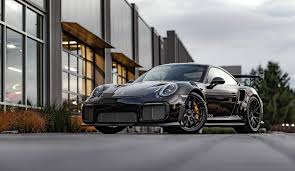
Your vehicle is a significant investment, and ensuring its protection from the elements and everyday hazards is crucial to maintaining its value and appearance. In Syracuse, NY, where road conditions and weather can be unpredictable, combining STEK Paint Protection Film (PPF) and Window Tint offers the ultimate solution for safeguarding your car. At Notorious Auto Protection, we specialize in applying these premium products to provide your vehicle with maximum protection and enhanced aesthetics.
Product Brand: Auto Protection
Question about the service you're choosing, or simply ready to book? Contact us today to get started
Explore the many services we offer by clicking the boxes below