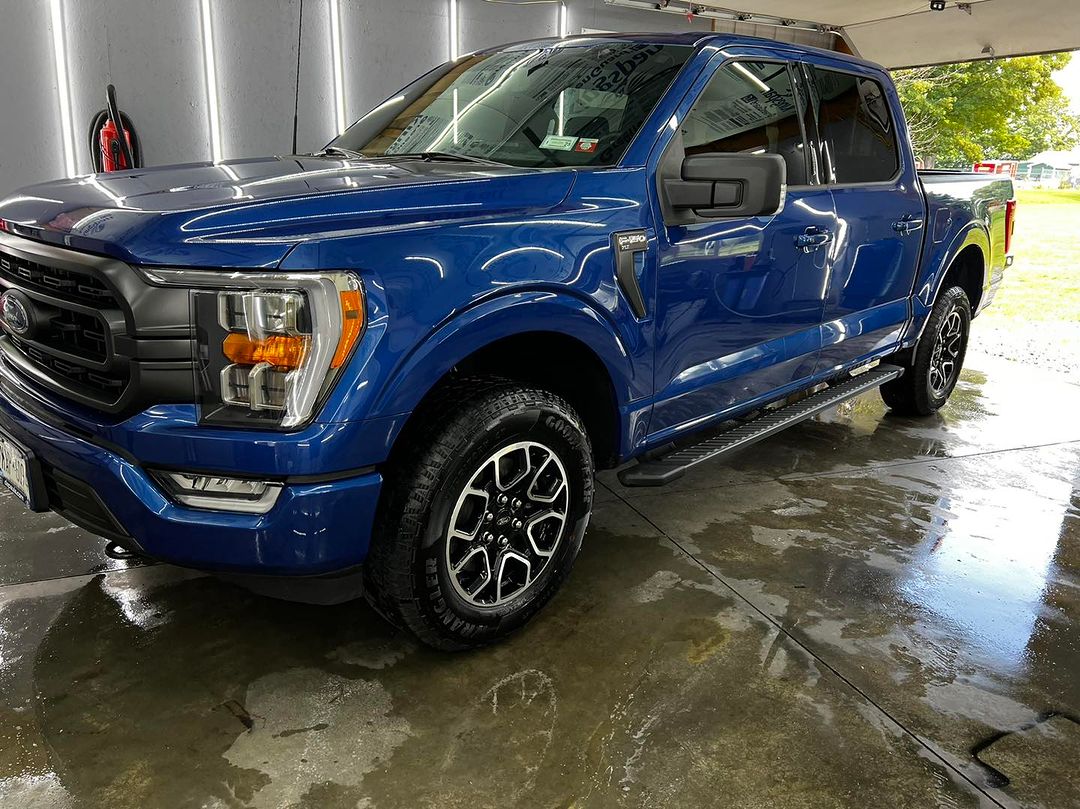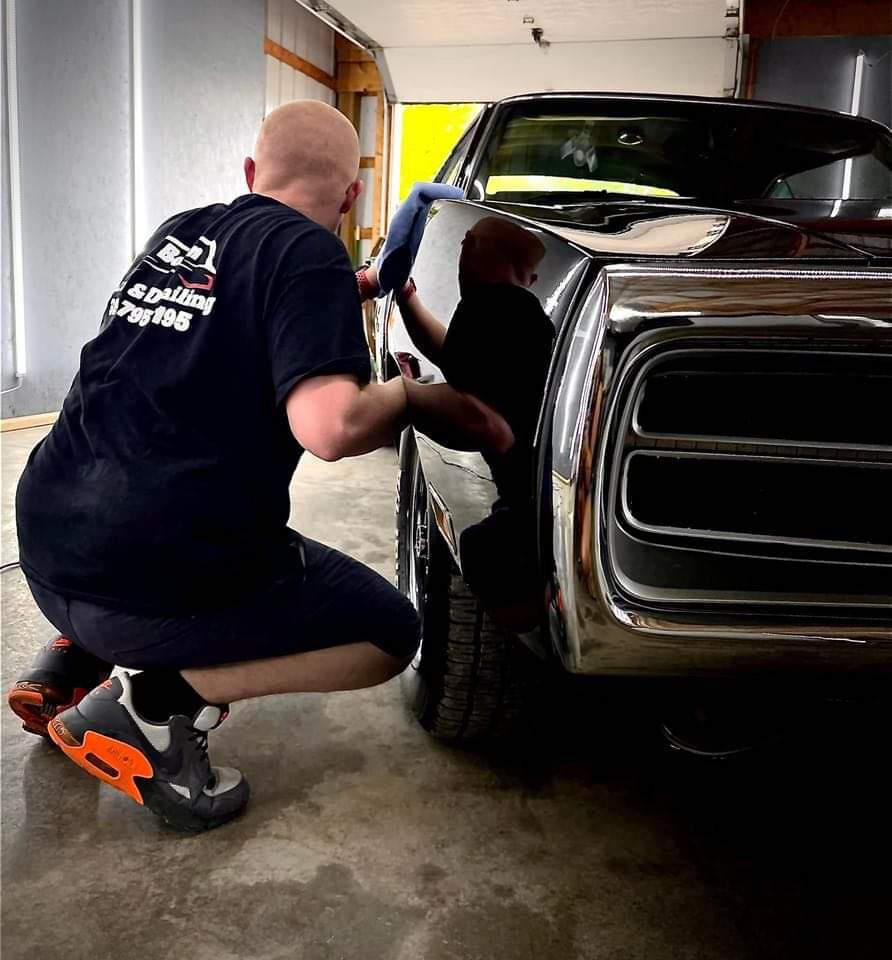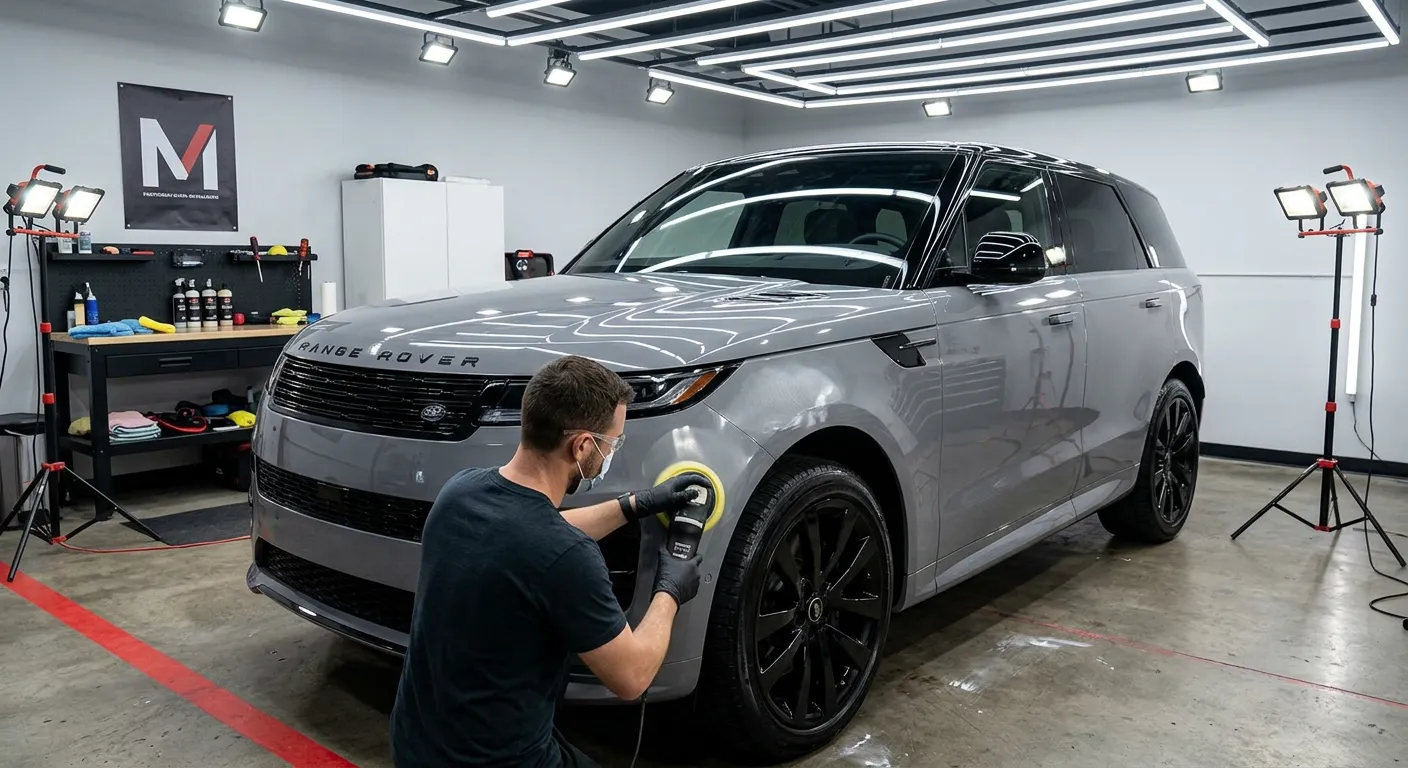
Paint Correction in Baldwinsville, NY can help restore gloss and clarity when swirl marks, light scratches, oxidation, water spots, and other surface defects make automotive paint look dull or hazy. Instead of covering these defects with a temporary product, paint correction uses controlled compounding and polishing processes to address defects within the paint surface.
Not every scratch can be polished away. Some defects are shallow enough for correction, while deeper damage may extend beyond the portion of paint that can be safely polished. The condition of the paint needs to be assessed before deciding how much correction makes sense.
At Notorious Auto Protection, we provide paint correction at our Syracuse, NY shop for Central New York vehicle owners, including drivers coming from Baldwinsville, NY.
If your paint looks good from a distance but reveals swirls, scratches, haze, or dull areas under direct light, here is what paint correction may be able to do.
Paint correction is a process used to address certain defects in an automotive paint finish through abrasive compounds, polishes, pads, and polishing equipment.
The process works on the paint surface rather than simply hiding defects.
3M describes automotive paint finishing as a series of stages that can include scratch refinement, compounding, machine polishing, and swirl removal. The amount of work needed depends on the severity of the paint defect.
Meguiar’s also makes correction compounds designed to address light to moderate scratches, swirl marks, oxidation, and other defects in factory paint.
The process can range from relatively light polishing to more involved correction.
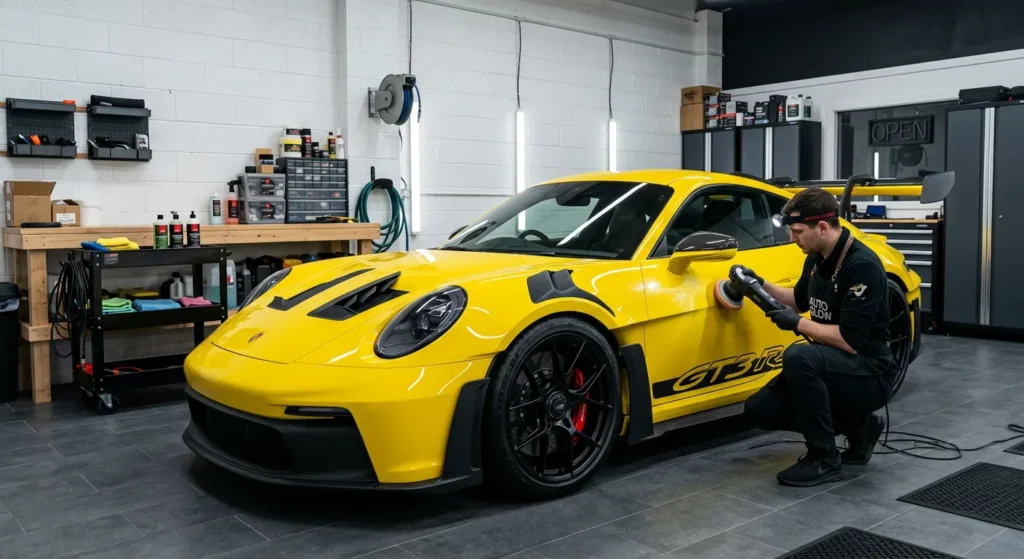
The right approach depends on what the paint needs.
Drivers considering Paint Correction in Baldwinsville, NY often start with one question:
Can my paint look better without repainting the vehicle?
For many surface defects, correction may improve the finish.
Common targets include:
3M states that its machine-polishing products can address minor surface defects such as small scratches, swirl marks, water spots, and light oxidation.
Meguiar’s offers products for defects ranging from light swirls and scratches to heavier swirls, oxidation, and acid-rain etching.
That does not mean every defect can be removed safely.
Depth matters.
Swirl marks are fine scratches that become easy to see when bright light hits the paint.
Dark paint can make them especially noticeable.
You may see circular-looking patterns around reflections from the sun, parking lot lights, or inspection lights.
Despite the name, the scratches do not always form perfect circles. The lighting and curved body panels can make groups of fine scratches appear as circular patterns.
Swirls and surface marring can develop when dirt or abrasive material moves across paint.
Possible sources include:
Even a newer vehicle can have visible paint defects.
Vehicle age alone does not tell you whether correction is worthwhile.
Many swirl marks can respond well to machine polishing.
3M states that its Finesse-it II Machine Polish is made to remove compound swirls and minor surface imperfections, including small scratches, swirl marks, and water spots.
Meguiar’s also makes compounds and polishes intended for swirl removal on automotive paint.
How much correction is possible depends on the depth and condition of the defects.
Light marring may respond to a polishing step.
More noticeable swirls may require a compound followed by finer polishing.
The objective is not to use the most aggressive process possible.
It is to select a process suited to the paint and defect.
Some scratches can be corrected.
Others cannot.
This is one of the biggest differences between professional paint assessment and assuming every scratch can be buffed out.
Paint correction is best suited to defects that can be addressed safely within the paint surface.
Meguiar’s states that its correction compounds can remove light to moderate scratches, while its more aggressive products are intended for heavier paint defects.
3M also produces systems capable of removing sanding scratches during professional paint-finishing work.
A deeper scratch may extend too far into the paint system for polishing to remove safely.
If damage has penetrated through the clear coat or into underlying color, primer, or substrate, a different repair may be needed.
A scratch that catches a fingernail deserves close inspection.
That simple check does not provide a full diagnosis, but a clearly deep scratch should not be treated as something that automatically needs heavier polishing.
Removing a deep defect through abrasion can require removing too much surrounding material.
Sometimes the better decision is to improve the appearance while leaving part of the defect rather than chasing complete removal.
Oxidation can leave paint looking faded, cloudy, chalky, or dull.
The exact appearance depends on the paint system and condition.
UV exposure and environmental exposure can contribute to paint deterioration over time.
Oxidation can range from mild surface dullness to paint deterioration that has progressed too far for normal correction.
This is another area where inspection matters.
Light oxidation and severe paint failure are not the same condition.
It can help some oxidized finishes.
Meguiar’s lists light oxidation among the defects addressed by its Fine-Cut Cleaner. The company also lists severe oxidation among the defects its heavier-cut compound is designed to address.
3M lists light oxidation among the minor paint imperfections its Finesse-it machine polish can address.
Results depend on the condition and type of paint.
If the paint system itself is failing, polishing cannot replace missing or failed paint.
Correction works with the material that is still present.
That is why an older faded vehicle should be inspected before assuming polishing will restore every panel.
Water spots are another common reason vehicle owners begin looking into paint correction.
Not all water spots are identical.
Some contamination may remain closer to the surface.
Other marks may have etched into the finish.
3M lists water spots among the minor surface imperfections its Finesse-it II Machine Polish is designed to address.
Meguiar’s lists fresh water spots among the defects its Fine-Cut Cleaner can remove. Its heavier compounds are also designed for defects that include acid-rain damage.
How well a spot responds depends on how deeply the paint has been affected.
If repeated washing does not change the appearance of the mark, a closer paint inspection can help determine the next step.
People often use “buffing,” “compounding,” and “polishing” as if they mean exactly the same thing.
They can represent different stages of paint correction.
Compounding generally provides more defect-removal ability than finishing polish.
A compound may be selected for more noticeable swirls, scratches, oxidation, or sanding marks.
Meguiar’s M105 Ultra-Cut Compound, as one product example, is designed for scratches, severe swirls, acid-rain damage, and sanding marks on glossy paint finishes.
Polishing can use a finer abrasive process to address lighter defects or refine the finish after compounding.
3M’s Finesse-it II Machine Polish is intended for minor imperfections and compound swirls while producing a smooth, glossy finish.
The exact combination depends on the paint.
A vehicle may need only polishing.
Another may need compounding followed by polishing.
Not every car needs the same correction process.
A one-step approach uses one main machine-polishing stage to improve the finish.
It may make sense when the defects are relatively light and the goal is a noticeable improvement rather than pursuing every visible imperfection.
A more involved correction can use a stronger defect-removal stage followed by a finer polishing stage.
3M’s professional paint-finishing systems illustrate this staged approach, using different abrasives and polishing processes based on the paint defect being addressed.
Multi-step correction can make sense when the finish has more noticeable swirls, scratches, haze, or other correctable defects.
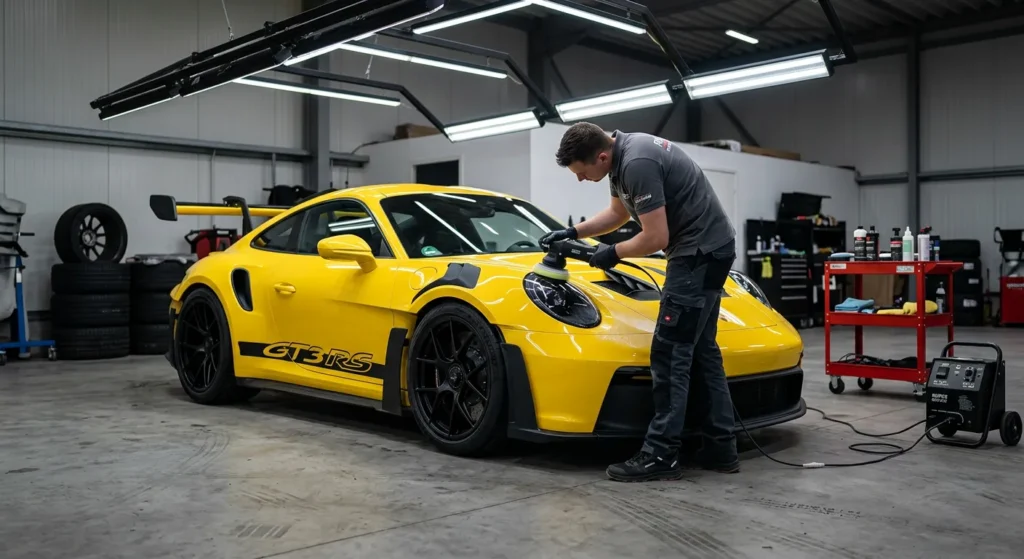
The number of steps should follow the condition of the paint rather than a fixed rule.
Two cars of the same year, make, model, and color can need very different correction work.
One may have been carefully hand washed.
The other may have years of wash-related marring.
One may have factory paint across every panel.
Another may have undergone previous bodywork.
A vehicle may also have:
A paint assessment helps determine which defects are reasonable candidates for correction.
The goal should be improving the paint while respecting its condition.
Abrasive paint correction works by removing a small amount of material from the surface.
That is why process selection matters.
Automotive clear coat is not an unlimited resource.
Repeated aggressive correction is not something to perform without reason.
Professional paint-finishing systems use different abrasive levels because the amount of cutting needed depends on the defect.
3M describes stages ranging from sanding and scratch refinement through compounding, machine polishing, and swirl removal.
A lighter defect should not automatically receive the same process as a severe one.
Here’s what matters: use enough correction to reach the desired improvement without treating maximum material removal as the goal.
Paint correction and wax do different jobs.
Correction addresses defects through an abrasive process.
Wax is a surface product.
Certain products can temporarily reduce how visible light defects appear without truly correcting them.
Meguiar’s describes one of its paint-gloss products as concealing light swirls through polishing oils. That is different from abrasive correction designed to remove certain defects.
This explains why a vehicle can look much better immediately after certain detailing products are applied, only for swirl marks to become more visible again later.
If you want defects addressed rather than temporarily concealed, ask about paint correction.
Paint correction and auto detailing can overlap, but they are not interchangeable terms.
Exterior detailing can include cleaning and preparing vehicle surfaces.
Paint correction focuses more directly on paint defects.
A car can be clean and still have extensive swirl marks.
Likewise, polishing dirty or contaminated paint is not the right starting point.
The surface needs suitable preparation before machine correction begins.
If your vehicle mainly needs cleaning, detailing may be the starting point.
If the clean paint still looks scratched, swirled, hazy, or dull, correction may be worth discussing.
Paint condition deserves attention before applying a long-lasting surface coating.
A ceramic coating is applied over the existing finish.
If visible defects bother you before coating, discuss correction first.
Correction can improve clarity and gloss before the coating is applied.
This does not mean every vehicle needs the most aggressive correction possible before ceramic coating.
A newer vehicle may need relatively little work.
A vehicle with years of swirls may need more.
The process should follow the paint condition and the owner’s expectations.
Notorious Auto Protection works with Ceramic Pro and XPEL FUSION ceramic coating products.
The same planning can apply before paint protection film installation.
PPF is applied over painted surfaces.
If the paint has defects that you want addressed, it makes sense to evaluate them before covering the area with film.
Not every tiny defect needs to be chased before PPF.
Rock chips and deep damage also cannot simply be polished away.
Discuss the existing paint condition before the film installation begins.
Notorious Auto Protection installs XPEL and Ceramic Pro PPF products and can plan correction and protection work around the condition of the vehicle.
Correcting the paint is only part of keeping it looking good.
Washing and drying habits after correction can affect how quickly new marring appears.
Try to avoid rubbing loose dirt across dry paint.
Use clean wash materials.
Keep towels used on paint clean and separate from towels used on dirty wheels or other heavily contaminated areas.
Do not continue wiping a vehicle with a towel that has been dropped onto the ground.
Wash tools and drying materials should be kept clean between uses.
No washing method can promise that a daily-driven vehicle will remain completely free from marks forever.
The aim is to reduce unnecessary contact and abrasion.
Dark paint often makes swirl marks easy to notice.
Bright sunlight can reveal fine scratches that were almost invisible in shade.
Black vehicles are a common case.
After washing, a black car may appear clean but show rings and fine lines around reflected light.
Correction can improve the clarity of these reflections when the defects are suitable for polishing.
A refined finish can make dark paint appear deeper because light is reflecting from a smoother-looking surface rather than being scattered visually by a network of fine defects.
The same correction principles apply to other colors, even if the defects are less obvious.
Drivers searching for Paint Correction in Baldwinsville, NY can visit Notorious Auto Protection at our Syracuse, NY location.
Our shop is located at:
Notorious Auto Protection
6742 Pickard Dr
Syracuse, NY 13211
We provide paint correction for vehicles with suitable swirls, scratches, oxidation, haze, and other paint defects.
Related services include:
If you are planning ceramic coating or PPF, we can also discuss whether the paint should receive correction before the protection product is installed.
Paint Correction in Baldwinsville, NY should begin by looking at the condition of the paint rather than assuming every mark needs the same polishing process.
Swirl marks and fine scratches may respond well to correction.
Light oxidation and certain water spots may also be suitable for compounding or polishing.
Deep scratches, failed clear coat, rock chips, and other damage may need a different repair.
The goal is to find out what can be safely improved and choose the correction process from there.
If you are coming from Baldwinsville, NY, call Notorious Auto Protection at (315) 552-4441 to discuss your vehicle.
You can also use our contact page to schedule an appointment at our Syracuse, NY shop.
Our hours are Monday through Saturday from 8 AM to 6 PM and Sunday from 8 AM to 5:30 PM.
Many light and moderate swirl marks can respond to machine polishing or compounding. 3M and Meguiar’s both make professional paint-finishing products intended to remove swirl marks. Results depend on defect depth and paint condition, so complete removal should not be assumed before inspection.
Some scratches can be corrected, but deeper damage may extend too far into the paint system for safe removal through polishing. If a scratch has penetrated beyond the correctable portion of the finish, another repair method may be needed.
Some oxidation can respond to paint correction. Meguiar’s offers compounds designed for light through heavier oxidation, while 3M lists light oxidation among the defects addressed by certain polishing products. Paint that has deteriorated or failed may not be restorable through polishing alone.
Compounding generally uses more cutting ability to address stronger defects. Polishing is commonly used for lighter correction or to refine the finish after compounding. The paint condition determines which stages are appropriate.
If your vehicle has swirls or other correctable defects that bother you, it makes sense to assess the paint before ceramic coating. Correction can improve the appearance of the finish before coating is applied.
Paint should be inspected before paint protection film installation. Correctable defects can be discussed before film covers the painted surface. Deep chips or other damage may require a different approach.
Notorious Auto Protection provides paint correction at 6742 Pickard Dr, Syracuse, NY 13211. Baldwinsville, NY drivers can call (315) 552-4441 or use our contact page to schedule an appointment.
Your vehicle is a significant investment, and ensuring its protection from the elements and everyday hazards is crucial to maintaining its value and appearance. In Syracuse, NY, where road conditions and weather can be unpredictable, combining STEK Paint Protection Film (PPF) and Window Tint offers the ultimate solution for safeguarding your car. At Notorious Auto Protection, we specialize in applying these premium products to provide your vehicle with maximum protection and enhanced aesthetics.
Product Brand: Auto Protection
Question about the service you're choosing, or simply ready to book? Contact us today to get started
Explore the many services we offer by clicking the boxes below