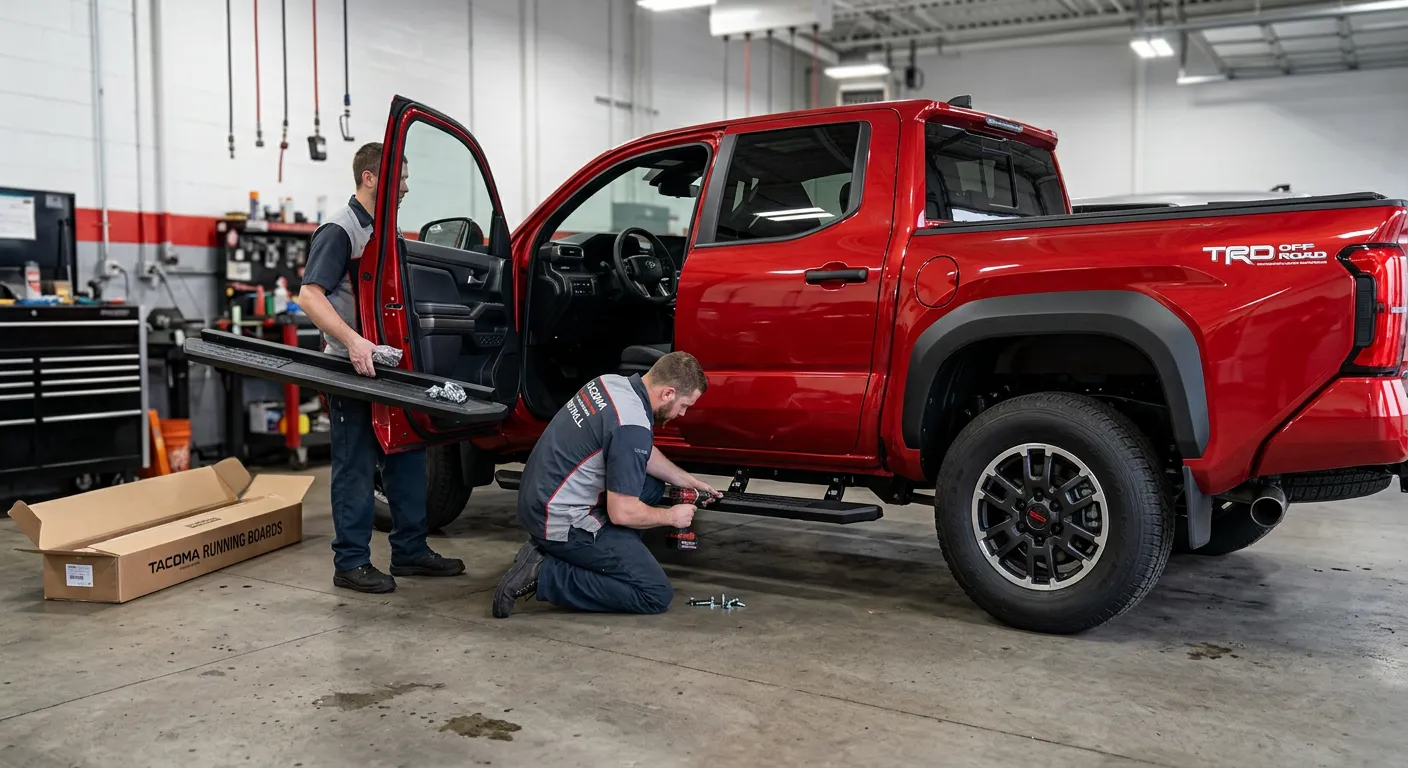
Truck Side Steps & Running Boards can make getting into a pickup easier while changing the way the truck looks from the side. The right style depends on cab configuration, ride height, step width, ground clearance, how the truck is used, and whether you want a fixed or retractable step.
A stock-height daily driver may work well with a wide running board. A lifted truck may benefit from a step that sits lower and provides a clear place for your foot. An off-road truck may need more ground clearance than a wide, low-mounted board provides.
Fitment matters too. Regular cab, extended cab, and crew cab trucks can use different step lengths and mounting locations. Even trucks with the same model name may need different parts based on model year and body configuration.
Notorious Auto Protection provides truck side step installation and other truck accessories in Syracuse, NY.
Before choosing a set based on appearance alone, compare how each style will work on your truck.
Side steps give you an intermediate stepping point between the ground and truck cab.
That can be useful on a stock truck and even more noticeable on a lifted pickup.
Chevrolet describes its truck assist steps, another name used for running boards and side steps, as providing a stable stepping surface for entering and exiting the vehicle. Chevrolet also notes that some designs make it easier to reach cargo in the truck bed or on the roof.
A step can also change the truck’s side profile.
Depending on the design, it can look:
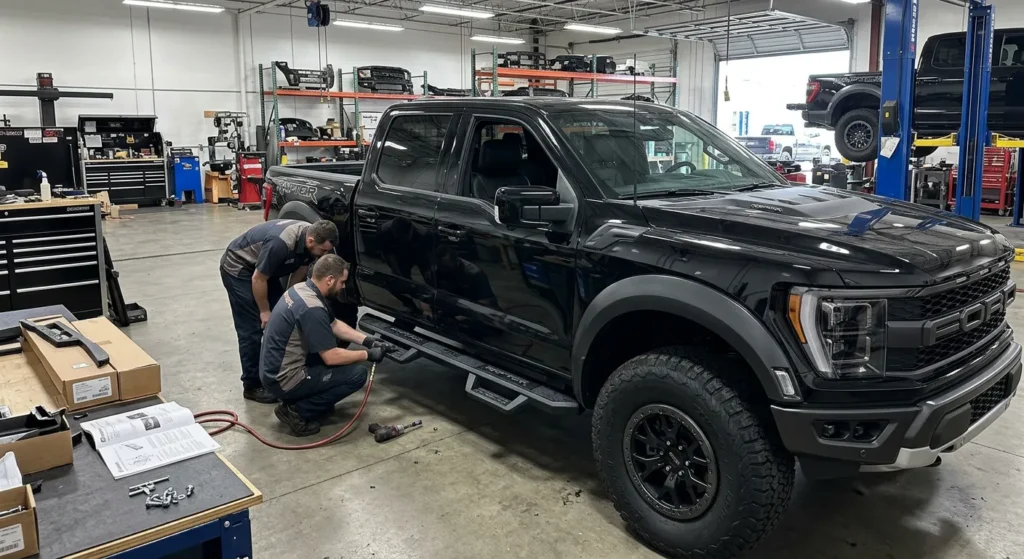
This is why the right choice involves both function and appearance.
When comparing Truck Side Steps & Running Boards, you will find several designs that may serve similar purposes.
Common styles include:
Manufacturers sometimes use these names differently.
Chevrolet notes that terms such as assist steps, step bars, molded assist steps, and tubular assist steps can describe several versions of equipment designed to provide a stepping surface.
Instead of shopping by name alone, compare the actual dimensions and mounting design.
A traditional running board usually provides a broad, relatively flat stepping surface along much of the cab.
The wide surface can make foot placement straightforward when entering or leaving the truck.
Chevrolet sells rectangular assist steps with six-inch-wide stepping surfaces for certain Silverado configurations. Its product information describes textured surfaces intended to provide traction and stable footing.
Running boards can work well for:
The board’s width and mounting height affect how it feels.
A wide board mounted very close to the rocker may look clean but provide less vertical assistance on a heavily lifted truck.
A lower board can provide a more useful intermediate step but may reduce ground clearance.
Nerf bars commonly use round or oval tubing rather than a full-width flat board.
They usually include designated stepping pads near the doors.
Chevrolet offers four-inch round assist steps on certain Silverado models. These include step pads and model-specific mounting hardware.
Tube steps can create a different appearance from a flat running board.
They may suit drivers who want:
Pay attention to tube diameter and step-pad size.
A narrow tube with a small pad will feel different under your foot than a six-inch rectangular board.
That difference becomes more noticeable when boots are wet, muddy, or covered in snow.
Drop steps place the stepping surface lower than the main bar or mounting rail.
This can be useful on a tall truck.
Instead of stepping onto a board positioned close to the rocker panel, your foot lands on a lower platform.
Drop steps are worth considering for:
The tradeoff is clearance.
A step hanging lower below the rocker area may become one of the lower points along the side of the truck.
That matters if the truck regularly travels over rocks, deep ruts, uneven trails, or other terrain where the underside and rocker area can approach the ground.
Powered running boards take a different approach.
Rather than remaining extended all the time, they deploy when needed and retract toward the rocker area when not in use.
This can provide a lower stepping position while the door is open without leaving a fixed board hanging at the same height while driving.
Powered steps add electrical and mechanical parts that fixed steps do not have.
Depending on the system, installation can involve:
If you are considering a powered step, verify that the system is made for your exact truck.
The fixed-versus-retractable decision often comes down to simplicity, clearance, and how you want the truck to look.
Fixed steps stay in place.
Advantages can include:
A fixed step’s ground clearance never changes, though.
If it sits low, it stays low while driving.
Powered retractable boards move into position when needed and retract afterward.
They can appeal to owners who want a lower step without keeping a large board extended all the time.
They also add moving and electrical parts.
Think about where and how the truck will be used before deciding which setup makes more sense.
Length is another choice.
RealTruck describes cab-length running boards and nerf bars as steps that extend along the truck cab. Regular-cab versions provide access around the doors, while extended and crew-cab versions cover the longer passenger compartment.
Wheel-to-wheel designs continue farther rearward toward the rear wheel.
Why extend the step beyond the cab?
Access to the front portion of the bed can be useful.
A rearward step section can provide a place to stand while reaching:
If you rarely need side access to the bed, a cab-length design may be enough.
There is no single correct width.
Chevrolet’s current accessory catalog illustrates how much designs can differ.
The manufacturer offers four-inch round assist steps on certain trucks, six-inch rectangular steps on others, and work-style steps with a seven-inch step depth for some heavy-duty applications.
A wider surface can provide more room for your foot.
A narrower design can keep the step closer to the truck’s body.
Think about:
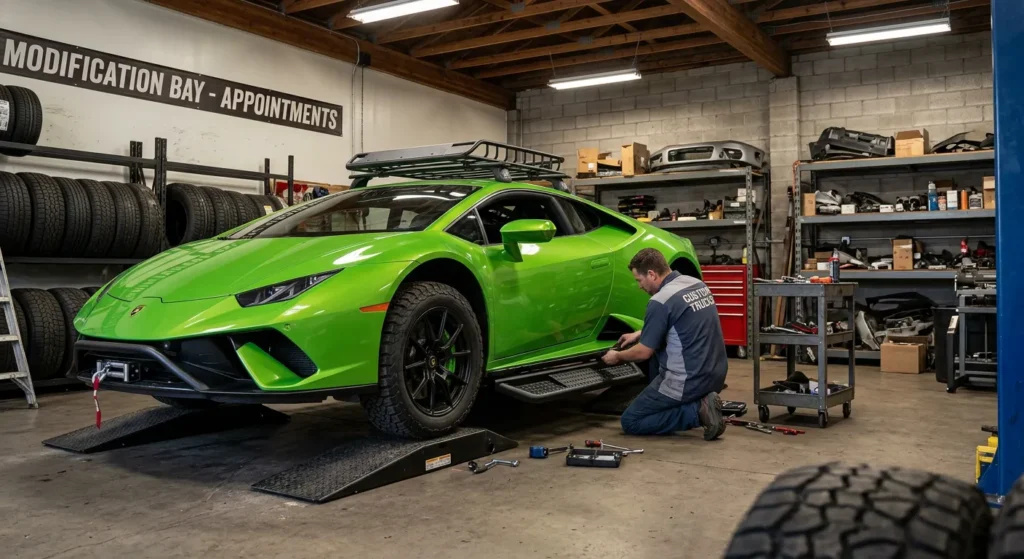
A truck used for work in heavy boots may benefit from a different stepping surface than a street truck where the owner wants a slim side profile.
Ground clearance deserves attention before installing side steps on an off-road truck.
Look at where the step sits relative to:
A low-mounted drop step can make entering a lifted truck much easier while also placing hardware closer to trail obstacles.
If the truck sees serious off-road use, distinguish between a step and rocker protection.
Some products are intended mainly as steps.
Others are built around rocker-protection systems and can accept removable steps.
Chevrolet, as one manufacturer example, offers removable assist steps that attach to its accessory rocker protectors on certain Silverado models. The steps can be unbolted while the rocker-protection system remains.
That type of arrangement shows why off-road truck owners should decide whether access, clearance, or rocker protection matters most.
A lifted truck can make side steps much more useful.
Raising the truck increases the height passengers need to climb.
Before choosing a step, consider the complete suspension and tire setup.
Ask:
A narrow step mounted high against the rocker may not provide enough help on a tall truck.
A lower drop step may be easier to use.
If the truck is still being built, it can make sense to choose the lift kit, truck wheels and tires, and side steps as parts of the same plan.
That gives you a better idea of the final ride height before selecting the step.
A daily-driven truck has different needs from a trail-focused build.
Ease of entry may matter every single day.
A broad running board can work well when:
Chevrolet states that its assist steps can help with entering and exiting a truck as well as accessing cargo around the roof or bed.
For a daily driver, also consider how easy the step surface will be to clean.
Mud, snow, slush, and road grime will collect differently depending on the board design.
The stepping surface deserves as much attention as the shape of the bar.
A smooth metal surface can become slippery when wet.
Many truck steps use:
Chevrolet’s current assist-step descriptions repeatedly call out textured surfaces designed to provide added traction.
Look at how much of your foot actually contacts that surface.
A large running board with only a small smooth section where you naturally step may not feel as secure as its overall dimensions suggest.
Winter use makes this more noticeable.
Snow and ice can collect on any exterior step.
Always check your footing during winter conditions.
Truck steps can be made from several materials, including steel, stainless steel, and aluminum.
The material is only part of the durability question.
Construction, finish, wall thickness, mounting brackets, drainage, and exposure all affect how the product holds up.
Chevrolet’s current accessory listings include aluminum work-style assist steps and stainless components on other step designs.
When comparing products, check:
Do not assume every black step uses the same material or coating.
Two products can look similar in photos while being built very differently.
Some side steps can help reduce the amount of debris that reaches portions of the truck’s lower body.
Chevrolet states that several of its accessory assist steps can help shield outer body panels from stones and other debris.
That does not make every running board a rock slider.
A normal side step and an off-road rocker-protection system can have very different construction and mounting.
If your goal is protection during contact with rocks or trail obstacles, look for equipment designed and rated for that job.
Do not assume a step can support impacts or vehicle weight unless the manufacturer states that capability.
Running boards are not universal simply because two trucks are similar in size.
Fitment can change based on:
Chevrolet’s accessory catalog shows separate side-step applications for regular-cab, double-cab, and crew-cab Silverado models.
The dimensions and mounting locations differ.
A step intended for a regular cab will not provide the correct length for a crew cab.
The mounting hardware also needs to line up with the truck.
Before ordering, verify the complete vehicle application.
It depends on the truck and step system.
Some applications use existing factory mounting points.
Chevrolet lists several current Silverado assist-step applications as no-drill installations using vehicle-specific mounting hardware.
Other aftermarket products or vehicles may require a different mounting process.
Do not assume “no drill” applies to every truck.
Check the instructions for the exact part number and vehicle before installation begins.
Proper bracket placement matters because the step needs to support people entering and exiting the cab.
Truck accessories in Syracuse, NY see winter conditions that owners in warmer climates may not think about as often.
Side steps can encounter:
A textured step can help with footing, but no outdoor step surface is immune to ice.
Keep the stepping areas clear when possible.
Inspect the mounting points and hardware as part of normal vehicle care.
Chevrolet’s current assist-step information advises owners to inspect for issues such as loose fasteners, damaged step pads, visible damage, and corrosion.
That is sensible for any exterior truck step.
If something feels loose or moves when weight is placed on it, have it checked.
Finish is mostly an appearance decision, but it can change the character of the truck.
Black steps can blend with:
Chrome or bright-finish steps can match:
Chevrolet offers both black and chrome versions of certain six-inch rectangular assist steps, illustrating how the same basic step format can be matched to different exterior styles.
Choose the finish around the truck rather than viewing the step by itself.
Side steps often become part of a larger truck project.
Notorious Auto Protection provides related services including:
The order of modifications can matter.
If you plan to lift the truck soon, consider the final ride height before selecting steps.
If off-road clearance matters, think about where the steps will sit after the suspension and tire changes are finished.
Notorious Auto Protection provides truck side step installation in Syracuse, NY.
Our shop is located at:
Notorious Auto Protection
6742 Pickard Dr
Syracuse, NY 13211
Before choosing Truck Side Steps & Running Boards, consider:
A step that works well on a stock crew-cab daily driver may not make sense for a lifted trail truck.
Choose the equipment around how you use the pickup.
Truck Side Steps & Running Boards should make the truck easier to use without working against the rest of the build.
Traditional running boards provide a broad stepping surface.
Tube steps create a narrower profile.
Drop steps can make tall and lifted trucks easier to enter.
Retractable boards provide a lower step when deployed while moving closer to the body when retracted.
Cab-length and wheel-to-wheel designs solve different access needs.
There is no reason to choose by appearance alone when fitment and step position can be checked first.
For truck side step installation in Syracuse, NY, call Notorious Auto Protection at (315) 552-4441.
You can also use our contact page to schedule an appointment.
Our hours are Monday through Saturday from 8 AM to 6 PM and Sunday from 8 AM to 5:30 PM.
The terms can overlap. Running boards commonly provide a wide stepping surface along much of the cab, while side steps can include tube bars, individual drop steps, and other designs. Chevrolet notes that assist steps, step bars, molded steps, and tubular steps are names used for several products serving the same general access purpose.
They can be. A lifted truck has a higher entry point, so a well-positioned step can make getting into the cab easier. Pay attention to how far below the rocker the step sits. A board mounted too high may provide little help, while a very low step can reduce off-road clearance.
They serve different needs. Drop steps place your foot lower, which can work well on a tall truck. Wide running boards can provide more continuous stepping space. Ground clearance, truck height, passenger needs, and appearance should guide the choice.
Cab-length steps run along the passenger cab. Wheel-to-wheel versions continue farther toward the rear wheel, which can provide a stepping point for reaching cargo near the front portion of the bed.
Not always. Some vehicle-specific systems attach to factory mounting locations. Chevrolet lists several Silverado assist steps as no-drill installations. Other trucks and step systems can use different mounting methods, so check the instructions for the exact application.
A fixed step that hangs below the truck’s rocker area can reduce clearance along that part of the vehicle. This deserves extra attention on off-road trucks. Retractable or removable designs can address this concern in certain applications.
Notorious Auto Protection provides truck side step installation at 6742 Pickard Dr, Syracuse, NY 13211. We also provide truck accessories, truck lifts, and truck wheel and tire services. Call (315) 552-4441 or use our contact page to schedule an appointment.

Your vehicle is a significant investment, and ensuring its protection from the elements and everyday hazards is crucial to maintaining its value and appearance. In Syracuse, NY, where road conditions and weather can be unpredictable, combining STEK Paint Protection Film (PPF) and Window Tint offers the ultimate solution for safeguarding your car. At Notorious Auto Protection, we specialize in applying these premium products to provide your vehicle with maximum protection and enhanced aesthetics.
Product Brand: Auto Protection
Question about the service you're choosing, or simply ready to book? Contact us today to get started
Explore the many services we offer by clicking the boxes below