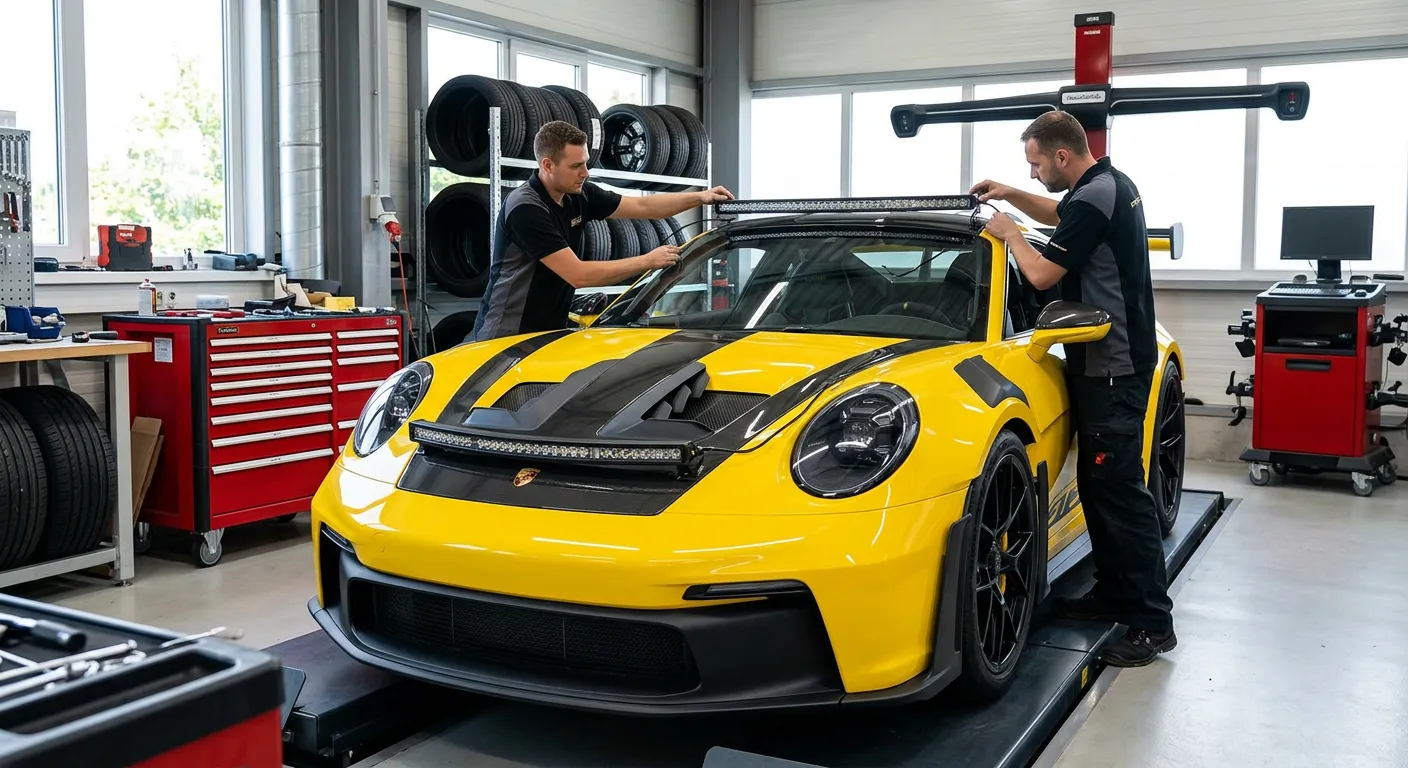
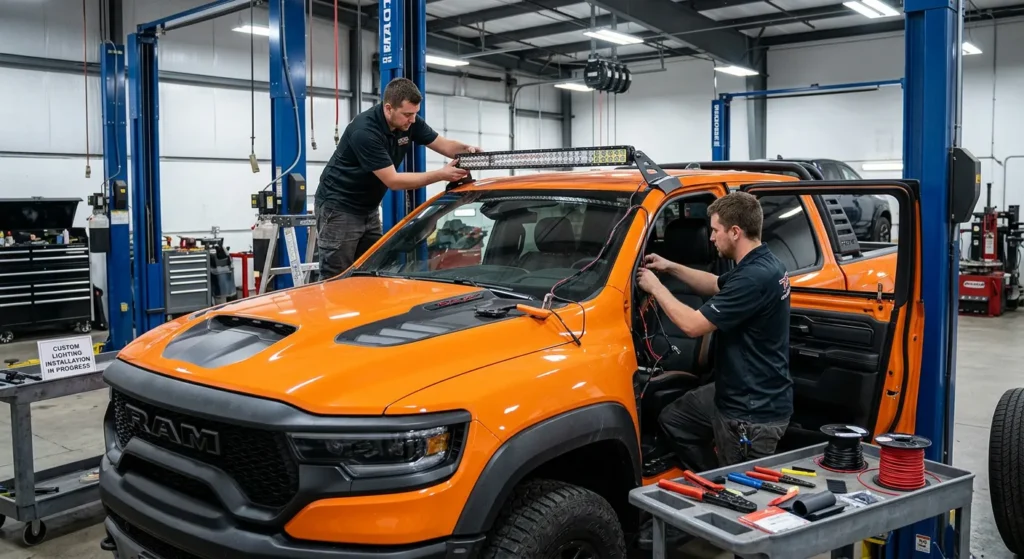
Light bar installation for trucks in Upstate New York is a popular upgrade for owners who want stronger visibility for off-road trails, job sites, campsites, farms, private land, snow work, or a more capable truck build. A light bar can change how a truck looks and how useful it feels after dark.
The real question is not just, “How bright should it be?”
The better question is, “Where should the light bar go, how should it be wired, and when can it be used without creating glare or legal trouble on public roads?”
That part matters in New York. Light bars are powerful auxiliary lights. They can be useful off-road, but they can blind other drivers if used on public streets. New York also has rules about vehicle lamps, colored lights, auxiliary lights, and inspection.
At Notorious Auto Protection in Syracuse, NY, truck owners can ask about light bar installation, truck lighting, rock lights installation, vehicle underglow installation, and truck accessories.
Notorious Auto Protection is located at 6742 Pickard Dr, Syracuse, NY 13211. To talk through light bar installation for your truck, call (315) 552-4441 or visit https://notoriousautoprotection.com/contact-us.
A truck light bar is an auxiliary LED lighting unit mounted to the front, roof, bumper, grille, hood area, or another part of a truck. It is made to add light beyond the factory headlights, usually for off-road or work use.
Light bars come in many sizes and styles. Some are short and hidden inside the grille. Others span across a bumper or roof line. Some throw light far down a trail. Others spread light wide across a work area.
A truck light bar may include:
Here is why this matters.
A light bar is not only a light. It is a full install that needs safe mounting, clean wiring, switch placement, glare control, and road-use planning. A poor install can lead to loose brackets, water issues, blown fuses, battery drain, dash holes, exposed wiring, or lights aimed into oncoming traffic.
For Upstate New York truck owners, the install should also account for snow, salt, mud, cold weather, vibration, and road grime.
Truck owners add light bars for many reasons. Some want better trail visibility. Some need lighting for work. Others want the truck to look more rugged. Many want all three.
Light bars are often used for:
Let’s break it down.
A trail truck may need long-distance lighting and side spread. A work truck may need a lower mounted light bar for a job site or plow area. A show truck may need a clean hidden light bar that looks sharp without making the front end look cluttered.
For drivers in Syracuse, NY and across Upstate New York, winter can also shape the setup. Snow, fog, blowing slush, and dirty roads can make glare worse, so brighter is not always better. Beam pattern, color, height, and aim all matter.
Light bar placement has a big effect on how the light works and how the truck looks.
Common mounting locations include:
A bumper-mounted light bar is popular because it sits lower and can be easier to aim. It can work well for trail lighting, plow-area lighting, and front-end style.
A grille-mounted or hidden light bar gives a cleaner look. It can keep the truck’s front end less cluttered while still adding extra light.
A roof light bar can throw light far ahead, but it can also create hood glare if not aimed well. It may also create wind noise and height-clearance concerns.
A-pillar lights are smaller than a full bar, but they can help light side areas or trail edges. They should be aimed with care so they do not create glare.
Rear-facing auxiliary lights can help with backing up, loading gear, trailers, plows, or private work areas. They should be controlled carefully and not used in a way that blinds traffic behind the truck.
The best mounting spot depends on how the truck is used.
Beam pattern is one of the biggest choices in light bar installation for trucks in Upstate New York.
A spot beam throws light farther down the road or trail. It is useful when you need distance, such as off-road trails or large private properties.
A flood beam spreads light wider but not as far. It is useful for work areas, campsites, job sites, and low-speed off-road driving.
A combo beam gives both distance and spread. This is a common choice for truck owners who want a balanced setup.
Here is why beam pattern matters.
A light bar with the wrong beam can be frustrating. Too much distance may not help when you need side visibility. Too much spread can cause glare or wash out close objects. Roof-mounted lights can reflect off the hood or snow. A bumper-mounted combo beam may fit many truck owners better than a roof bar if daily use and glare are concerns.
For snow, fog, and wet roads, aim and color can matter as much as output.
Light bars often come in single-row and dual-row styles.
A single-row light bar has one row of LEDs. It is usually slimmer, cleaner, and easier to fit into tight spaces such as grilles or slim bumpers.
A dual-row light bar has two rows of LEDs. It can produce more light, but it is larger and may be more visible on the truck.
Now here’s the thing.
A bigger light bar is not always the better choice. A large dual-row bar may look aggressive, but it may also create more glare, more mounting challenges, and more legal concerns if used incorrectly.
A single-row hidden grille light may be the better choice for a cleaner daily truck. A dual-row bumper light may make sense for off-road use, private property, or work trucks that need stronger light.
Good planning starts with where you need light, not just how much light the bar can produce.
Most truck light bars use white LEDs. White light is common because it gives bright visibility and strong output.
Amber light can be useful in dust, snow, fog, or rain because many drivers find it more comfortable in low-visibility conditions. Amber can also reduce harsh glare compared with some cool white lights, depending on the setup.
RGB or color-changing light bars may look good on show trucks, but they should be treated very carefully. Colored and flashing lights can create legal issues in New York, especially colors tied to emergency, volunteer, hazard, tow, or service vehicle use.
Here is the practical approach.
Use white or amber lighting for private work or off-road function, depending on your needs. Keep color-changing or show lighting for parked display, where allowed. Avoid red, blue, green, flashing, rotating, or police-like effects on public roads.
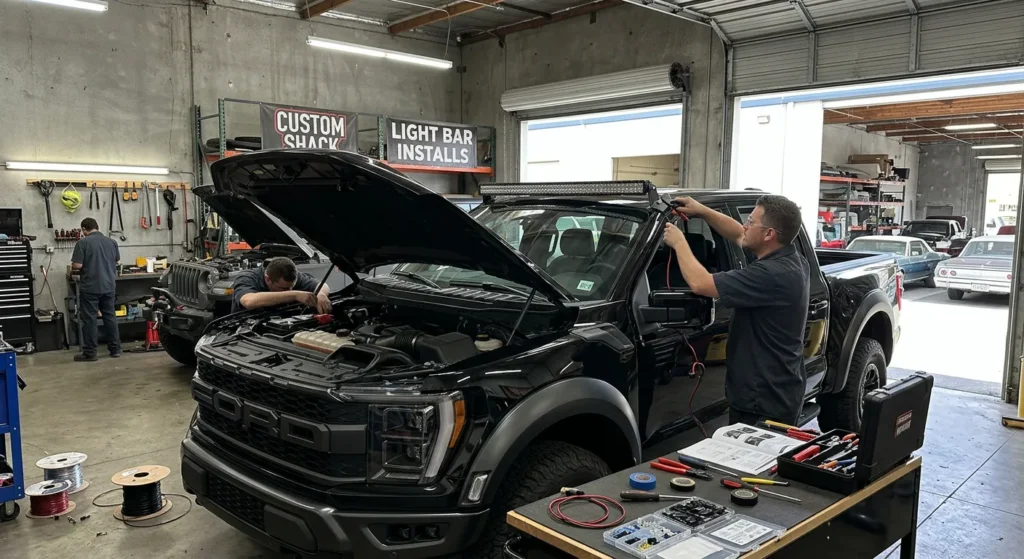
If you want a show setup, also ask about rock lights installation, vehicle underglow installation, and interior vehicle ambient lighting installation.
Light bar installation cost depends on the truck, light bar type, mounting location, wiring needs, switch setup, brackets, and labor time.
Notorious Auto Protection does not need to guess from a random online number because each truck is different. A hidden grille light bar on one pickup is not the same as a roof-mounted bar on another. A bumper light on a work truck is not the same as a multi-light off-road setup with switches, relays, and rear work lights.
Cost can be affected by:
A clean quote starts with the truck details and how you want to use the lights.
Before calling, gather your vehicle year, make, model, light bar size if known, and preferred mounting location. Photos of the truck and the look you want can help too.
Wiring is one of the most important parts of light bar installation.
A light bar needs a proper power supply, safe fuse protection, a relay when needed, secure ground, clean wire routing, and a switch that is easy to use. The wiring also needs to be protected from heat, sharp metal, water, salt, moving parts, and vibration.
A good wiring plan may include:
The catch is, poor wiring can create real problems.
Loose wires can rub through. Bad grounds can cause flicker. Missing fuse protection can be unsafe. Weak connections can fail in winter. Wires routed near hot exhaust or moving parts can get damaged. A random dash switch can look out of place.
For Upstate New York trucks, wiring should be planned for salt, slush, snow, water, mud, and cold starts.
New York law does not use one simple rule for every light bar setup, but several lighting rules matter.
New York Vehicle and Traffic Law § 376 gives the Commissioner of Motor Vehicles authority over lamps, reflectors, signaling devices, their number, type, design, location, attachment, and use on vehicles driven, operated, or parked on public highways or streets in New York.
New York Vehicle and Traffic Law § 375 covers vehicle equipment and colored light restrictions. Certain colored lights are limited to specific emergency, volunteer, hazard, tow, snow-related, or service vehicle uses.
New York regulation 15 NYCRR § 44.5 covers auxiliary lights. It discusses certain supplemental red lights and amber fog lights, including mounting and glare-related language for amber fog lights.
New York DMV inspection rules can also matter because lamps and equipment may be checked during inspection.
What this means for light bar installation for trucks in Upstate New York is simple: street use needs caution.
A truck light bar may be fine for off-road use, private property, work areas, or parked display, but that does not mean it should be used on public roads. A light bar can blind other drivers if it is too bright, aimed too high, or used in traffic.
This is not legal advice. For legal questions about your exact setup, ask New York DMV, local law enforcement, or a qualified attorney.
Light bars are often best treated as off-road or private-property lighting.
Use a light bar for:
Avoid using a light bar:
Here is why this matters.
A light bar can produce far more glare than factory low beams. Roof bars can reflect off snow, fog, rain, and the hood. Bumper bars can still blind other drivers if aimed high. More light is only useful when it helps the driver without hurting everyone else.
A smart setup includes a clear switch, a safe default off position, and a driver who knows when not to use it.
Professional light bar installation matters because the job includes more than bolting on a light.
A clean install should look good, stay secure, survive weather, and work when needed. It should also avoid poor wire routing, weak brackets, bad switches, water leaks, and glare issues.
A proper install should account for:
Syracuse, NY and Upstate New York trucks see rough roads, snow, salt, mud, and freeze-thaw cycles. That can loosen weak hardware and damage exposed wiring. A clean install helps the system last longer and look better.
Notorious Auto Protection installs light bars, truck lighting, rock lights, and other truck upgrades, so the lighting plan can fit the full build.
Yes. Light bar installation often works best as part of a larger truck or Jeep plan.
If you want more lighting, ask about:
If you want a more capable truck build, ask about:
If you want the truck to look cleaner, ask about:
Next steps depend on the truck.
A lifted trail truck may need a bumper light bar, rock lights, and off-road tires. A work truck may need a lower light bar and rear work lights. A show truck may need a hidden grille light bar, tint, wrap, rock lights, and clean detailing.
Light bar installation for trucks in Upstate New York can be planned around the type of build.
A daily driver may need a clean hidden light bar and a simple switch. The focus should be clean appearance, safe wiring, and keeping the light off on public roads.
A work truck may need lighting for job sites, trailers, tools, farms, or snow work. Placement and switch access should match how the truck is used.
A lifted truck may pair well with a bumper light bar, rock lights, wheel lighting, and side steps. Headlight aim and glare should be checked after lift work.
An off-road truck may need a combo beam light bar, ditch lights, rock lights, and rear work lights. Wiring and mounting should be ready for mud, water, and vibration.
A show truck may use a hidden grille light bar, RGB parked-display lighting, tint, wrap, and detailing. Street use should still follow New York rules.
Before scheduling light bar installation, think through the goal.
Ask yourself:
Bring photos if you have them. Photos help the team understand the look and light placement you want.
You should also share:
The more the shop knows before the install, the cleaner the setup can be.
Notorious Auto Protection has served Syracuse, NY since 2020 and is trusted for truck lighting, vehicle upgrades, protection, tint, wraps, detailing, audio, and custom work. The shop is Ceramic Pro certified, a Ceramic Pro vendor, and carries warranties on products and services.
With 269 reviews and a 5-star rating, Notorious Auto Protection is a trusted choice for truck owners across Syracuse, NY and Upstate New York.
Related services include:
Whether you want a hidden grille light, bumper light bar, work lighting, or a full truck lighting setup, the team can help you choose the right plan.
Light bar installation for trucks in Upstate New York should be planned around brightness, beam pattern, mounting location, wiring, switch placement, and New York lighting rules. A good setup should look clean, work when you need it, and stay off when it could create glare or legal trouble on public roads.
Before you call, gather your truck year, make, model, desired light bar size, and the way you plan to use the lights. Photos of your truck and examples of the look you want can also help.
Notorious Auto Protection is located at 6742 Pickard Dr, Syracuse, NY 13211. Business hours are Monday through Saturday from 8 AM to 6 PM and Sunday from 8 AM to 5:30 PM.
Call (315) 552-4441 or visit https://notoriousautoprotection.com/contact-us to schedule an appointment.
Light bars can be installed, but road use is limited by New York lighting rules. Bright auxiliary lights, colored lights, and flashing lights can create legal trouble if used on public roads. Many truck owners use light bars for off-road, work, or private-property use.
The best location depends on how you use the truck. Bumper and grille mounts are common for cleaner daily setups. Roof mounts can throw light far but may create hood glare and height concerns.
Spot beams throw light farther. Flood beams spread light wider. Combo beams give both distance and spread, which works well for many truck owners.
A light bar can help in some off-road or work settings, but bright white light can reflect off snow and create glare. Amber lighting and careful aim may work better in some snowy conditions.
Cost depends on the truck, light bar size, mount location, brackets, wiring route, switch setup, relays, fuses, and labor time. Call Notorious Auto Protection for a custom quote.
Yes. Light bars pair well with rock lights, underglow, truck lighting, lift kits, off-road wheels, and other truck upgrades.
Call Notorious Auto Protection at (315) 552-4441 or visit https://notoriousautoprotection.com/contact-us to request an appointment.
Your vehicle is a significant investment, and ensuring its protection from the elements and everyday hazards is crucial to maintaining its value and appearance. In Syracuse, NY, where road conditions and weather can be unpredictable, combining STEK Paint Protection Film (PPF) and Window Tint offers the ultimate solution for safeguarding your car. At Notorious Auto Protection, we specialize in applying these premium products to provide your vehicle with maximum protection and enhanced aesthetics.
Product Brand: Auto Protection
Question about the service you're choosing, or simply ready to book? Contact us today to get started
Explore the many services we offer by clicking the boxes below