Brake Repair in Syracuse, NY should not wait until your vehicle becomes difficult to stop. Your braking system often gives you warning signs before a worn or damaged component becomes a larger problem. Squealing, grinding, vibration, pulling while braking, changes in pedal feel, longer stopping distances, and dashboard warning lights can all be reasons to have the brake system inspected.
Drivers sometimes assume every brake noise means they need new pads. That is not always the case. Your braking system includes pads, rotors, calipers, brake fluid, hoses, lines, and other components. A proper inspection helps determine where the symptom is coming from rather than replacing parts based on a guess.
At Notorious Auto Protection, we provide brake repair for drivers in Syracuse, NY. If your brakes sound different, feel different, or simply have not been checked recently, our team can inspect the system and discuss what your vehicle needs.
Here are the warning signs you should watch for.
Before looking at brake warning signs, it helps to understand what happens when you press the pedal.
Many modern vehicles use disc brakes at all four wheels, while some use a combination of disc and drum brakes.
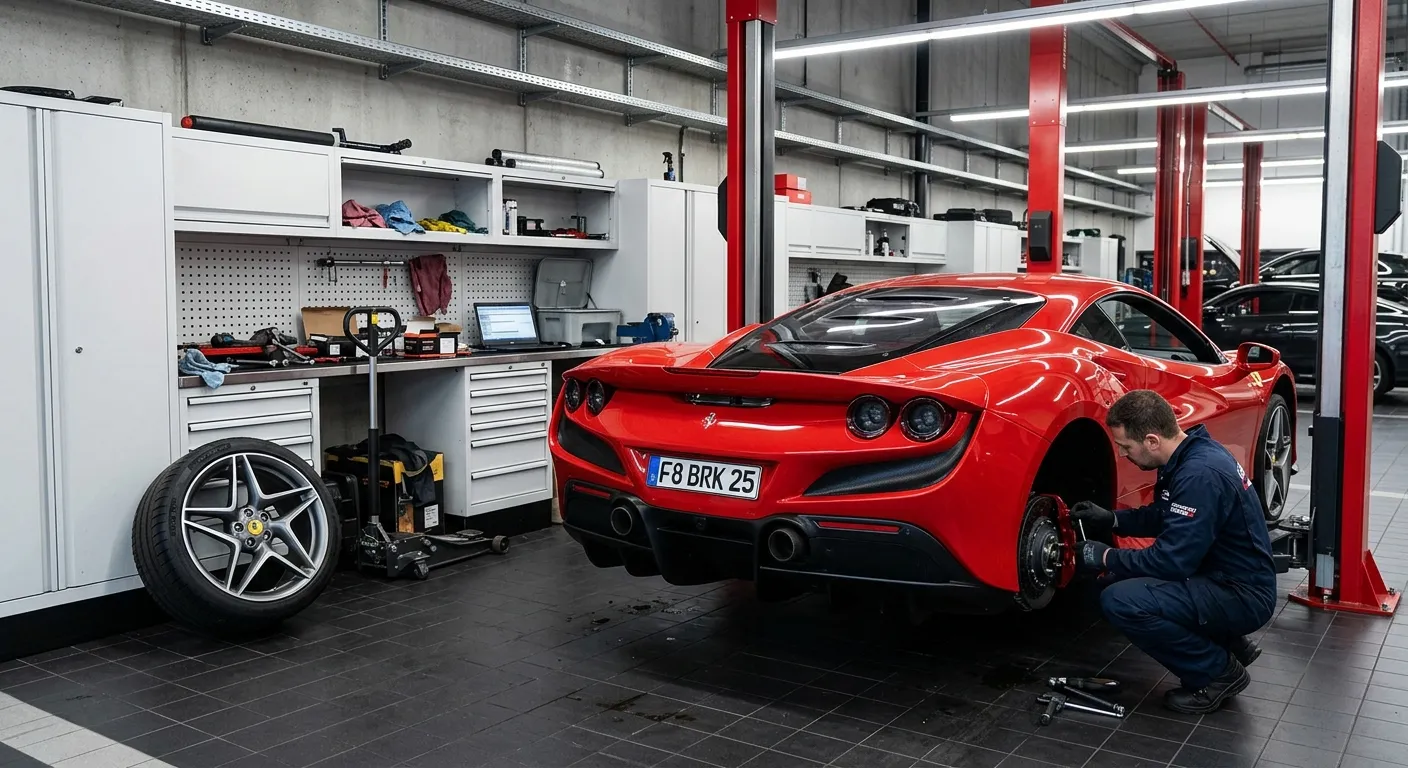
In a disc brake system, the brake pads press against a rotating brake rotor to create friction and slow the wheel. A brake caliper holds and moves the pads.
Chevrolet identifies three major disc brake components:
Some vehicles use brake shoes and drums on certain wheels instead.
Each part has to work correctly for the braking system to perform as intended.
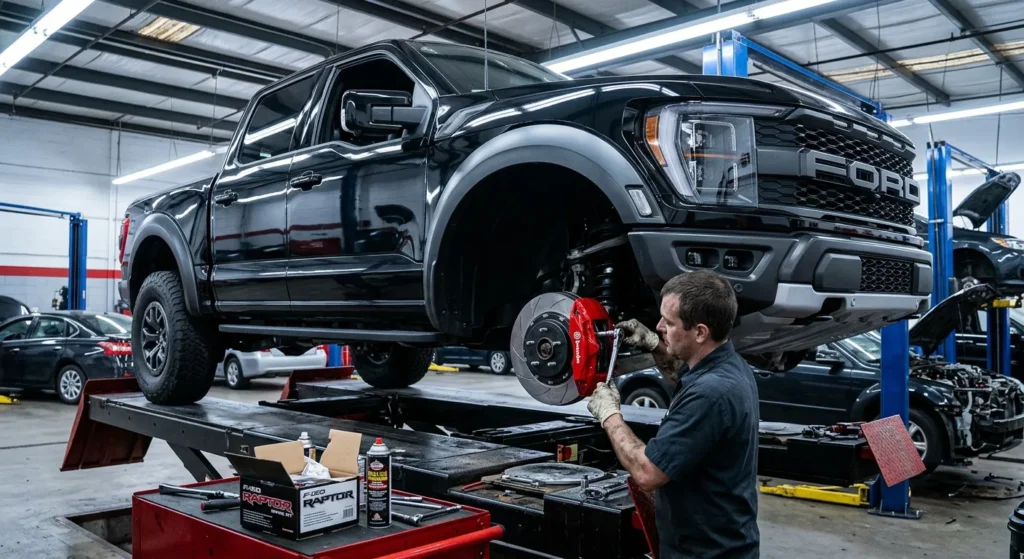
Brake components also wear.
There is no single replacement mileage that applies to every driver and vehicle. Chevrolet notes that brake wear varies with driving habits and conditions. Your vehicle manufacturer’s maintenance schedule and inspection recommendations should guide service for your specific model.
This is why paying attention to changes in braking can be useful between scheduled inspections.
Your vehicle may give you several clues that the brake system needs attention.
Watch for:
One symptom does not automatically tell you which brake component needs repair.
It tells you the system deserves attention.
If braking performance suddenly becomes poor, the brake pedal nearly reaches the floor, or you cannot stop normally, treat the situation differently from a routine maintenance concern.
Stop driving when it is safe to do so and arrange for the vehicle to be inspected or transported for service.
Toyota’s owner information identifies loss of brake effectiveness and a spongy pedal that nearly reaches the floor as symptoms that can indicate the vehicle needs repair.
Squealing is one of the most recognizable brake symptoms.
Some brake pads include wear indicators designed to make noise as the pad material reaches a certain level.
Chevrolet explains that these indicators can be metal tabs built into the brake pads. When wear reaches the indicator, contact with the rotor can produce a chirping, squealing, or whistling sound.
Toyota also states that brake pad wear indicators can create a warning noise when pads reach the point where replacement is needed.
That does not mean every squeak automatically means worn pads.
Brakes can make noises for several reasons, and some occasional brake noise can occur without a repair being required.
The pattern matters.
If you have developed a persistent squealing or scraping sound, especially when braking, schedule an inspection rather than trying to diagnose the pads by sound alone.
Grinding deserves quicker attention.
Toyota lists grinding or scraping as a possible sign of badly worn brake pads. Chevrolet also identifies grinding as a sign that brake service may be needed.
When friction material becomes severely worn, metal components can begin contacting surfaces they should not.
That can lead to damage beyond the pads.
If your brakes have changed from an occasional squeak to persistent grinding, do not simply turn up the radio and continue driving as usual.
Have the system inspected.
Grinding may indicate that the brake repair has progressed beyond a routine pad replacement, although only an inspection can confirm what is happening on your vehicle.
Does the brake pedal pulse against your foot when you slow down?
A persistent vibration during normal braking deserves inspection.
Chevrolet lists vibration in the brake pedal or steering wheel when braking among the signs that brake service may be needed.
Brake pulsation can have more than one cause.
Chevrolet lists possible causes of pedal pulsation or brake noise that include worn brake pads, worn or heat-cracked rotors, loose-fitting pads, damaged noise insulators, and uneven hardware torque.
Do not assume a pulsating pedal automatically means one particular component needs replacement.
Diagnosis comes first.
There is one exception worth knowing.
An anti-lock braking system can cause pedal pulsation when ABS is actively operating during a hard or slippery stop. That behavior is different from a vibration that repeatedly occurs during ordinary braking.
A shaking steering wheel can also point toward a brake concern when it happens during braking.
Pay attention to when the vibration occurs.
Does the steering wheel feel normal while cruising but start shaking when you apply the brakes?
Does it happen mainly from higher speeds?
Does the vibration become stronger with heavier braking?
These details can help during diagnosis.
Brake-related vibration may be connected to rotor condition or other components, but the vehicle needs to be inspected before determining the cause.
Chevrolet includes steering wheel vibration during braking among its listed brake-service warning signs.
Your car should not suddenly veer strongly to one side every time you apply the brakes.
Chevrolet lists a vehicle pulling left or right during braking as a sign the brake system may need service.
Toyota also tells owners that a vehicle pulling heavily to one side while braking is a symptom that should receive attention.
Pulling does not prove that one specific brake component has failed.
Tires, suspension, alignment, and other vehicle conditions can also affect how a vehicle tracks.
The timing gives you a clue.
If the pulling is strongly connected to brake application, tell the technician exactly when it occurs.
If your vehicle also pulls when you are not braking, mention that as well.
Notorious Auto Protection provides suspension repair in addition to brake repair, which allows different vehicle symptoms to be inspected rather than assuming every pull comes from the same source.
A noticeable change in brake pedal feel should get your attention.
Chevrolet lists a spongy brake pedal among the signs that brake service may be necessary.
Toyota also identifies a spongy pedal as a possible repair symptom.
Drivers usually become familiar with how much resistance their brake pedal has during normal driving.
If the pedal suddenly feels much softer than usual, requires different pressure, or approaches the floor, do not treat that change as normal wear without an inspection.
A soft pedal can have different causes within the brake system.
Rather than trying to diagnose the issue based only on pedal feel, have the system checked.
Pedal travel is another change worth noticing.
Chevrolet identifies a brake pedal that extends farther than normal as a brake-service warning sign.
You may notice that you have to push the pedal noticeably lower before the vehicle begins slowing the way you expect.
Changes can happen gradually, which makes them easy to get used to.
Think about how the vehicle feels compared with a few weeks or months ago.
Has pedal travel increased?
Does braking require more effort?
Does the pedal feel different at the beginning of its travel?
If something has changed, schedule a brake inspection.
A vehicle taking longer than normal to stop is not a symptom to put off.
Chevrolet lists longer-than-normal stopping distances among its brake service warning signs.
Toyota also lists reduced brake responsiveness as a possible sign of brake pad wear.
Stopping distance can be affected by many conditions, including tires, road surface, weather, vehicle load, and speed.
The concern here is a noticeable change in how your own vehicle normally behaves under comparable conditions.
If your brakes require more distance or pedal effort than they previously did, have the vehicle inspected.
If braking performance is severely reduced, do not continue driving normally.
Your dashboard can provide one of the clearest warnings that something needs attention.
A brake system warning light should not be ignored.
The exact meaning varies by vehicle, so check your owner’s manual.
Chevrolet states that a brake system warning light that remains on can indicate a brake problem and may also appear when brake fluid is low.
For the Chevrolet vehicles covered by its guidance, the company advises drivers to stop carefully as soon as it is safe if the brake system warning light appears while driving. If the warning remains after stopping, Chevrolet advises having the vehicle towed for service.
Your vehicle manufacturer’s instructions should take priority because warning-light behavior and required actions can differ by model.
The ABS light is separate from the regular brake system warning light on many vehicles.
ABS stands for anti-lock braking system.
The system is designed to help prevent wheel lock during certain braking situations.
Chevrolet explains that, on its vehicles, an ABS warning light by itself can mean the regular brakes still operate while the anti-lock function does not.
If both the ABS warning light and regular brake system warning light illuminate, the situation can be more serious.
Toyota also tells owners that an ABS warning light appearing while driving can indicate a malfunction that requires service.
Again, check the owner’s manual for your exact vehicle.
Dashboard warning symbols and required responses are not identical across every make and model.
A burning smell around a vehicle should never be diagnosed from a blog post alone.
Ford includes a burning smell among warning signs associated with brake operation.
If you smell something unusual after repeated or heavy braking, safely stop and determine whether the vehicle should continue being driven.
Do not touch brake components to check whether they are hot.
Brakes can reach very high temperatures during operation.
A burning odor may have several possible sources in a vehicle, so inspection is the right way to determine whether the smell is related to the braking system.
There is no universal mileage at which every vehicle needs new brake pads.
Chevrolet states that brake wear varies depending on driving habits and conditions.
Toyota makes a similar point, noting that brake pad life varies with factors such as driving habits and road conditions.
Your vehicle’s maintenance schedule should be your starting point.
You may need an inspection sooner if you notice symptoms.
Factors that can affect brake wear include:
Instead of waiting for a certain odometer reading, combine the manufacturer’s maintenance schedule with attention to how your vehicle sounds and feels.
Driving conditions in Syracuse, NY change considerably throughout the year.
Winter weather means drivers can encounter snow, ice, slush, moisture, and road treatments. Vehicles also experience temperature changes between seasons.
These conditions are another reason to inspect the entire brake system rather than focusing only on pad thickness.
A brake inspection can look at components such as pads, rotors, calipers, hoses, and brake fluid-related components.
Chevrolet states that its multipoint brake inspections include front and rear pads or shoes, rotors, hoses, calipers, and fluid lines.
Your vehicle may require a different inspection procedure based on its design.
After winter or before a season of heavier driving, paying attention to brake condition can help you identify wear before it becomes obvious from behind the wheel.
A brake inspection is about finding the source of the symptom.
Depending on the vehicle and concern, areas that may need inspection include:
Pads are checked for remaining friction material and wear patterns.
Rotors can be inspected for condition and measurements appropriate to the vehicle manufacturer’s specifications.
Calipers play a role in applying the pads to the rotor and should operate correctly.
Fluid level and the condition of related lines, hoses, and hydraulic components may need attention depending on the vehicle and symptom.
Brake hardware and related parts can also contribute to noise or improper operation.
If a brake or ABS warning light is illuminated, diagnosis may require checking the vehicle’s electronic systems in addition to physically inspecting brake components.
The purpose is to determine what the vehicle needs rather than replacing parts that may still be serviceable.
Drivers often ask whether they need pads, rotors, or both.
There is no accurate answer without inspecting the vehicle.
Brake pads are friction components that wear as they press against the rotors.
Rotors wear too.
Chevrolet notes that rotors have minimum thickness specifications and should be replaced before reaching their stated minimum thickness.
Rotor condition can also be affected by wear and heat.
This is why brake service should be based on measurements, condition, symptoms, and vehicle specifications.
Replacing parts based solely on mileage can miss the actual cause of a brake complaint.
A brief brake noise does not always mean the vehicle is unsafe to drive.
Persistent squealing is different.
Some pads intentionally produce a warning noise when they reach their wear indicator.
Toyota advises having pads checked and replaced when this warning noise occurs and notes that rotor damage can result if worn pads are not replaced when needed.
If the sound has become grinding, braking performance has changed, or a warning light has appeared, seek service promptly.
When you are unsure about whether a vehicle is safe to drive, do not gamble on the brakes.
Arrange an inspection or transportation for the vehicle.
If you are experiencing brake noise, vibration, pulling, changes in pedal feel, or other braking concerns, Notorious Auto Protection provides brake repair in Syracuse, NY.
Established in 2020, Notorious Auto Protection provides automotive care and vehicle services from our shop at 6742 Pickard Dr, Syracuse, NY 13211.
Our services extend beyond brakes.
If an inspection points toward another vehicle system, you can also learn about our suspension repair, wheels and tires, and exhaust system repair and upgrades.
We also provide appearance and protection services, including paint protection film, ceramic coating, window tinting, and auto detailing.
Brakes can communicate problems through sound, pedal feel, vibration, vehicle movement, and dashboard warnings.
Pay attention when something changes.
Squealing may be a wear indicator.
Grinding deserves prompt attention.
A vehicle pulling during braking needs inspection.
A soft pedal, reduced braking response, or brake system warning light can require more urgent action.
If your vehicle needs Brake Repair in Syracuse, NY, call Notorious Auto Protection at (315) 552-4441 or use our contact page to schedule an appointment.
Our hours are Monday through Saturday from 8 AM to 6 PM and Sunday from 8 AM to 5:30 PM.
Warning signs can include persistent squealing, grinding, brake pedal vibration, steering wheel vibration while braking, pulling during braking, a soft or spongy pedal, increased stopping distance, or a brake warning light. These symptoms can have different causes, so an inspection is needed to determine what requires service.
Some brake pads have wear indicators designed to make a squealing or chirping sound when pad material reaches a certain level. Brake noise can have other causes too. If the squealing continues, have the brakes inspected rather than assuming the pads are the only problem.
Grinding can be associated with severe brake pad wear or another brake problem. Chevrolet and Toyota both identify grinding or scraping as a reason to have the brakes serviced. Continuing to drive may cause further component damage. If braking ability has also changed, stop driving when safe and arrange for service.
Brake-related vibration can be associated with rotor condition or other brake components. Chevrolet lists steering wheel vibration during braking as a brake-service warning sign. Tires, suspension, and other parts can also cause vibration, so the vehicle should be inspected before deciding which repair is needed.
A soft or spongy pedal can indicate a brake system problem. Both Chevrolet and Toyota identify unusual soft or spongy brake pedal behavior as a reason for service. If the pedal nearly reaches the floor or braking performance becomes poor, stop driving when safe and seek service.
There is no replacement mileage that applies to every vehicle. Brake wear depends on the vehicle, driving conditions, driving habits, brake components, and other factors. Follow your vehicle manufacturer’s maintenance guidance and have the brakes inspected when you notice warning signs.
Notorious Auto Protection provides brake repair at 6742 Pickard Dr, Syracuse, NY 13211. Call (315) 552-4441 or visit our contact page to schedule an appointment.

Your vehicle is a significant investment, and ensuring its protection from the elements and everyday hazards is crucial to maintaining its value and appearance. In Syracuse, NY, where road conditions and weather can be unpredictable, combining STEK Paint Protection Film (PPF) and Window Tint offers the ultimate solution for safeguarding your car. At Notorious Auto Protection, we specialize in applying these premium products to provide your vehicle with maximum protection and enhanced aesthetics.
Product Brand: Auto Protection
Question about the service you're choosing, or simply ready to book? Contact us today to get started
Explore the many services we offer by clicking the boxes below