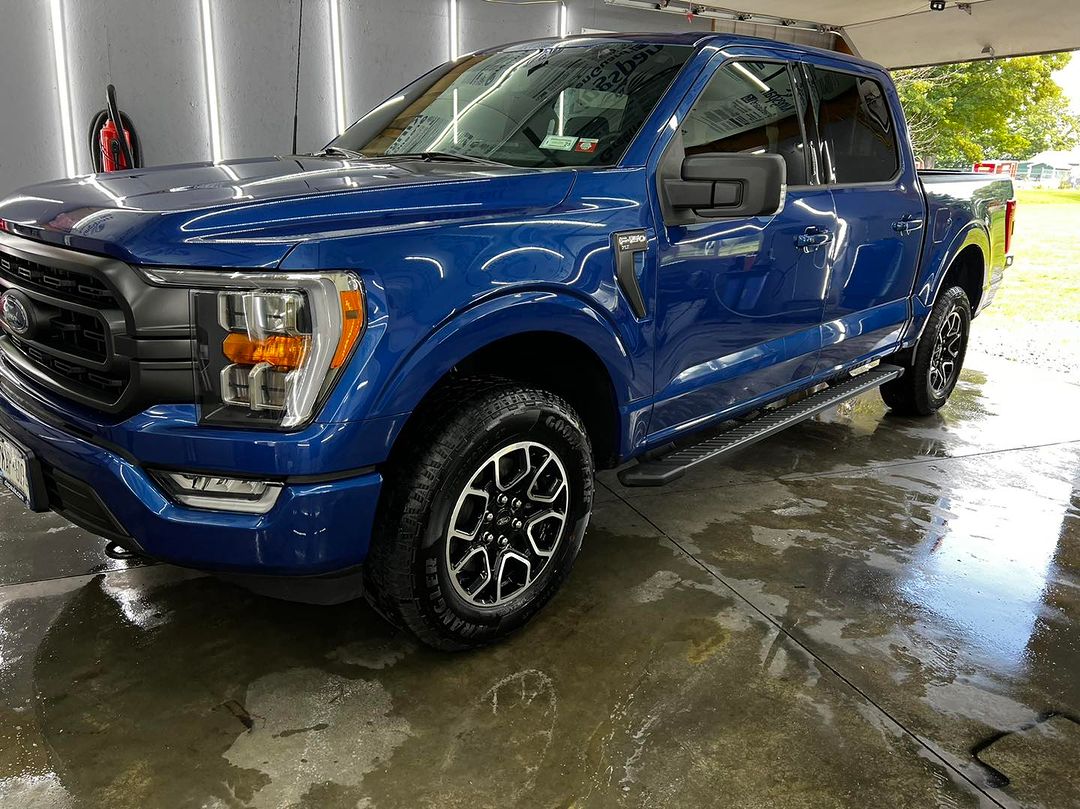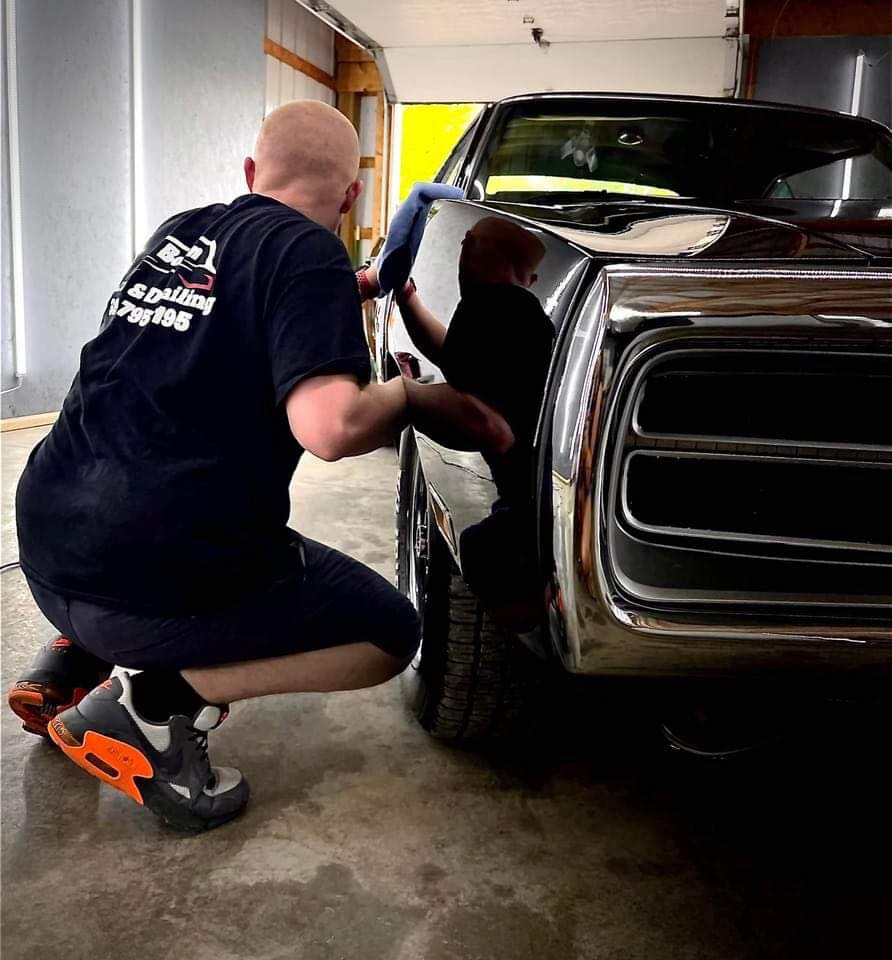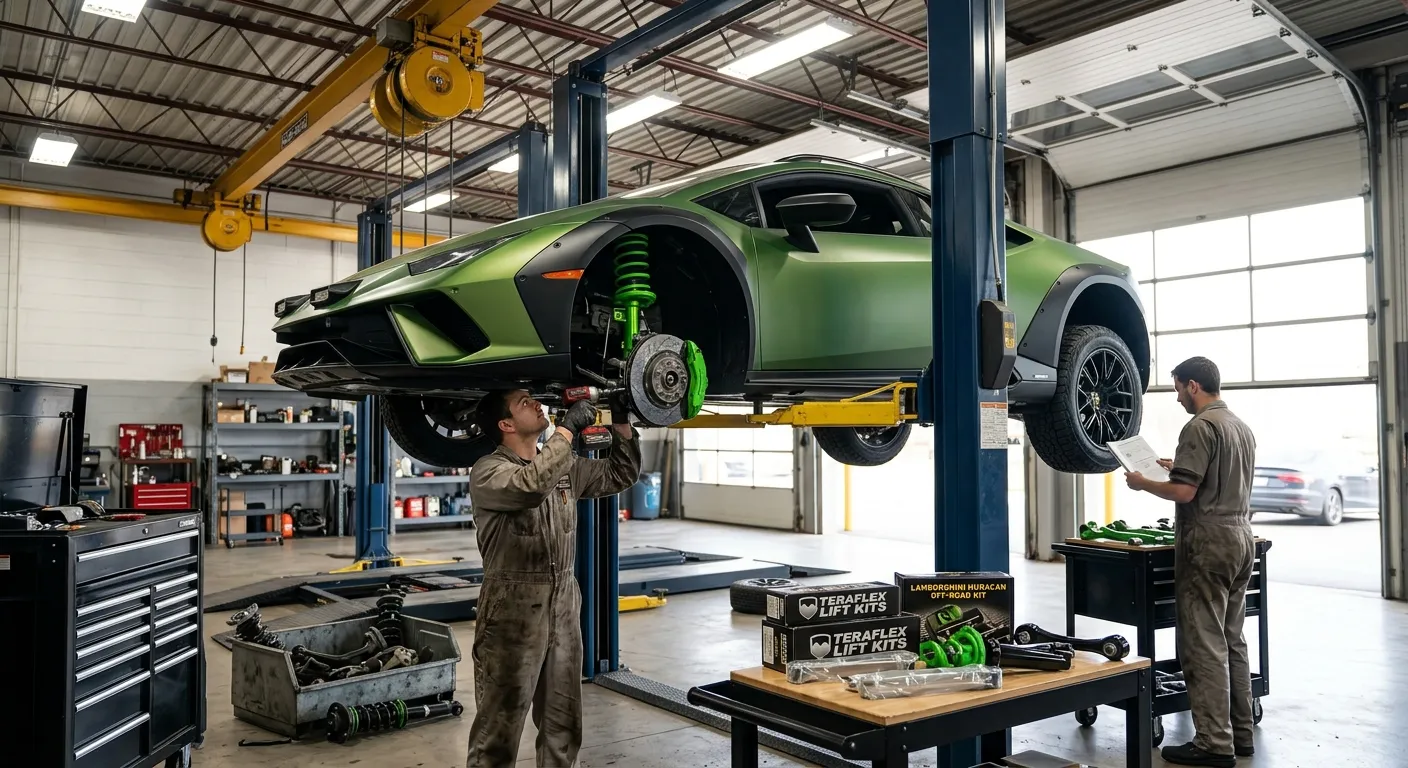
Lift kit installation in Central New York is a popular upgrade for truck, Jeep, and SUV owners who want more ground clearance, a stronger stance, room for larger tires, or a more capable off-road look. Whether you drive a Ram, Silverado, F-150, Tacoma, 4Runner, Wrangler, Gladiator, Bronco, Sierra, Tundra, or another lifted build candidate, the right lift should fit the vehicle and the way you drive.
The real question is not only, “How high should I lift it?”
The better question is, “What lift size gives me the look, tire clearance, ride feel, and alignment setup I actually want?”
That question matters in Central New York. Local drivers deal with snow, road salt, potholes, uneven pavement, muddy trails, job sites, gravel roads, and winter driving. A lift kit can make a truck or Jeep look better and feel more ready for rough conditions, but it should be planned with the right parts, tire size, wheel offset, and alignment needs in mind.
At Notorious Auto Protection in Syracuse, NY, drivers can ask about lift kit installation, truck lifts, truck lift and suspension kit installation, truck modifications, and off-road wheels and tires.
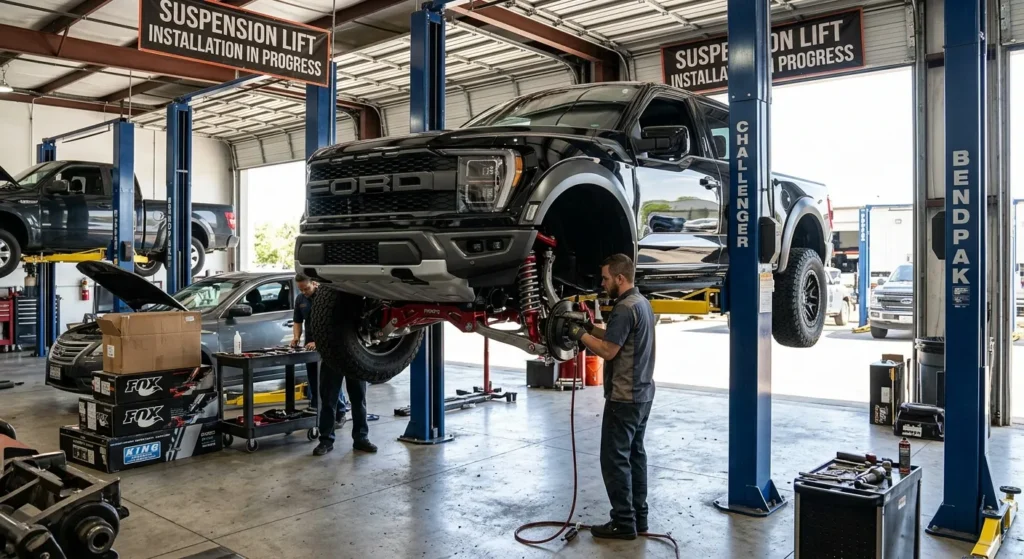
Notorious Auto Protection is located at 6742 Pickard Dr, Syracuse, NY 13211. To talk through lift kit installation in Central New York, call (315) 552-4441 or visit https://notoriousautoprotection.com/contact-us.
A lift kit raises a vehicle higher than stock height. The goal may be more tire clearance, more ground clearance, better off-road stance, or a stronger custom look.
Lift kits can be simple or more involved. Some kits level the front of a truck so it sits closer to even from front to rear. Other kits raise the whole vehicle several inches and replace or modify suspension parts. Larger lifts may involve new shocks, struts, springs, control arms, brackets, steering parts, brake line changes, driveline considerations, and more.
Here is why this matters.
A lift kit changes more than height. It can change suspension geometry, steering feel, ride quality, tire wear, braking feel, entry height, headlight aim, and how the vehicle handles. That is why lift kit installation should be planned around both style and function.
A clean lift kit plan should cover:
The right setup should look good and drive well.
Truck and Jeep owners choose lift kit installation for many reasons. Some want the vehicle to look more aggressive. Some want room for larger tires. Others want more clearance for trails, snow, ruts, mud, or job site use.
Common reasons include:
Let’s break it down.
A daily driver may only need a mild lift or leveling kit. A weekend trail Jeep may need more clearance and more suspension travel. A show truck may focus on stance, wheels, lighting, and appearance. A work truck may need a practical lift that still drives well and carries gear safely.
For Central New York drivers, lift kit installation can also be part of a winter-ready or trail-ready build. Larger tires, better lighting, side steps, rock lights, and undercoating may all fit into the same plan.
Lift kit sizes usually refer to how many inches the vehicle is raised. Common options include 1 inch, 2 inches, 2.5 inches, 3 inches, 4 inches, 6 inches, and higher custom setups.
A small lift or leveling kit can clean up the stance and help fit slightly larger tires. This is common for drivers who want a mild look without making the vehicle much harder to drive every day.
This range is popular for trucks and Jeeps that need a stronger look and more tire clearance while staying practical for daily use. Parts and alignment needs become more involved than a small leveling kit.
A 4-inch lift gives a much more visible change. It can allow larger tires and more ground clearance, but it may also require more suspension parts, more setup time, and closer attention to ride and steering.
A 6-inch lift creates a bold stance and room for much larger tires. It can look great on trucks and some Jeeps, but it comes with more changes to ride height, entry height, handling, braking feel, headlight aim, and long-term wear.
Bottom line, bigger is not always better. The best lift size is the one that fits your vehicle, tires, use, and comfort level.
A leveling kit raises the front of a truck to reduce the factory nose-down rake. Many trucks sit lower in front from the factory. A leveling kit can help the truck sit more evenly.
A suspension lift kit usually raises the whole vehicle and changes more parts. It may include springs, struts, shocks, control arms, brackets, crossmembers, steering parts, or other suspension pieces depending on the vehicle and lift height.
Here is the simple version.
A leveling kit is usually best for:
A suspension lift kit is usually best for:
Now here’s the thing.
A leveling kit can still affect alignment and tire wear. It may be smaller than a full lift, but it still changes suspension angles. That is why alignment should be part of the conversation even with a mild setup.
A body lift raises the body of the vehicle from the frame using spacers, while the suspension and frame stay closer to their original height. This can create room for larger tires, but it does not give the same suspension clearance benefits as a suspension lift.
A suspension lift raises the vehicle through the suspension system. This can improve ground clearance under parts of the vehicle and allow more travel or clearance depending on the kit.
The catch is, body lifts and suspension lifts do not feel the same and do not solve the same problem.
Body lifts may work for certain looks and tire clearance goals. Suspension lifts are usually the better choice when drivers want a more complete off-road or stance upgrade. Some builds may use both, but that should be planned carefully.
Ask Notorious Auto Protection which setup fits your truck or Jeep before buying parts. The right answer depends on the vehicle, tire goal, and how you drive.
Lift kit installation cost depends on the vehicle, lift size, kit type, parts, labor, tire fitment, alignment needs, and whether extra work is needed.
Notorious Auto Protection does not need to guess from a generic price because each truck or Jeep is different. A small leveling kit on one truck is not the same as a 6-inch suspension lift on another. A Jeep Wrangler lift is not the same as a late-model pickup lift. A rusty Central New York truck may also take more time than a clean newer vehicle.
Cost can be affected by:
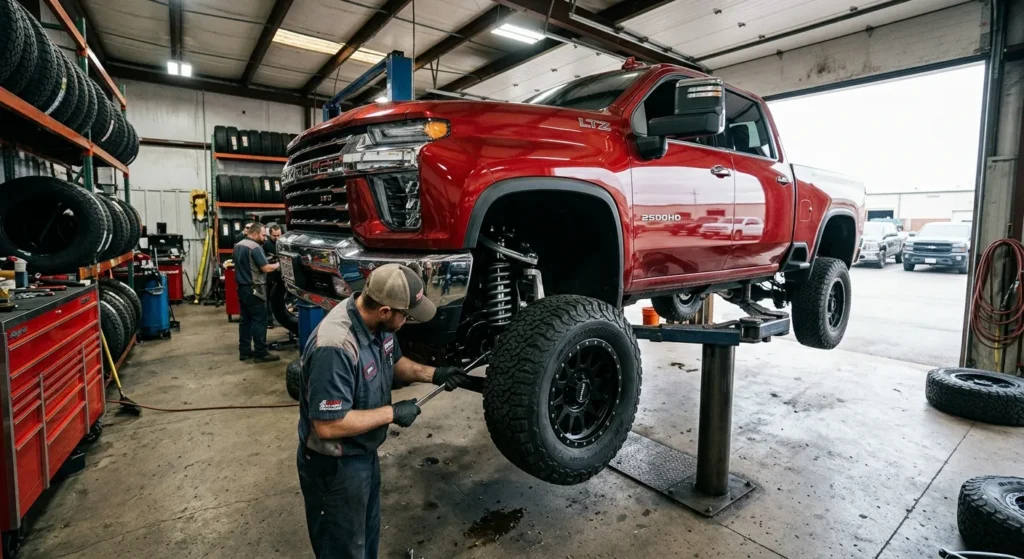
A quote should be based on the vehicle and the finished setup you want. Call with your vehicle details, desired lift size, current tire size, and desired tire size.
Alignment is one of the most important parts of lift kit installation.
When a truck or Jeep is lifted, suspension angles change. Camber, caster, and toe can shift. If those angles are not corrected, the vehicle may pull, wander, wear tires unevenly, or feel unstable at highway speeds.
Hunter Engineering describes wheel alignment as adjusting wheel angles so they are set to vehicle maker specifications or a custom specification for the vehicle’s use. Alignment helps tire wear, handling, and steering feel.
Here is why that matters after a lift.
A lifted truck with poor alignment can chew through expensive tires. It can also feel loose, twitchy, or tiring to drive. Larger tires make this even more noticeable because they cost more and can add more stress to steering and suspension parts.
A good post-lift process should include:
Some lifts may also need a follow-up check after the vehicle has been driven for a short period. Suspension parts can settle, and bolts may need inspection after initial use.
Lift kit installation and tire fitment should be planned together.
Many drivers install a lift because they want bigger tires. That can work well, but tire size, wheel width, and offset need to match the lift and vehicle.
Tire fitment can be affected by:
Here is why this matters.
A truck can look like it has enough room while parked, then rub when turning, braking, backing up, or hitting bumps. A Jeep may clear tires on the street but rub off-road when the suspension flexes. A wheel with aggressive offset can change the stance but may also create more fender poke and road spray.
For a cleaner result, plan wheels, tires, and lift height together. Notorious Auto Protection can help with wheels and tires, off-road wheels and tires, and [truck wheel tires](https://notoriousautoprotection.com/services/truck-wheel-ti re s/).
A lift kit changes how a vehicle feels.
A mild lift may feel close to stock when installed well. A larger lift with big tires can feel different during braking, turning, lane changes, and highway driving. The center of gravity moves higher, which can affect body roll and handling.
NHTSA rollover safety materials explain that taller, narrower vehicles have a higher center of gravity and can be more prone to rollover than lower, wider vehicles. A lift can raise the vehicle’s center of gravity, so daily driving habits should match the new setup.
What this means is simple.
A lifted truck or Jeep should be driven with the new height in mind. Leave more room for braking. Take turns with care. Watch parking garage clearance. Pay attention to wind, load weight, towing, and tire pressure.
Ride quality can also change based on:
If you want a daily-friendly lift, say that when you call. If you want an off-road focused build, say that too. The parts and setup should match the use.
New York does not have a simple one-line rule that covers every lift kit setup. Road-use concerns can involve equipment, inspection, lighting, tire coverage, bumper height, headlight aim, and whether the vehicle remains safe to operate.
New York Vehicle and Traffic Law § 375 covers vehicle equipment rules. It includes requirements for equipment condition and lighting, and New York DMV inspection rules can also matter when a vehicle has changed suspension, wheels, tires, or other equipment.
The practical takeaway is this: a lifted vehicle still needs to be safe and road-ready.
Syracuse, NY drivers should think about:
This is not legal advice. Lift rules and enforcement can depend on the vehicle and setup. For exact legal questions, check with New York DMV, local authorities, or a qualified attorney.
Lift kit installation starts with a vehicle review and a plan. The team needs to know the vehicle, current suspension condition, desired lift height, tire size, wheel setup, and how the truck or Jeep will be used.
A typical process may include:
Now here’s the thing.
Rust can change the job. Central New York trucks and Jeeps often see road salt, and that can make bolts, brackets, and underbody parts harder to work with. A vehicle inspection helps catch these issues before the install plan is finalized.
Yes. Lift kit installation often works best as part of a full truck or Jeep plan.
If you want the build to sit right, ride well, and look finished, you may also want to ask about:
For exterior protection, ask about undercoating, paint protection film, ceramic coating, window tinting, and auto detailing.
A lifted truck or Jeep can throw more road spray along the body, especially with wider wheels and tires. Paint protection, undercoating, and regular detailing can help keep the vehicle cleaner through Central New York weather.
Lift kit installation can be planned for many vehicle types.
Pickup trucks are popular lift candidates. A truck lift can improve stance, tire clearance, and off-road appearance. Common upgrades include leveling kits, 3-inch lifts, 4-inch lifts, and 6-inch lifts.
Jeep owners often lift for tire clearance, trail use, and a stronger off-road look. A Jeep lift should consider suspension flex, steering feel, tire size, and daily driving comfort.
Some SUVs can be lifted for stance, ground clearance, or off-road use. Fitment, ride quality, and alignment should be reviewed before choosing parts.
Work trucks may need practical lifts that still handle tools, gear, towing, plowing, or job site driving. Ride quality and load use should be discussed before choosing a kit.
Show trucks may focus more on stance, wheel fitment, lighting, tint, and finish. These builds should still be aligned and checked for road use.
Notorious Auto Protection has served Syracuse, NY since 2020 and is trusted for vehicle protection, truck upgrades, lighting, accessories, wheels, tires, tint, wraps, detailing, and custom work. The shop is Ceramic Pro certified, a Ceramic Pro vendor, and carries warranties on products and services.
With 269 reviews and a 5-star rating, Notorious Auto Protection is a trusted choice for Central New York drivers who care about their vehicles.
Related services include:
Whether you want a mild leveling kit or a taller truck lift, the team can help you plan the setup around fitment, alignment, tires, and daily use.
Lift kit installation in Central New York should be planned around lift height, tire size, wheel fitment, alignment, ride quality, and how the vehicle will be used. A clean setup should look right, drive well, and make sense for Syracuse, NY roads.
Before you call, gather your vehicle year, make, model, current tire size, desired tire size, and the lift height you are considering. It also helps to know whether your goal is daily driving, off-road use, work use, or show style.
Notorious Auto Protection is located at 6742 Pickard Dr, Syracuse, NY 13211. Business hours are Monday through Saturday from 8 AM to 6 PM and Sunday from 8 AM to 5:30 PM.
Call (315) 552-4441 or visit https://notoriousautoprotection.com/contact-us to schedule an appointment.
Lift kit installation cost depends on your vehicle, lift height, kit type, tire size, labor time, parts, rust level, alignment needs, and whether extra suspension or steering parts are needed. Call Notorious Auto Protection for a custom quote.
The right lift size depends on your truck or Jeep, tire goals, daily driving needs, and off-road plans. A mild leveling kit may work for a daily driver, while a larger suspension lift may fit a more aggressive build.
Yes. Alignment is strongly recommended after lift kit installation because lifting changes suspension angles. A proper alignment helps steering feel, tire wear, and handling.
Usually, yes, but tire fitment depends on lift height, wheel width, wheel offset, tire size, fender clearance, and steering clearance. Tire rub can still happen if the setup is not planned correctly.
Yes. A lift can change ride height, steering feel, braking feel, body roll, entry height, and highway handling. A mild lift may feel close to stock, while larger lifts can feel more different.
New York road use depends on the full vehicle setup, equipment, inspection condition, lighting, tire coverage, and safety. For exact legal questions, check with New York DMV, local authorities, or a qualified attorney.
Call Notorious Auto Protection at (315) 552-4441 or visit https://notoriousautoprotection.com/contact-us to request an appointment.
Your vehicle is a significant investment, and ensuring its protection from the elements and everyday hazards is crucial to maintaining its value and appearance. In Syracuse, NY, where road conditions and weather can be unpredictable, combining STEK Paint Protection Film (PPF) and Window Tint offers the ultimate solution for safeguarding your car. At Notorious Auto Protection, we specialize in applying these premium products to provide your vehicle with maximum protection and enhanced aesthetics.
Product Brand: Auto Protection
Question about the service you're choosing, or simply ready to book? Contact us today to get started
Explore the many services we offer by clicking the boxes below