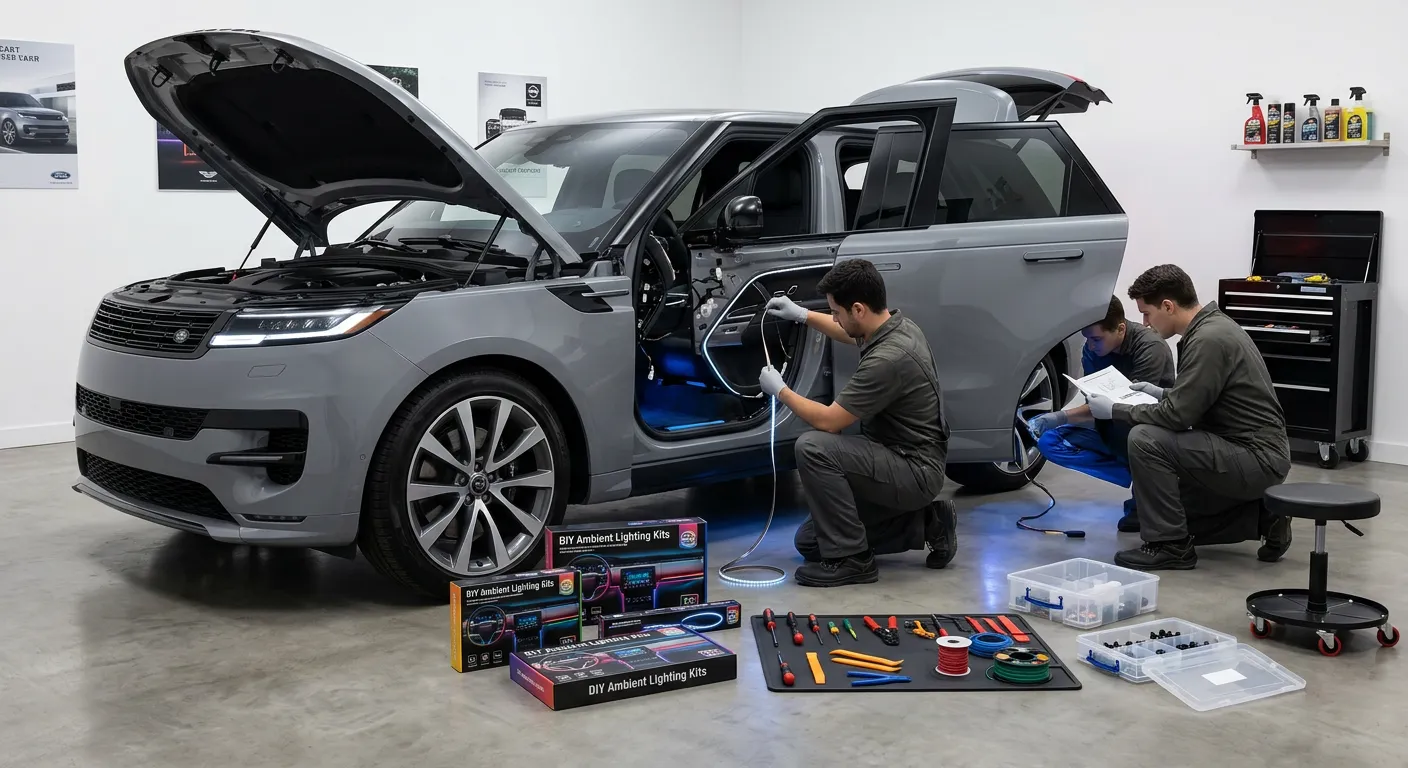
DIY Ambient Lighting Kits vs Professional Installation comes down to much more than whether you can install LED lights yourself. Placement, wiring, interior disassembly, electrical connections, control modules, fit, and the finished appearance all play a part. A DIY kit can appeal to someone who enjoys working on their own vehicle, while professional installation is designed for drivers who want the work handled for them.
For vehicle owners in Syracuse, NY, interior ambient lighting can change the appearance of a car after dark by adding light around areas such as the dashboard, doors, center console, and footwells. The installation method can have a major effect on how those lights look once the job is finished.
At Notorious Auto Protection, we provide professional interior vehicle ambient lighting installation for drivers who want lighting fitted to their vehicle.
Before deciding between a DIY kit and professional installation, it helps to understand what each route involves.
Automotive ambient lighting adds accent lighting to selected areas of a vehicle’s interior.
Depending on the system and vehicle, lights may be positioned around areas such as:
Factory manufacturers use similar ideas in modern vehicles.
Mercedes-Benz describes ambient lighting systems that illuminate areas around the instrument panel, doors, center console, and other sections of the cabin. Factory systems may also provide multiple colors, brightness settings, and lighting zones.
Aftermarket systems bring similar lighting concepts to vehicles that may not have the desired interior lighting from the factory.
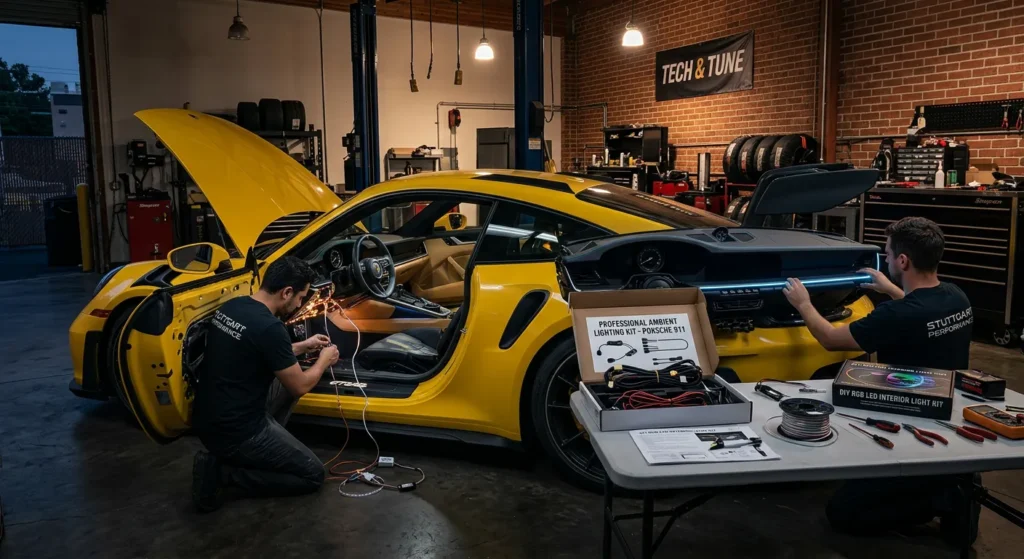
The installation method is where DIY and professional approaches begin to separate.
When comparing DIY Ambient Lighting Kits vs Professional Installation, there are several areas to consider.
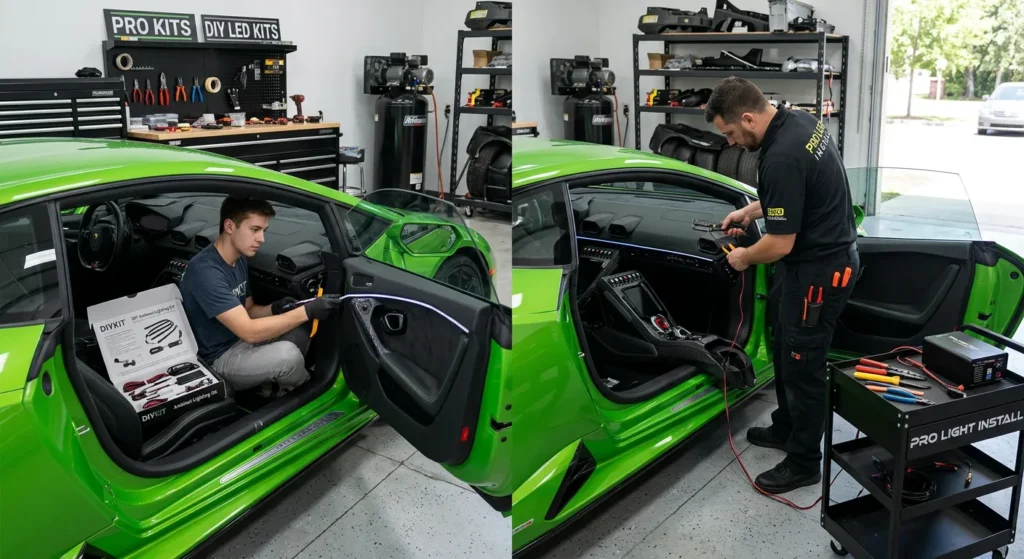
A DIY kit puts you in charge of the work. You choose where the lights go, remove any necessary trim, route the wiring, make the required electrical connections, position the controller, and put the interior back together.
Professional installation puts those tasks in the hands of an installer.
The difference becomes more noticeable as the lighting design becomes more involved.
Adding a simple plug-in footwell light is different from installing lighting through several doors, the dashboard, center console, and other trim sections.
Ask yourself what you actually want the finished interior to look like.
If you only want a small amount of removable accent lighting, a DIY product may fit that goal.
If you want lighting fitted across several areas of the cabin with wiring kept out of sight, professional ambient lighting installation is worth considering.
DIY kits vary widely.
Some are relatively simple and may use adhesive-backed LED strips with a plug-in power source.
Others require much more work.
A more involved kit may require you to:
The instructions included with the product should determine the correct installation process for that specific kit.
Do not assume that wiring instructions for one vehicle or lighting kit automatically apply to another.
Modern vehicles contain many electrical components, sensors, modules, airbags, switches, and factory wiring systems. That makes careful planning important before altering the interior.
Professional installation starts from a different perspective.
Rather than adapting the entire project around what can be installed quickly at home, the lighting can be planned around the vehicle and the desired appearance.
Placement is a major part of that process.
You may want illumination around the dashboard but not the footwells.
Another owner may want lighting through the doors and center console.
Someone building a custom interior may want several illuminated areas tied into one visual theme.
At Notorious Auto Protection, our interior vehicle ambient lighting service gives Syracuse, NY vehicle owners a professional option instead of taking apart their own interiors.
Automotive electrical work deserves attention.
Your vehicle contains circuits designed for specific electrical loads and components.
That means adding aftermarket equipment should not be treated like plugging decorative lights into a wall at home.
Ford warns owners in its manuals that electrical or electronic accessories and components may affect the performance and durability of a vehicle’s battery. Ford also states that aftermarket electrical or electronic accessories can affect other electrical systems.
The exact risks depend on the vehicle, accessory, and installation method.
This is why you should follow vehicle manufacturer guidance and the lighting manufacturer’s instructions when working with electrical accessories.
If you do not understand the required electrical connection, guessing is not a good approach.
Many ambient lighting installations require access behind interior panels.
That can include:
Modern trim can use clips, fasteners, wiring connectors, and other attachment methods.
The removal process varies by vehicle.
Pulling on a panel without knowing where its fasteners are located can damage clips or trim.
There may also be factory wiring attached behind the panel.
This becomes even more important around doors and pillars because those areas may contain safety equipment.
If you are installing a DIY ambient lighting kit, use service information appropriate for your exact vehicle rather than assuming every panel simply pulls off.
Light placement is one of the biggest differences you will notice after installation.
Consider a strip of light installed along the dashboard.
If it follows the trim evenly, the light can appear to belong with the shape of the cabin.
If the strip changes height, has gaps, or stops in an awkward location, your eye may notice those differences every time the system is turned on.
The same applies to doors.
Lighting positioned consistently from one door to another can give the cabin a connected appearance.
Placement also affects where the light reflects.
A light source does not need to point directly at your eyes to become distracting. It can reflect from glossy trim, windows, mirrors, screens, or other surfaces.
Test potential locations before permanently mounting the lights.
One reason people choose professional installation is the finished look.
Many owners do not simply want lights inside the car. They want the lighting to appear as though it belongs there.
That usually means thinking about:
DIY installations can look good when the installer has the right skills, tools, patience, and vehicle knowledge.
The challenge is that mistakes can be very visible after dark.
A loose wire that is barely noticeable during daylight may stand out once the cabin lights are running.
The same is true of uneven strips or exposed light sources.
Wiring should be planned before installing the lights.
Do not start sticking lights to panels and figure out the wiring afterward.
You need to know where wires will travel and how they will reach their destination without interfering with moving or safety-related parts.
Loose wires can also make the finished cabin look unfinished.
Areas around seats, pedals, steering components, doors, and airbags deserve extra attention.
Never route wires where they could interfere with normal vehicle controls.
If a wire needs to cross an area containing safety equipment, consult proper service information or have the installation handled by someone familiar with the vehicle.
It can.
Adding aftermarket electrical equipment introduces another device into the vehicle’s electrical system.
The effect depends on how the accessory is powered and installed.
Manufacturer warnings are one reason owners should take this seriously.
Ford’s owner information states that aftermarket electrical and electronic accessories may affect battery performance and other electrical systems.
Other manufacturers may have their own requirements and warnings.
Before installing a DIY ambient lighting kit, check the owner’s manual and installation information for your exact vehicle.
The catch is that a tutorial for a similar car may not cover every electrical difference in your model or model year.
This is one of the most important considerations when routing aftermarket interior wiring.
Vehicles may have airbags installed in locations such as:
The National Highway Traffic Safety Administration states that side airbags can be mounted in seats or doors, while curtain airbags may deploy from the roof rail above the side windows.
That matters when you are routing wires or adding components behind interior trim.
You do not want aftermarket lighting, wiring, controllers, or mounting hardware interfering with an airbag deployment area.
Do not place ambient lighting components or wiring where they could interfere with an airbag.
If you cannot identify the airbag locations or safe routing paths in your vehicle, professional installation is the safer route.
A plug-in kit may appeal to owners who want a simpler project.
These products can reduce the amount of electrical work required when they use an existing accessory power outlet or another manufacturer-approved connection.
They still require planning.
Ask:
A simple kit can be a reasonable choice for someone who wants basic lighting and is comfortable accepting a more accessory-like appearance.
If your goal is a fitted look across several interior panels, the project becomes more involved.
Professional installation may make more sense when your desired design requires work across several areas of the vehicle.
Consider professional ambient lighting installation if you want:
It can also make sense when you simply do not want to work around modern vehicle electronics and interior panels.
You bought the lighting upgrade because you want to enjoy the finished cabin.
There is nothing wrong with deciding that you would rather have someone else handle the installation.
Newer vehicles can make the decision more complicated.
Modern interiors may contain:
The more equipment built into the interior, the more carefully an aftermarket installation needs to be planned.
This does not mean an ambient lighting installation cannot be performed.
It means the person performing the work needs to understand what is behind the panels before routing wires or making electrical connections.
Vehicle-specific information matters.
Yes.
Ambient lighting and a starlight headliner affect different parts of the cabin.
Ambient lights can add illuminated lines or accents around doors, dashboard areas, the console, and footwells.
A starlight headliner creates a starfield across the ceiling.
Combining the two can give you lighting above and around the cabin.
Color planning becomes especially useful when using both.
You may want the headliner and ambient lighting to share similar colors.
You might prefer contrast.
You could also use adjustable settings to change the appearance depending on the situation.
Talk about the complete interior before choosing each part separately.
Before buying a kit or scheduling installation, decide what you actually want.
Start with these questions:
Do you want only footwell lighting, or do you want illuminated doors, dashboard areas, and the console too?
Some owners prefer indirect illumination where the glow is visible but the lighting hardware is less noticeable.
If so, confirm the available color controls before choosing a system.
Interior lighting should not become a distraction while driving.
If exposed wiring would bother you, include wire routing in your planning from the beginning.
If not, professional installation may make more sense than learning on your own vehicle.
Do not guess when connecting an aftermarket accessory to a vehicle’s electrical system.
If you like the appearance of custom ambient lighting but do not want to disassemble interior panels, route wires, or work with vehicle electrical connections yourself, Notorious Auto Protection can handle the installation.
We provide interior vehicle ambient lighting installation in Syracuse, NY.
Our team can discuss where you want the lighting, what type of appearance you have in mind, and how the lighting can fit with the rest of your vehicle.
You can also pair an interior lighting project with other custom services.
Interested in stars across the ceiling? See our starlight headliner installation.
Looking for a different exterior appearance? See our vinyl wrap service.
Want to change how your windows look while adding privacy and solar protection? Learn about our window tinting service.
We also provide auto detailing, paint correction, paint protection film, and ceramic coating for Syracuse, NY vehicle owners.
When comparing DIY Ambient Lighting Kits vs Professional Installation, think beyond the lights themselves.
Consider wiring, panel removal, airbag locations, placement, reflections, electrical connections, and what you want the interior to look like when the job is finished.
A DIY kit may suit someone who enjoys working on vehicles and wants a smaller lighting project.
Professional installation may suit drivers who want lighting fitted across several interior areas without doing the installation themselves.
Want to talk about your vehicle?
Call Notorious Auto Protection at (315) 552-4441 or visit our contact page to schedule an appointment in Syracuse, NY.
It depends on the kit and the vehicle. A simple plug-in footwell kit can involve much less work than a system installed through doors, dashboard trim, and a center console. Some installations require panel removal, wire routing, and electrical connections. Read the kit instructions and vehicle information before beginning.
Some simple lighting kits may not require door panel removal. Lighting installed within or behind door trim may require access behind the panel. The process depends on the vehicle and where you want the lights positioned.
Improperly placed aftermarket wiring or components can create concerns around airbag deployment areas. NHTSA notes that side and curtain airbags may be located in seats, doors, and roof areas. Do not place wiring or lighting equipment where it could interfere with an airbag. Consult vehicle-specific service information when you are unsure.
Any electrical accessory draws power. The effect depends on the accessory, electrical connection, operating time, and vehicle. Ford warns that aftermarket electrical and electronic accessories can affect battery performance. Follow the vehicle manufacturer’s guidance and the lighting manufacturer’s installation instructions.
Placement depends on the vehicle and selected system, but ambient lighting can be used around areas such as dashboard trim, doors, center consoles, and footwells. Notorious Auto Protection can discuss possible locations for your vehicle before installation.
Yes. Ambient lighting can illuminate areas around the cabin while a starlight headliner creates illuminated points across the ceiling. The colors and brightness can be planned so the two modifications work well together.
Notorious Auto Protection provides interior vehicle ambient lighting installation in Syracuse, NY. Call (315) 552-4441 or visit our contact page to discuss your vehicle and schedule an appointment.
Your vehicle is a significant investment, and ensuring its protection from the elements and everyday hazards is crucial to maintaining its value and appearance. In Syracuse, NY, where road conditions and weather can be unpredictable, combining STEK Paint Protection Film (PPF) and Window Tint offers the ultimate solution for safeguarding your car. At Notorious Auto Protection, we specialize in applying these premium products to provide your vehicle with maximum protection and enhanced aesthetics.
Product Brand: Auto Protection
Question about the service you're choosing, or simply ready to book? Contact us today to get started
Explore the many services we offer by clicking the boxes below