Window Tinting in Liverpool, NY can change the appearance of your car while helping with glare, solar heat, UV exposure, and daytime privacy. The right window film is not just about choosing how dark you want the glass to look. Film type, visible light transmission, vehicle glass, New York tint rules, and the way you use your vehicle all matter.
Liverpool, NY drivers deal with bright summer sun, long highway trips, winter glare, and changing weather throughout the year. A well-matched automotive window film can make the cabin more comfortable without forcing you to choose the darkest film available.
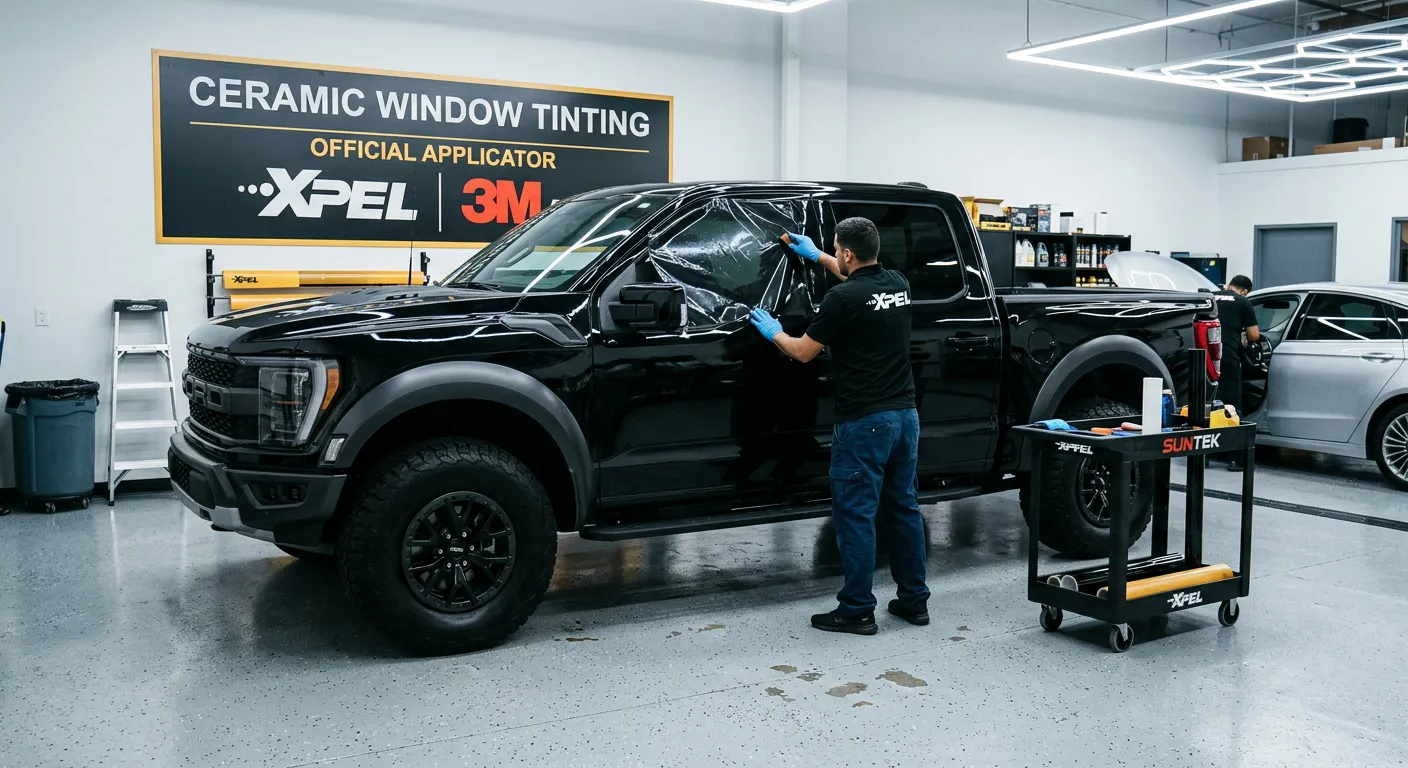
Notorious Auto Protection provides window tinting at our shop in Syracuse, NY, near Liverpool. We install XPEL and Ceramic Pro window films, giving vehicle owners several choices for appearance and solar performance.
Before choosing a shade, learn what the numbers mean and how New York’s rules apply to your vehicle.
Automotive window film can serve several purposes at once.
Drivers may want window tint for:
Your reason for tinting should guide the film choice.
Someone who mainly wants heat rejection may choose a different film from a driver whose main goal is a darker appearance.
This is where film technology matters.
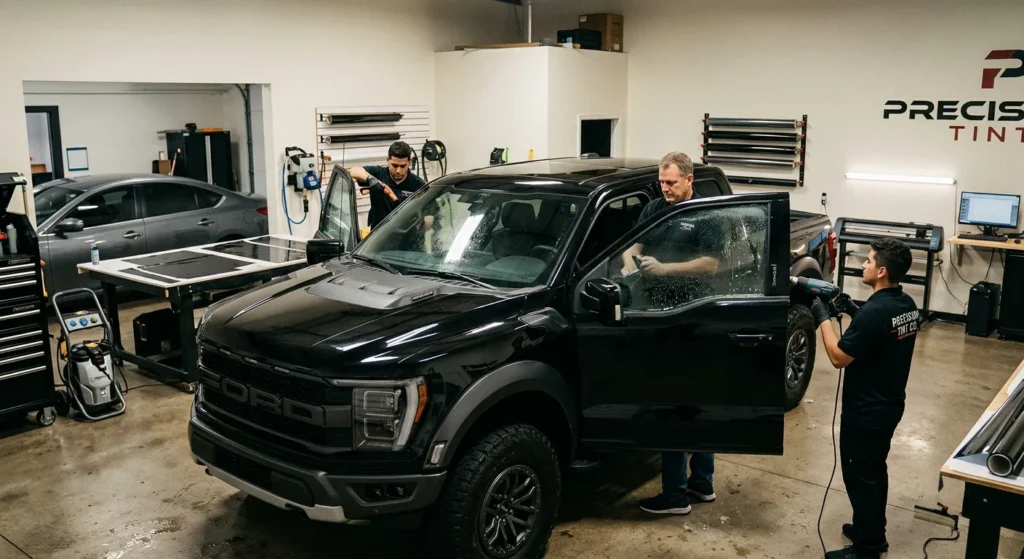
Modern ceramic films can provide high levels of infrared and UV rejection without requiring the darkest shade in the product line.
When shopping for Window Tinting in Liverpool, NY, you may see several film categories.
Common choices include:
These names refer to how a film is made and what materials are used.
Do not choose by category name alone.
Compare the manufacturer’s published specifications for the exact film.
Look at:
Two films that look nearly identical from outside the vehicle can have different solar-performance specifications.
VLT stands for visible light transmission.
It describes how much visible light passes through a material.
A high VLT number means more visible light passes through.
A low VLT number means less visible light passes through.
This means:
The percentage printed in a film catalog may describe the film itself rather than the final reading once that film is installed on automotive glass.
That difference matters in New York.
Automotive glass is not always perfectly clear before film is installed.
The final window reading depends on the glass and film together.
Ceramic Pro’s KAVACA specification sheet shows this difference directly.
Its KAVACA Ultimate IR 70 is listed at 66% VLT for the film alone and 57% when measured on the automotive glass used for Ceramic Pro’s published test.
KAVACA Ultimate IR 80 is listed at 74% VLT for the film and 65% on that test glass.
The exact reading on your vehicle can differ because the original glass matters.
This is why selecting film solely from the number in its product name can create problems.
New York rules apply to the amount of light transmitted through the finished window, not just the film’s advertised shade.
Ceramic window film is popular with drivers who care about solar performance.
XPEL’s PRIME XR and XR PLUS lines use nano-ceramic technology.
Ceramic Pro offers KAVACA Ultimate IR as a ceramic window film.
Ceramic films are available in multiple VLT levels, so choosing ceramic does not automatically mean choosing very dark windows.
That gives Liverpool, NY drivers more flexibility.
You can compare lighter and darker films while still looking at infrared and UV performance.
For a street vehicle, the finished window still needs to be considered against New York requirements.
Not every vehicle owner needs the same film type.
XPEL PRIME CS uses color-stable dyed film technology. XPEL lists it as blocking 99% of harmful UV rays, with several shades available.
A color-stable film can suit someone who wants:
Ceramic films move farther toward heat and infrared rejection.
The choice comes down to what you want from the windows.
If cabin heat is high on your list, compare the infrared and total solar energy specifications rather than choosing solely from appearance.
Notorious Auto Protection works with XPEL window film.
XPEL’s PRIME automotive range includes several film types.
PRIME CS uses color-stable dyed film technology.
XPEL lists:
This can suit drivers who want the appearance and UV benefits of automotive tint without moving into a ceramic product.
PRIME XR uses nano-ceramic technology.
XPEL lists PRIME XR with up to 85% infrared heat rejection and 99% UV rejection.
It is available in several VLT levels.
PRIME XR PLUS sits at the higher end of XPEL’s automotive tint range.
XPEL’s current specification sheet lists infrared rejection figures as high as 96% at 1025 nm for several XR PLUS shades.
The same specification sheet lists 99% UV rejection across the XR PLUS shades shown.
The actual solar performance differs by shade, so read the complete specification table rather than applying one maximum figure to every film.
Ceramic Pro is another brand used by Notorious Auto Protection.
Its KAVACA range includes several automotive film choices.
Ceramic Pro’s specification sheet lists KAVACA Ultimate IR as a ceramic window film available across several VLT levels.
Depending on shade and measurement method, Ceramic Pro publishes high infrared rejection figures and 99.90% UV rejection.
Its specification sheet is useful because it separates film-only VLT from VLT measured on automotive glass.
That makes it easier to see why the finished-window reading deserves attention.
KAVACA Carbon X uses nano-carbon and nano-ceramic materials according to Ceramic Pro.
Its specification sheet lists several VLT levels along with UV, infrared, glare, and total solar energy measurements.
Drivers comparing KAVACA Carbon X and Ultimate IR should look at the complete specifications rather than darkness alone.
One reason Liverpool, NY drivers consider window tint is cabin heat.
Solar energy enters a vehicle through its glass.
Automotive film can reject a portion of that energy.
When comparing films, you may see measurements such as:
TSER means total solar energy rejected.
Infrared measurements can vary based on the wavelength range used in testing.
That is why two infrared percentages from different manufacturers should not automatically be treated as direct equivalents unless the testing methods match.
Manufacturer specification sheets give you more context than a single marketing number.
UV rejection is another reason to consider automotive film.
XPEL lists 99% UV rejection across its PRIME XR PLUS specification sheet.
Ceramic Pro lists 99.90% UV rejection for KAVACA Ultimate IR and Carbon X in its specification sheet.
UV protection does not require choosing the darkest film available.
Lighter films can also carry high UV-rejection specifications.
This can be useful for a driver who wants UV protection while keeping a lighter appearance.
Bright sunlight can make daytime driving uncomfortable.
Window film can reduce the amount of visible light entering through treated glass, which can reduce glare.
The amount depends partly on VLT.
XPEL’s PRIME specification sheet lists increasing glare reduction as VLT gets lower across many of its products.
There is a tradeoff.
A darker film reduces more visible light during the day, but it also means less visible light passes through the window at night.
Think about when and where you use the vehicle before choosing darkness.
No.
Darkness and solar performance are related measurements, but they are not the same thing.
A darker film lets less visible light through.
A ceramic film can target infrared energy while retaining a relatively light appearance.
XPEL’s current PRIME specification sheet shows this clearly.
PRIME XR PLUS 70 is listed at 67% VLT and 67% infrared energy rejection across XPEL’s stated 780 to 2500 nm measurement range.
PRIME CS is a different film technology with lower published infrared figures.
This means a darker-looking film is not automatically the better choice for someone mainly interested in heat rejection.
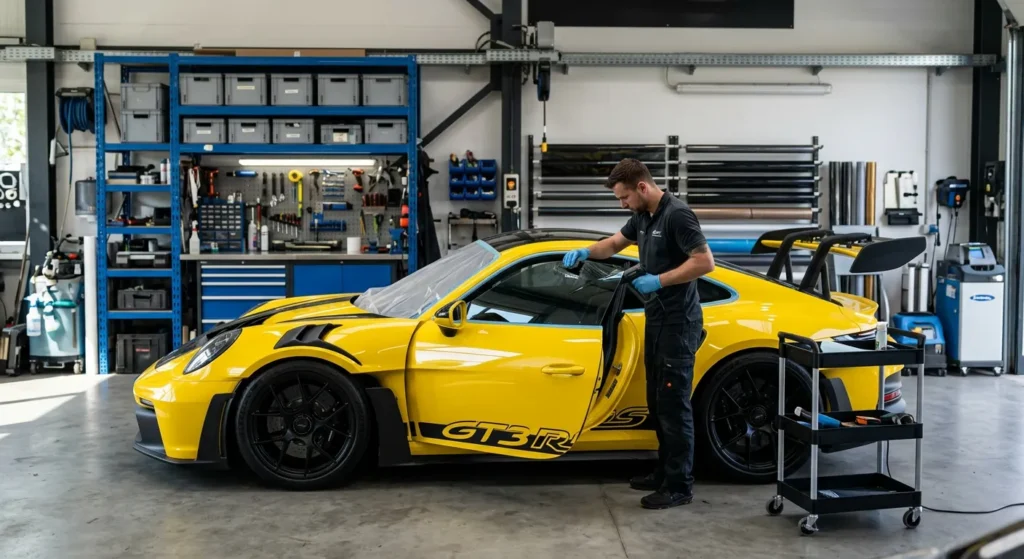
Compare the film technology and specification sheet.
New York window tint rules deserve attention before selecting a shade.
The New York State DMV inspection regulations state that, for model year 1992 and newer vehicles, any part of the windshield below the top six inches can be rejected when it allows less than 70% visible light transmission.
The same 70% minimum applies to side windows adjacent to or forward of the driver’s seating position.
The rear-window rule depends partly on whether the vehicle has dual outside rearview mirrors.
New York’s rules also differ for certain windows and vehicle classifications.
Do not assume a shade is permitted throughout the entire vehicle because you have seen the same tint on another car.
Vehicle type, window position, glass, and final VLT all matter.
Window tint is part of New York’s vehicle inspection process.
The DMV inspection regulations tell inspection stations to check applicable windows for proper visible light transmission.
For model year 1992 and newer vehicles, the regulations call for rejection when applicable front-side windows allow less than 70% light transmission.
The windshield below the top six inches is also subject to the 70% requirement.
This is why the final window reading matters.
A film sold under a name such as “70” does not guarantee the glass-and-film combination will measure at or above 70%.
Factory glass already affects light transmission.
Ask about the finished result before selecting a film for a regulated window.
New York has a medical exemption process for people who meet defined requirements.
The New York State DMV uses Form MV-80W for tinted-window exemption applications.
According to the DMV, the exemption applies when a person has a qualifying medical condition and other protective measures are not adequate.
The form requires information from an eligible New York-licensed medical provider.
An exemption should not be assumed based solely on light sensitivity.
The DMV and New York State Department of Health determine which medical conditions qualify.
Drivers who believe they qualify should review the current DMV application and requirements.
Many SUVs and trucks arrive with darker rear glass from the factory.
This is often called privacy glass.
Factory privacy glass and aftermarket window film are not the same product.
Privacy glass gets its darker appearance from the glass itself.
Window film is applied to the glass.
If your SUV already has dark rear windows, you may still want film for solar or UV performance.
The final appearance will depend on the factory glass and the film installed over it.
This is another reason to look at the vehicle before selecting a shade.
SUV and truck owners often want the front and rear windows to look more consistent.
The rear privacy glass may already appear much darker than the front door glass.
Film selection can change that visual balance.
Do not choose a front-door film only by trying to copy the appearance of the rear glass.
New York’s front-window rules still apply.
A better approach is to look at permitted front-window choices and then decide what can be done with the remaining glass.
Appearance should follow the legal and practical requirements of the vehicle.
A daily-driven car needs to work in many lighting conditions.
Liverpool, NY drivers may use their vehicles:
Very dark glass can look appealing during the day while making nighttime visibility through that window more difficult.
Think about your normal schedule.
A lighter ceramic film may suit a driver focused on heat and UV performance without wanting a very dark appearance.
Film technology gives you more choices than simply picking the darkest shade.
Trucks and SUVs can have a mixture of clear front glass and dark rear privacy glass.
That creates several choices.
You may want to:
Large glass areas can admit a lot of solar energy.
XPEL discusses panoramic roofs and sunroofs as another area where its PRIME films can be used for UV and solar protection.
The glass type and vehicle should be checked before applying film to a roof panel.
Tesla vehicles can have large glass areas, making window-film selection another consideration for owners.
Notorious Auto Protection offers dedicated Tesla window tinting along with other Tesla services.
Cybertruck owners can also view our Cybertruck window tinting service.
Film choice should account for the specific glass and vehicle rather than assuming every window should receive the same film.
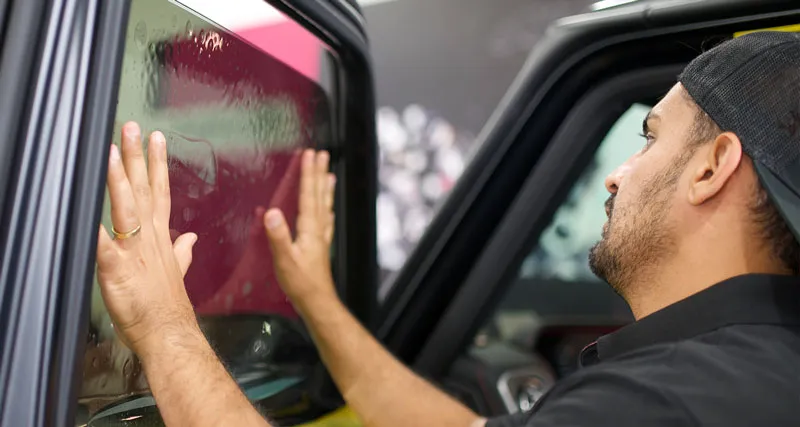
Freshly installed window film needs time to settle and dry.
Follow the film manufacturer’s and installer’s care instructions.
You may notice temporary moisture patterns or a hazy appearance during the drying period.
Drying time can vary with temperature, humidity, film, and vehicle.
Avoid picking at film edges.
Use cleaning products and tools suited to automotive window film.
If you notice an edge lifting or another concern after installation, contact the installer rather than trying to repair the film yourself.
Drivers searching for Window Tinting in Liverpool, NY can visit Notorious Auto Protection at our Syracuse, NY shop.
We are located at:
Notorious Auto Protection
6742 Pickard Dr
Syracuse, NY 13211
Our window tinting service includes film choices from XPEL and Ceramic Pro.
You can also pair window tint with other vehicle-protection services, including:
If you live in Liverpool, NY and are deciding between film types, tell us what matters most to you.
That might be heat rejection, UV protection, glare, appearance, or a combination of those goals.
We can discuss the film choices available for your vehicle and the windows you want tinted.
Window Tinting in Liverpool, NY starts with choosing the right film for the vehicle rather than choosing darkness alone.
VLT tells you how much visible light passes through.
The finished glass-and-film combination matters when checking New York requirements.
Ceramic films can offer high infrared and UV rejection without requiring the darkest appearance.
Color-stable films give drivers another choice when appearance and UV rejection are higher priorities than maximum infrared performance.
New York tint rules should be checked before installation, especially for the windshield and windows next to or forward of the driver.
For window tinting near Liverpool, NY, call Notorious Auto Protection at (315) 552-4441.
You can also use our contact page to schedule an appointment at our Syracuse, NY shop.
Our hours are Monday through Saturday from 8 AM to 6 PM and Sunday from 8 AM to 5:30 PM.
For model year 1992 and newer vehicles, New York DMV inspection regulations require at least 70% visible light transmission through the windshield below the top six inches and through side windows adjacent to or forward of the driver’s seating position. Other windows can be treated differently based on vehicle configuration and mirror equipment. Check the current DMV rules for your exact vehicle.
Not necessarily. The final VLT is measured through the glass and film together. Factory automotive glass already reduces some light transmission, so a film labeled around 70% may result in a finished reading below 70%. The complete window needs to be considered.
Ceramic film can make sense when infrared heat rejection and UV rejection matter to you. XPEL PRIME XR and XR PLUS and Ceramic Pro KAVACA Ultimate IR are ceramic-film choices with published solar-performance specifications. Compare the exact film and shade before choosing.
Not automatically. Darkness measures visible light transmission, while heat performance involves other measurements such as total solar energy rejection and infrared rejection. A lighter ceramic film can have stronger infrared performance than a darker film made with another technology.
Many automotive films are designed to reject a high percentage of UV radiation. XPEL lists 99% UV rejection for its PRIME XR PLUS films, while Ceramic Pro lists 99.90% UV rejection for KAVACA Ultimate IR and Carbon X in its specification sheet. Check the exact product data before choosing.
New York DMV provides a medical exemption process through Form MV-80W for people who meet defined medical requirements. The application requires certification from an eligible New York-licensed medical provider, and only qualifying conditions can support the exemption.
Notorious Auto Protection provides window tinting at 6742 Pickard Dr, Syracuse, NY 13211, near Liverpool. We install XPEL and Ceramic Pro window films. Call (315) 552-4441 or use our contact page to schedule an appointment.
Your vehicle is a significant investment, and ensuring its protection from the elements and everyday hazards is crucial to maintaining its value and appearance. In Syracuse, NY, where road conditions and weather can be unpredictable, combining STEK Paint Protection Film (PPF) and Window Tint offers the ultimate solution for safeguarding your car. At Notorious Auto Protection, we specialize in applying these premium products to provide your vehicle with maximum protection and enhanced aesthetics.
Product Brand: Auto Protection
Question about the service you're choosing, or simply ready to book? Contact us today to get started
Explore the many services we offer by clicking the boxes below